Paro Tshechu Festival Tour — Sacred Cham Dances, Throngdroel Ceremony & Tiger's Nest
Paro · Thimphu · Punakha · Gangtey
Tour Information
- Paro Tshechu — three full days of sacred Cham masked dances at Rinpung Dzong
- Throngdroel ceremony — 30-metre sacred thangka unveiled at 3am on the final festival morning
- Dance of the Drums from Dramitse — UNESCO Intangible Cultural Heritage
- Chele La Pass evening excursion (3,988m) — views of Jomolhari and Haa Valley
- Tiger's Nest hike on a full dedicated day — no festival-day rushing
- Punakha Dzong at the confluence of the Pho Chhu and Mo Chhu rivers
- Phobjikha Valley and Gangtey Gompa — black-necked crane habitat
- Farmhouse visit and traditional Bhutanese evening on arrival in Paro
- Fully private — guide, vehicle and itinerary exclusively yours
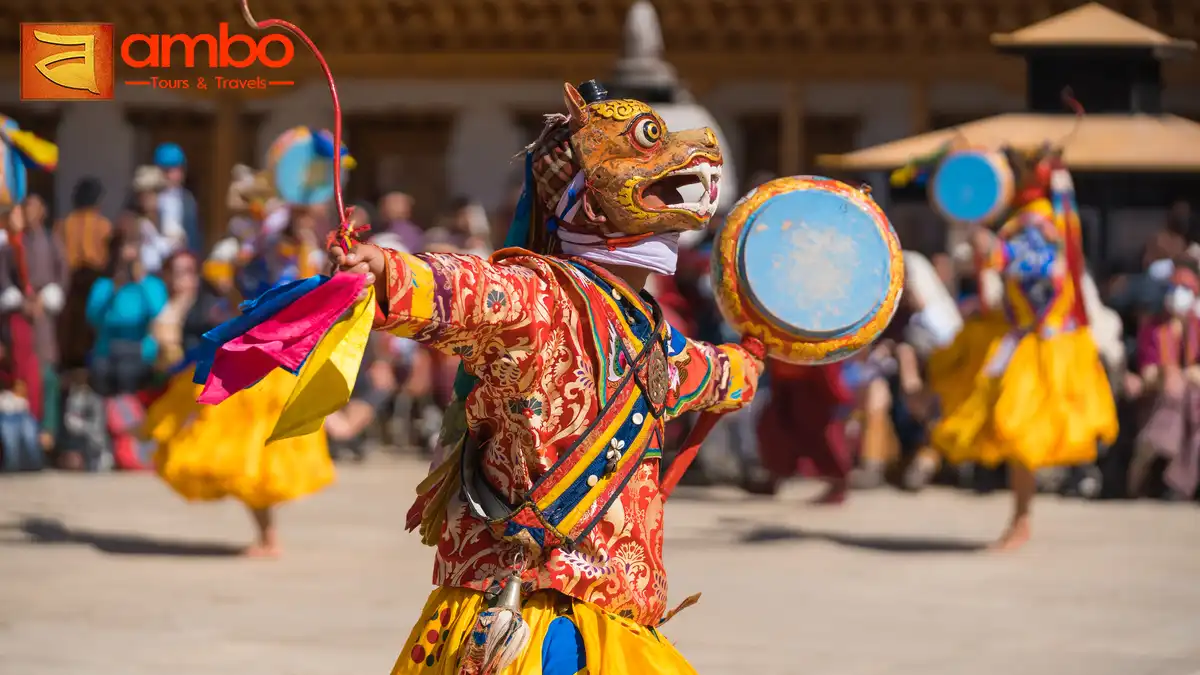
The Paro Tshechu is one of the most sacred annual festivals in Bhutan — five days of masked Cham dances performed by monks in elaborate brocade costumes at Rinpung Dzong in Paro valley, culminating in the pre-dawn Throngdroel ceremony when a 30-metre silk thangka is unfurled from the dzong walls before thousands of pilgrims at 3am. Buddhist tradition holds that beholding the Throngdroel cleanses the sins of a lifetime.
This 10-day tour dedicates three full days to the festival — Day 6, 7, and 8 — with the Throngdroel on the final morning of Day 10 before departure. The dances include the Dance of the Lords of the Cremation Grounds, the Dance of the Eight Manifestations of Guru Rinpoche, the UNESCO-listed Dance of the Drums from Dramitse, and the Dance of the Black Hats. Day 8 ends with an evening excursion to Chele La Pass (3,988m) with views of Mount Jomolhari.
The wider itinerary covers Thimphu, Punakha Dzong via Dochula Pass, and Phobjikha Valley before the festival begins in Paro. Tiger's Nest is on Day 9 — a full dedicated day. Operated by Ambo Tours, DOT Licence No. 1053330, Thimphu.
Tour Pricing
10 Days Bhutan Journey — Cost
All prices in USD per personCost includes Sustainable Development Fee (SDF) of US $100 per person per night and Bhutan Visa Fee of US $40 per person.
Detailed Itinerary
Your Bhutan travel adventure begins the moment your flight descends through dramatic Himalayan valleys into Paro International Airport — one of the world's most technically challenging runways, flanked by steep mountain ridges. After a warm meet-and-greet with your Ambo Tours guide, the scenic drive to Thimphu begins along the Wang Chhu river.
- Tamchog Monastery: A short stop to view this historic monastery built in 1420 by Thang Tong Gyalpo — the legendary Tibetan Lama known as the 'Iron Bridge Builder' who constructed 108 bridges across Tibet and Bhutan, including 8 within the kingdom. A wonderful first taste of Bhutan Buddhist culture.
- National Memorial Chorten: Built in honour of the third King, Late His Majesty Jigme Dorji Wangchuck, this solemn and beautiful stupa is circumambulated daily by elderly Bhutanese in a living act of devotion — one of the most moving sights in Bhutan sightseeing.
- Buddha Dordenma (Kuensel Phodrang): The tallest sitting Buddha statue in the world at 51.5 metres, gazing serenely over the Thimphu valley. An unmissable landmark of any Bhutan tour package and a breathtaking introduction to the kingdom's spiritual grandeur.
- Craft Bazaar: Browse Bhutanese handicrafts, thangka paintings, hand-woven textiles, and traditional art works — perfect for picking up authentic souvenirs early in your Bhutan holiday.
- Tashichho Dzong: End the day at the majestic seat of Bhutan's national government and central monastic body. Its gleaming whitewashed walls and golden rooftops glow magnificently in the evening light — a defining image of Bhutan Buddhist culture and governance united in one extraordinary building.
Practical tip: Thimphu sits at 2,334 m — hydrate well and take it easy on your first evening. Try Ema Datshi (chilli and cheese stew), Bhutan's beloved national dish, for dinner. Tomorrow brings a full day of Thimphu cultural exploration.
Thimphu is unlike any other capital city in the world — no traffic lights, no skyscrapers, and a pace of life governed by the philosophy of Gross National Happiness (GNH). Today is a full immersion in the art, faith, nature, and living traditions that make this city the cultural heart of Bhutan tourism.
- Changangkha Lhakhang: The oldest temple in the Thimphu valley, built in the 13th century by Phajo Drugom Zhigpo on a ridge commanding sweeping views over the city. Parents bring newborns here to receive blessings — an intimate and authentic glimpse into Bhutanese family life and Bhutan Buddhist culture.
- Takin Preserve Center: Home to the Takin — Bhutan's national animal, a remarkable creature that resembles a cross between a gnu and a mountain goat, found nowhere else on earth. A fascinating stop for wildlife lovers on any Bhutan itinerary.
- Sangaygang Viewpoint: A hilltop vantage point offering panoramic views over the entire Thimphu valley — perfect for photography and quiet reflection on the Bhutan landscape spread below.
- Dupthop Lhakhang: One of the few surviving nunneries in Bhutan — a rare and precious window into the lives of female Buddhist practitioners within the kingdom's monastic tradition.
- Simply Bhutan (Lunch): An interactive living museum where you can savour traditional Bhutanese dishes, sample Ara (local rice wine), watch folk dances, and dress in traditional Bhutanese attire — a highlight of any Bhutan cultural tour.
- Postal Museum: Bhutan's internationally celebrated stamps — some printed on silk, some shaped like maps — have made the kingdom famous among philatelists worldwide. Here you can even print your own photo on an official Bhutanese stamp — a uniquely memorable souvenir of your Bhutan trip.
- National Institute for Zorig Chusum (Painting School): Watch students master Bhutan's 13 traditional arts and crafts — painting, sculpture, weaving, embroidery, and wood carving — in a living classroom setting. This is sustainable tourism Bhutan at its most meaningful.
Tip: The evening is free to stroll Thimphu's vibrant town centre — browse shops, try local street food, and absorb the unhurried energy of a capital city that has never lost its soul. Tomorrow, the beautiful mountain drive to Punakha begins over the legendary Dochula Pass.
The drive from Thimphu to Punakha — the ancient capital of Bhutan until the reign of the second King — is one of the great scenic journeys of any Bhutan itinerary. The road climbs through dense blue pine forest to the wind-swept heights of Dochula Pass before descending dramatically into the warm, subtropical Punakha valley — a transformation so complete it feels like entering a different country.
- Dochula Pass (3,140 m): A high mountain pass adorned with 108 memorial chortens set against a breathtaking Himalayan panorama on clear mornings. On a good April day, peaks including Gangkar Puensum — Bhutan's highest unclimbed summit — are visible in the distance. One of the most photographed moments in all of Bhutan travel.
- Chimi Lhakhang (Fertility Temple): Built in 1499 by Lama Drukpa Kuenley — the Divine Madman — who travelled throughout Bhutan and Tibet using songs, humour, and unconventional wisdom to teach the path to salvation. The temple is a place of pilgrimage for couples hoping for children, set amid open rice paddies on a gentle hillock above the valley floor.
- Punakha Dzong: Built in 1637 by Shabdrung Ngawang Namgyal at the confluence of the Pho Chhu and Mo Chhu rivers, this is widely considered the most beautiful Bhutan dzong in the kingdom. Its soaring whitewashed walls, jacaranda trees in purple April bloom, and richly painted interior halls make it an unmissable centrepiece of any Bhutan tour package.
- Khamsum Yulley Namgyal Monastery (Evening Hike): A rewarding 45-minute uphill hike through rice paddies leads to this imperial monastery built by Her Majesty the Queen Tshering Yangdon Wangchuck — its interior murals represent the finest contemporary Bhutan Buddhist culture art in the valley.
Tip: Punakha is significantly warmer than Thimphu — light clothing is ideal for the afternoon. Try Jasha Maru (spicy minced chicken stew) for dinner, a local Punakha favourite. Tomorrow, the serene Phobjikha Valley awaits.
Today's drive from Punakha to the Phobjikha Valley takes you from subtropical warmth back up into one of Bhutan's most hauntingly beautiful high-altitude landscapes — a glacier-carved glacial bowl that is one of the great Bhutan hidden gem destinations in the kingdom. En route, a striking dzong visit anchors the morning before the valley's serenity takes hold.
- Wangdue Phodrang Dzong: Built in 1638 by Shabdrung Ngawang Namgyal on a commanding ridge above the confluence of two rivers, this historically important Bhutan dzong is currently undergoing restoration. Its strategic position and dramatic silhouette against the surrounding mountains make it one of the finest architectural viewpoints in central Bhutan.
- Gangtey Monastery (Gangtey Gonpa): Built in 1613 by Gyaltse Pema Thinley, this is the only Nyingmapa monastery in the Phobjikha valley and one of the most spiritually significant in all of Bhutan tourism. Perched on a forested hillock above the valley floor, its sweeping views and active monastic community make it a profound Bhutan monastery experience.
- Black-Necked Crane Information Center: The endangered Black-Necked Crane winters in Phobjikha (October–February) — but the center's exhibits and conservation story are compelling year-round, illuminating the deep connection between Bhutan Buddhist culture and wildlife protection. The cranes are believed to circle Gangtey Monastery three times before departing for Tibet each spring.
- Phobjikha Valley Exploration: In the evening, stroll the wide, flat valley floor — one of the most restorative walks in all of Bhutan sightseeing. The open meadows, traditional farmhouses, and mountain silhouettes create a landscape of rare, unhurried beauty.
Practical tip: The valley sits at approximately 2,900 m — pack warm layers for the evening. Dinner at your guesthouse will feature locally grown potatoes and buckwheat — the staple high-altitude crops of this farming community. Tomorrow, a scenic drive returns you to Thimphu.
The morning drive from Gangtey back to Thimphu winds through the same mountain corridor you traversed earlier in the trip — but the changing light and accumulated experience of the journey transforms familiar landscapes into something newly resonant. Stop freely for photographs wherever the scenery demands it, and arrive in the capital refreshed and ready for an afternoon of culture.
- Royal Textile Museum: Home to an exquisite collection of royal and regional textiles spanning centuries of Bhutanese weaving tradition. Each pattern and colour combination carries encoded meaning — family lineage, regional identity, ceremonial purpose — and understanding this living language of cloth is one of the most enriching aspects of any Bhutan cultural tour. The museum's collection includes pieces from the royal family's personal wardrobe, making it a unique window into the kingdom's most intimate traditions.
- Changlimithang Archery Stadium: Archery is Bhutan's national sport — and watching a live match at Changlimithang Stadium is one of the most entertaining and culturally distinctive experiences in all of Bhutan sightseeing. Teams shoot at targets 145 metres apart while teammates perform elaborate dances and songs to distract or celebrate. The atmosphere is boisterous, colourful, and utterly unlike any sporting event you have encountered elsewhere — a living expression of Gross National Happiness and communal joy.
The evening is free to explore Thimphu town — browse the weekend market (if visiting on Friday or Saturday), pick up handicrafts, or simply sit at a café and watch the world go by at the gentle pace that defines life in Bhutan's capital.
Tip: Try Khur-le (buckwheat pancakes with honey or cheese) at a local café for a truly Bhutanese afternoon snack. Tomorrow, the extraordinary Paro Tshechu Festival begins — one of the highlights of this entire Bhutan holiday.
Today marks the beginning of the centrepiece of this entire Bhutan travel experience — the legendary Paro Tshechu Festival. The one-hour drive from Thimphu to Paro buzzes with anticipation as the valley fills with pilgrims, monks, and festival-goers dressed in their finest traditional attire. This is Bhutan Buddhist culture at its most spectacular and most alive.
- Paro Tshechu Festival (Morning): Witness the sacred mask dances performed by monks and laypeople in the courtyard of Rinpung Dzong — each dance narrates a chapter of Bhutanese Buddhist mythology and is believed to bring merit and blessings to all who observe it. The costumes are extraordinary — silk brocade robes, elaborate painted masks, and ornate crowns that have been worn in these performances for centuries.
- Rinpung Dzong: The great fortress-monastery of Paro, founded in 1644, its whitewashed walls and golden rooftops rising dramatically above the Paro Chhu river. Connected to the town by a traditional covered wooden bridge, this is one of the finest Bhutan dzong settings in the entire kingdom — and during Tshechu, its courtyards transform into a stage for living religious theatre.
- Ta Dzong (National Museum of Bhutan): After lunch, visit the circular watchtower-museum above the dzong, housing an outstanding collection of thangka paintings, ancient weapons, natural history exhibits, and royal artefacts — an essential complement to the festival experience for any Bhutan itinerary.
- Bhutanese Farmhouse Visit: In the evening, visit a traditional Bhutanese farmhouse to experience a typical day in rural Bhutanese life — cooking over a wood stove, spinning prayer wheels, and sharing butter tea with a local family. This is sustainable tourism Bhutan at its most human and most memorable.
Tip: Arrive early at the dzong for a good viewing position near the main performance area. Dress respectfully and ask before photographing individuals at close range. The best time to visit Bhutan for festival culture is precisely now — savour every moment. Tomorrow: another full day of Tshechu.
A full day dedicated entirely to the Paro Tshechu Festival 2026 — and what a day it is. By now you have settled into the rhythm of the festival, and today brings deeper immersion: familiar faces in the crowd, favourite viewing spots claimed, and a growing understanding of the sacred choreography unfolding before you in the ancient courtyard of Rinpung Dzong.
The Paro Tshechu is one of the most important religious festivals in all of Bhutan tourism — a five-day event held annually in the third month of the Bhutanese lunar calendar. Sacred Cham (mask dances) are performed by monks who train for years to master the precise movements, costumes, and ritual meanings of each dance. Among the dances you may witness today:
- Dance of the Lords of the Cremation Grounds — dancers wearing skull masks representing the guardians of the charnel grounds, embodying impermanence and the cycle of life.
- Dance of the Eight Manifestations of Guru Rinpoche — celebrating the eight forms of Padmasambhava, the Indian saint who brought Buddhism to Bhutan in the 8th century.
- Dance of the Judgement of the Dead — a morality play depicting the weighing of a soul's deeds before the Lord of Death, one of the most theatrically compelling performances in Bhutan Buddhist culture.
Between performances, mingle with Bhutanese families who have travelled from remote villages specifically for this event — dressed in their finest Kira and Gho, sharing food, laughter, and prayers. This communal joy is the living spirit of Gross National Happiness.
Practical tip: The evening is free for shopping and photography in Paro town — browse for hand-woven textiles, carved wooden bowls, and traditional jewellery. Try Ema Datshi at a local restaurant for dinner. Tomorrow: the festival continues, plus a spectacular evening excursion to Cheli La Pass.
The third and penultimate full day of the Paro Tshechu Festival carries its own special energy — the festival is building toward its climactic final morning, and the sacred dances take on an additional intensity as monks and performers prepare for the great unveiling ahead. Spend the morning and afternoon fully immersed in the spectacle at Rinpung Dzong before a breathtaking evening excursion into the high Himalayas.
Today's festival programme typically includes some of the most visually spectacular dances of the entire Tshechu:
- Dance of the Ging and Tsholing — colourful and energetic dances representing protective deities, performed with elaborate costumes and ceremonial weapons.
- Dance of the Black Hats — one of the most sacred and ancient dances in Bhutan Buddhist culture, performed by monks wearing large black hats and representing tantric masters subduing evil forces.
- Dance of the Drums from Dramitse — a UNESCO Intangible Cultural Heritage dance originating from a monastery in eastern Bhutan, performed in large circular formations to the thunder of ceremonial drums.
In the evening, make the spectacular excursion to Cheli La Pass (3,988 m) — the highest motorable pass in Bhutan. On a clear April evening, the panoramic views encompass Mt. Jomolhari (7,326 m), the sacred guardian peak of Paro, glowing in the golden late-afternoon light, as well as the entire Haa Valley spreading below. In April, rhododendrons line the roadside in vivid red and pink bloom — one of the finest Bhutan landscape experiences of the entire trip.
Tip: Dress very warmly for Cheli La — temperatures at nearly 4,000 m drop sharply even in April. The sunrise view from this pass is extraordinary if you can arrange an early morning visit on another day. Tomorrow, the legendary hike to Tiger's Nest Monastery awaits.
Today delivers one of the most iconic experiences in all of Bhutan travel — the hike to Paro Taktsang (Tiger's Nest Monastery), perched impossibly on a sheer cliff face 900 metres above the Paro valley floor. Built in 1684 by Gyaltse Tenzin Rabgay around the cave where Guru Rinpoche meditated in the 8th century, this is the single most visited and most photographed site in all of Bhutan tourism — and it earns every superlative.
The hike takes approximately 2–3 hours ascending through fragrant blue pine and rhododendron forest, with the monastery appearing and disappearing dramatically through the trees as you climb. The final approach crosses a narrow bridge above a cascading waterfall before climbing stone steps into the monastery complex itself.
- Taktsang Monastery (Tiger's Nest): Explore the four main temples, golden statues, sacred butter lamps, and ancient meditation caves — including the cave of Guru Rinpoche himself, considered one of the holiest sites in all of Bhutan Buddhist culture. The views from the monastery terrace over the Paro valley are simply extraordinary. Note: photography is not permitted inside the temple complex, and shoes must be removed before entering.
- Drukgyel Dzong: After descending, visit this ruined dzong built in 1647 by Shabdrung Ngawang Namgyal to commemorate a Bhutanese victory over Tibetan invaders. Its dramatic hilltop ruins and views toward Mt. Jomolhari make it one of the most atmospheric stops on any Bhutan itinerary.
- Kyichu Lhakhang: One of the oldest and most sacred temples in Bhutan, built in 659 AD by the Tibetan King Srongtsen Gampo. Its tranquil orange-tree courtyard, ancient statues, and perpetually burning butter lamps create an atmosphere of profound peace — a perfect contemplative end to a day of extraordinary Bhutan sightseeing.
Practical tip: Start the Tiger's Nest hike early — by mid-morning the trail becomes busy. Wear sturdy shoes, carry water, and bring a light snack. The evening is free to stroll Paro town for final shopping and photography. Tomorrow brings the most sacred moment of the entire festival.
The final morning of your Bhutan Paro Tshechu Festival 2026 tour begins before dawn — and it is worth every early minute. At 3:00 am, drive to Paro Dzong to witness the sacred Throngdroel ceremony — the most spiritually significant event of the entire Tshechu and the undisputed highlight of this Bhutan cultural tour.
The Throngdroel (meaning 'liberation upon sight') is a massive sacred silk appliqué thangka — measuring over 30 metres in height — that is unfurled from the dzong walls in the pre-dawn darkness and displayed to the assembled crowd for only a few precious hours before the sun's rays touch it. Bhutanese Buddhist tradition holds that merely beholding the Throngdroel cleanses the sins of a lifetime and brings the viewer closer to liberation — and the atmosphere among the thousands of pilgrims, monks, and devotees gathered in the torchlit darkness is unlike anything else in the world of Bhutan travel.
As the first light of dawn touches the mountains above Paro valley, the Throngdroel is carefully rolled and stored for another year — and with it, the Paro Tshechu Festival 2026 draws to a close. The silence that follows is profound.
After this extraordinary final experience, transfer to Paro International Airport for your departure. As your plane climbs through the mountain valleys and the kingdom of Bhutan recedes below the wing, the memories of 10 days of Bhutan Buddhist culture, sacred festivals, Himalayan landscapes, and human warmth will remain with you for a lifetime.
This is not just a tour. This is a transformation.
Practical tip: Dress in warm layers for the 3 am ceremony — Paro nights are cold in April. The crowd is large but orderly; arrive early for a good viewing position. Carry your camera but be respectful of the sacred atmosphere — this is a moment of genuine religious devotion for thousands of Bhutanese pilgrims.
Tour arranged by Ambo Tours & Travels · Trip ID: 25N26M3 · +975 16160000 / +975 16162222 · [email protected] · www.ambotours.com
Included / Excluded
- ✔All meals — breakfast, lunch, and dinner
- ✔Accommodation on twin / double sharing basis (single supplement extra)
- ✔All transportation within the kingdom including airport transfers
- ✔Sustainable Development Fee — Government tax (SDF)
- ✔Bhutan visa fee
- ✔Entrance fees for museums and monuments
- ✔English-speaking private local guide
- ✔Sightseeing as per itinerary
- ✔Bottled water throughout the journey
- ✖International flights to and from Paro (PBH)
- ✖Gratuities for guides and drivers
- ✖Travel insurance premiums
- ✖Payments for services provided on a personal basis
- ✖Cost for any services not mentioned under "Cost Includes"
- ✖Cost incurred due to mishaps, strikes, political unrest, etc.
- ✖Personal expenses — laundry, beverages, or personal services
Ambo Tours & the 1% Club
Every tour we run includes a contribution to a Bhutanese NGO of your choice — at no extra cost to you. We call this the 1% Club: a minimum of 1% of your trip's profit, or Nu 5,000, whichever is higher, donated on every single journey. You choose where it goes.
About the Paro Tshechu Festival
The Paro Tshechu is one of the most sacred festivals in the Bhutanese religious calendar — five days of masked Cham dances performed by monks at Paro's Rinpung Dzong each spring. The dances are not performances — they are religious ceremonies, each encoding specific teachings from Bhutanese Buddhist tradition. Attending the Paro Tshechu is considered an act of merit, and Bhutanese families travel from across the country in full traditional dress to be present.
The five days of dances include some of the most visually extraordinary ritual ceremonies in the Himalayan world: the Dance of the Black Hats (Shanag), the Dance of the Eight Manifestations of Guru Rinpoche, the Dance of the Lords of the Cremation Grounds (Tungam), and the UNESCO Intangible Cultural Heritage listed Dance of the Drums from Dramitse (Drametse Nga Cham) — a dance that originated in eastern Bhutan and is performed nowhere else in its original form.
The festival culminates in the Throngdroel ceremony — a pre-dawn gathering at 3am when a 30-metre silk thangka depicting Guru Rinpoche is unfurled from the dzong walls. It is displayed only until the first rays of sun touch it. Buddhist tradition holds that beholding it cleanses the sins of a lifetime. For the full Bhutan festival context, see our complete guide to Bhutan festivals.
Festival Dates & Schedule
The Paro Tshechu is held annually in spring — typically between late March and mid-April, with exact dates set by the Bhutanese lunar calendar each year. The festival runs for five days. This 10-day tour is timed to include three full festival days (Days 6, 7, and 8) and the Throngdroel ceremony on the final morning of Day 10.
Approximate daily schedule:
Festival days begin at approximately 8–9am with the opening dances and continue until late afternoon. Each day features a different programme of Cham dances. Day 8 adds an evening excursion to Chele La Pass (3,988m) after the afternoon dances conclude. The Throngdroel unveiling on Day 10 begins at approximately 3am — your guide will manage timing and positioning.
Contact our Thimphu team with your available travel window and we will confirm the exact festival dates for your travel year and check tour availability. We book Paro Tshechu tours early — accommodation in Paro valley fills months in advance during the festival window. For the full annual calendar, see our Bhutan festival calendar.
What to Expect
Crowds and atmosphere — the Paro Tshechu is attended by thousands of Bhutanese pilgrims and a smaller number of international visitors. The dzong courtyard is full but not overwhelming. The atmosphere is celebratory and devotional simultaneously — families picnic on the hillside above, children run between the spectators, monks perform with total concentration. Your guide will position you well for each day's main dances.
Dress code — dress modestly at all times during the festival. Covered shoulders and knees are required. Many international visitors wear traditional Bhutanese dress (kira for women, gho for men) which is available to rent in Paro town — your guide can arrange this and it is warmly received by Bhutanese attendees.
Photography — permitted in the spectator areas during the dances. Not permitted inside the dzong's temple chambers. Avoid flash during ceremonies. For the Throngdroel at 3am, a camera capable of high-ISO shooting gives better results than flash.
The Throngdroel morning — your guide will wake you well before 3am on Day 10. Dress warmly — Paro valley at 3am in spring is cold. The experience of the crowd, the darkness, the smell of butter lamps, and the moment the thangka is revealed is unlike anything else in the Bhutanese calendar.
For a full preparation guide, see our Bhutan culture and customs guide.
Itinerary Map
The map below shows the 10-day Paro Tshechu Tour route from Paro through Thimphu, Punakha, Gangtey, and back to Paro for three festival days and Tiger's Nest.
Map coming soon.
Frequently Asked Questions
The Paro Tshechu is one of the most important annual religious festivals in Bhutan, held at Rinpung Dzong in Paro valley every spring. The festival runs for five days with sacred Cham dances performed by monks in elaborate brocade costumes and painted masks. Each dance has specific spiritual significance — the Dance of the Black Hats, the Dance of the Lords of the Cremation Grounds, and the UNESCO-listed Dance of the Drums from Dramitse are the most celebrated. Bhutanese families travel from across the country in traditional dress to attend. The festival culminates in the pre-dawn Throngdroel ceremony on the final morning.
The Throngdroel is a monumental silk thangka — approximately 30 metres tall — depicting Guru Rinpoche, the saint who brought Buddhism to Bhutan. It is unfurled from the walls of Rinpung Dzong at approximately 3am on the final morning of the Paro Tshechu and displayed only until the first rays of sunlight touch it. Buddhist tradition holds that simply beholding the Throngdroel cleanses the sins of a lifetime and grants liberation. The ceremony draws thousands of pilgrims who have gathered through the night. Your guide will position you for the ceremony — arrive at least 90 minutes before the unveiling.
The Paro Tshechu is held annually in spring — typically in March or April, with exact dates determined by the Bhutanese lunar calendar each year. The festival runs for five days. This tour is timed to include three full festival days and the Throngdroel ceremony. Contact our Thimphu team with your available travel window and we will confirm the exact dates for your travel year and check availability. See our Bhutan festivals guide for the full festival calendar.
Yes — the Paro Tshechu is one of the most recommended first Bhutan experiences precisely because it combines the cultural depth of the festival with the western Bhutan highlights (Thimphu, Punakha, Gangtey) and Tiger's Nest in a single itinerary. The festival itself is accessible and welcoming to international visitors. Your guide will explain each dance and its spiritual significance. Dress modestly — covered shoulders and knees — and follow your guide's advice on positioning for photography.
Photography of the dances in the dzong courtyard is generally permitted from the spectator areas. Video is also allowed. Photography is not permitted inside the dzong's temple chambers. Flash photography during ceremonies is considered disrespectful and should be avoided. The Throngdroel ceremony at 3am is photographable but low-light conditions require either a camera capable of high-ISO shooting or acceptance of the atmospheric imperfection. Your guide will advise on the best vantage points for each day's dances.
Arrive at Rinpung Dzong by 8am at the latest on each festival day — the main dances begin between 8 and 9am and the best spectator positions fill quickly. Your guide will manage timing each morning. On the Throngdroel day (Day 10), the ceremony begins at approximately 3am — your guide will wake you and accompany you to the dzong well before the unveiling.
Ready to Begin Your Journey?
Our Thimphu team responds within 24 hours. Tell us your dates and we will handle the rest.