Bhutan Festival Calendar 2026 — What You Need to Know Before You Book
More than a dance — what a Tshechu actually means
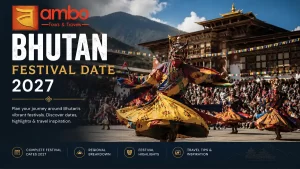
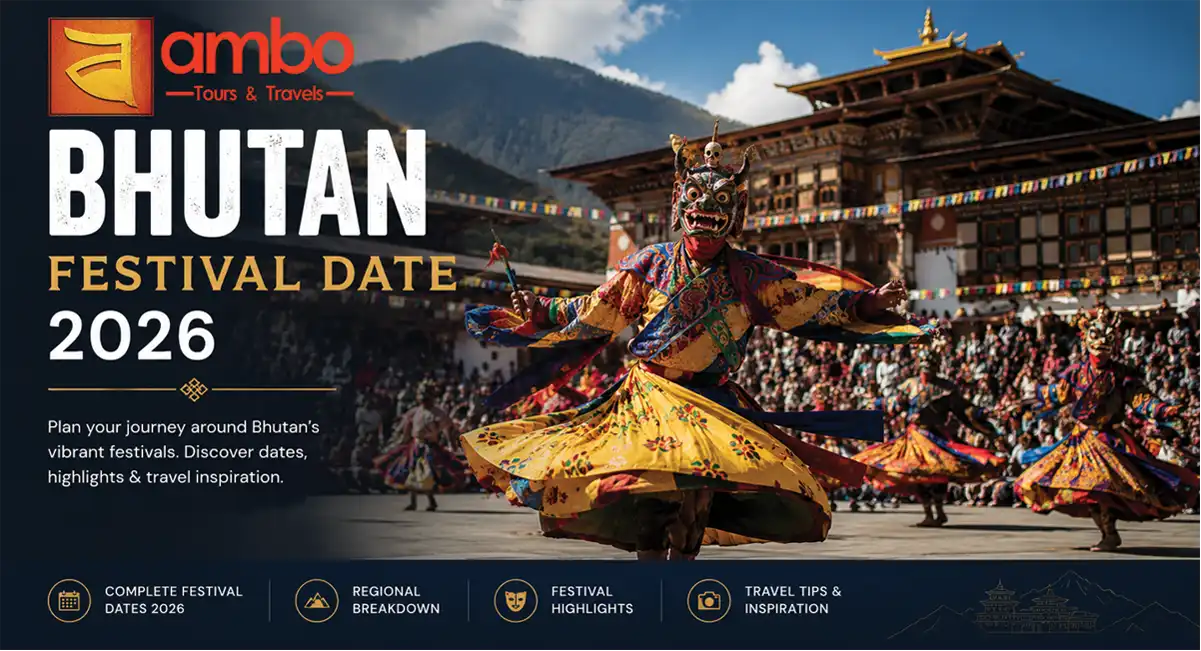
However, reducing a Tshechu to a “dance festival” misses what it actually is. For Bhutanese communities, a Tshechu is one of the most important events of the year — a gathering of the entire district, an act of collective merit-making, and a rare moment when people travel from the most remote corners of a valley to stand together in a dzong courtyard. Furthermore, the dances are not performances. They are teachings, enacting stories of dharma, karma, and liberation in movement and colour.
For a visitor, witnessing a Tshechu is consequently one of the most complete cultural experiences available anywhere in Asia. Rather than watching from a distance, you stand present alongside Bhutanese families who have come from hours away — grandmothers in their finest kira, children seeing the same dances their grandparents saw. Nothing is staged for tourists. The crowd, the incense, the sound of cymbals and drums against stone walls: it is entirely real, and entirely unlike anything else.
The thongdrol — the moment that defines every Tshechu
Each Tshechu concludes with the unfurling of a thongdrol — a giant sacred silk tapestry depicting Guru Rinpoche — at dawn on the final day. The belief held by Bhutanese Buddhists is that simply viewing the thongdrol confers liberation. As a result, the scale, the cold pre-dawn air, and the crowd pressing forward in silence combine into one of the most powerful moments available anywhere in the 2026 Bhutan festivals calendar.
Beyond the Tshechus, the calendar also includes Dromchoes (rituals commemorating specific historical events), Drups (multi-day intensive religious ceremonies), and several nature and cultural festivals established in recent decades to celebrate Bhutan’s biodiversity and regional heritage. In total, the Bhutan festival calendar 2026 covers 43 events — and Ambo Tours has built dedicated packages around every major one.
Why Ambo Tours is the right partner for a Bhutan festival trip
Because all international visitors must book through a DOT-licensed operator, choosing the right team is the single most important decision you make. Ambo Tours & Treks (DOT License No. 1053330) is a 100% Bhutanese team based in Thimphu. Since 2019, we have been planning festival itineraries — and we know exactly when to arrive, where to position for the thongdrol, and which accommodation fills out first. Tell us your target festival and, in return, we handle everything from there.
The Top Bhutan Festivals for 2026 — Our Expert Picks
There are 43 listed events in the Bhutan festival calendar 2026. Not all of them are equally accessible or equally suited to every traveller. Below, therefore, are the festivals that consistently define a Bhutan trip — with honest notes on what makes each one worth building an itinerary around.
Most Visited
Paro Tshechu
The most internationally recognised festival in Bhutan. Five days of cham at Rinpung Dzong culminate in the thongdrol unfurling at dawn on the final morning. Because it falls during Bhutan’s most beautiful spring weather, demand is extreme. Book 4–6 months ahead — flights and hotels in Paro fill completely. Ambo Tours secures priority accommodation for our Paro Tshechu guests — see the package here.
Historical Re-enactment
Punakha Dromchoe & Tshechu
The Dromchoe (24–26 Feb) includes a unique re-enactment of a 17th-century battle in which Bhutanese soldiers repelled a Tibetan invasion — hundreds of men in traditional battle dress fill the dzong courtyard. The Tshechu then follows immediately (27 Feb – 1 March). One location, two extraordinary events, and four unmissable days.
Thimphu Tshechu
Held in the capital, the Thimphu Tshechu is logistically the easiest festival to attend and one of the largest. Moreover, Tashi Chhodzong — the seat of Bhutan’s government — provides a stunning backdrop. It combines naturally with the Thimphu Drubchen (17 September) and the Gangtey Tshechu just days later.
Ura Yakchoe
Five days in a remote high-altitude village in Bumthang, where the festival has changed almost nothing in generations. As a result, far fewer tourists attend. The ritual centres on a centuries-old statue of Guru Rinpoche carried through the village. Notably, travellers who have attended multiple Bhutanese festivals consistently name Ura as their favourite.
Jambay Lhakhang Drup
One of Bhutan’s most sacred and visually extraordinary festivals. The highlight is the fire ceremony on the final night — a naked masked dance performed by torchlight that ranks among the most remarkable ritual events in Asia. Because it requires travel to Bumthang, plan a minimum of 8–10 days in Bhutan to incorporate it properly.
Black Necked Crane Festival
A single-day celebration marking the annual arrival of black-necked cranes from Tibet. Part conservation awareness event and part cultural festival, it features traditional dances, crane costume performances, and the surreal sight of the cranes gliding in across the valley. Unlike any other event on the 2026 calendar.
Bhutan Festival Calendar 2026 by Season — When to Go for What
Understanding the Bhutan festival calendar 2026 alongside seasonal weather patterns is essential for planning a successful trip. Importantly, the calendar is not evenly distributed. Most major events cluster in two peak windows — spring (February to May) and autumn (September to November) — which, not coincidentally, align with Bhutan’s finest weather. The lunar calendar ties festivals to the agricultural and spiritual rhythm of the year, and that rhythm has shaped the same travel windows for centuries.
Spring (February – May) — peak Bhutan festival season
Spring is both peak festival and peak travel season. The Punakha Dromchoe and Tshechu arrive in late February, followed by a dense cluster of regional festivals in March, and then Paro Tshechu at the end of March. Consequently, this run of events is the most in-demand period on Bhutan’s tourism calendar. The weather is clear, rhododendrons bloom at altitude, and the light across the valleys is extraordinary. However, the trade-off is fierce competition for accommodation and flights. Therefore, book at least four months ahead for any spring festival — and six months for Paro specifically.
Summer (June – August) — quieter, greener, and more affordable
The monsoon runs roughly from late June through August, which means most major festivals fall outside this window. Nevertheless, the Kurjey Tshechu (24 June) and Nimalung Tshechu (22–24 June) sit just at the edge of the rains and are well worth attending. Summer travel in Bhutan is quieter, greener, and considerably less expensive than peak season — though road conditions deteriorate in the east and certain trekking routes become inaccessible. Meanwhile, the Tour of the Dragon mountain bike race (5 September) marks the natural boundary as summer transitions into autumn.
Autumn (September – November) — the finest all-round season
Autumn rivals spring as the finest time to be in Bhutan. Once the monsoon clears, the sky turns a specific shade of blue that photographers chase across Asia, and the Bhutan festivals 2026 calendar grows exceptionally dense. Specifically, the Thimphu Tshechu (21–23 September) anchors a remarkable run of events that extends through September into the Jakar and Pemagatshel Tshechus in October, and then continues to the Jambay Lhakhang Drup and Black Necked Crane Festival across October and November. As a result, this is the ideal season for travellers who want both cultural depth and trekking.
Winter (December – January) — the most underrated season
December is Bhutan’s quietest tourism month and also, unexpectedly, one of its most culturally rich. In fact, the Trongsa Tshechu (17–21 December), Lhuentse Tshechu (17–21 December), and the Druk Wangyel Tshechu at Dochula Pass (13 December) all fall within the same week. Cold, certainly — but the skies are clear, Himalayan views rank among the best of the year, and these events are attended almost entirely by Bhutanese people. That intimacy, in short, is something the peak-season festivals simply cannot offer.
How Ambo Tours matches you to the right season
Because festival dates shift with the lunar calendar every year, the most reliable approach is to share your preferred travel window with our team and let us align the itinerary with what is actually on the ground. We track confirmed dates directly from the Department of Tourism of Bhutan and update our recommendations as soon as official announcements are made. In other words — you tell us when you can travel, and we tell you exactly what not to miss.
Full Bhutan Festival Calendar 2026 — All 43 Events
Dates are tentative and follow the Bhutanese lunar calendar. Updated January 2025 by the Department of Tourism of Bhutan. Dates shift year-on-year; always confirm with your licensed operator before booking flights or accommodation.
| # | Festival | Location | Date (2026) |
|---|---|---|---|
| 1 | Lhamoi Dromchhen | Trongsa Dzong, Trongsa Central | 22–24 Feb |
| 2 | Punakha Dromchoe | Punakha Dzong, Punakha West | 24–26 Feb |
| 3 | Punakha Tshechu | Punakha Dzong, Punakha West | 27 Feb – 1 Mar |
| 4 | Tharpaling Thongdrol | Tharpaling Lhakhang, Chumi, Bumthang Central | 3 Mar |
| 5 | Tangsibi Mani | Tangsibi Lhakhang, Ura, Bumthang Central | 4–6 Mar |
| 6 | Chhorten Kora | Chorten Kora, Trashiyangtshe East | 3 Mar & 19 Mar |
| 7 | Gomphukora | Gom Kora Lhakhang, Trashiyangtshe East | 26–28 Mar |
| 8 | Talo Tshechu | Talo Gonpa, Punakha West | 26–28 Mar |
| 9 | Gasa Tshechu | Gasa Dzong, Gasa West | 26–28 Mar |
| 10 | Zhemgang Tshechu | Zhemgang Dzong, Zhemgang Central | 26–28 Mar |
| 11 | Paro Tshechu | Rinpung Dzong, Paro West | 29 Mar – 2 Apr |
| 12 | Rhododendron Festival | Lamperi Botanical Park, Thimphu Thimphu | 13–14 Apr |
| 13 | Domkhar Tshechu | Domkhar, Chumi, Bumthang Central | 26–28 Apr |
| 14 | Ura Yakchoe | Ura Lhakhang, Bumthang Central | 28 Apr – 2 May |
| 15 | Nimalung Tshechu | Nimalung Dratshang, Chumi, Bumthang Central | 22–24 Jun |
| 16 | Kurjey Tshechu | Kurjey Lhakhang, Choekhor, Bumthang Central | 24 Jun |
| 17 | Tour of the Dragon (MTB Race) | Bumthang to Thimphu Central→West | 5 Sep |
| 18 | Thimphu Drubchen | Tashi Chhodzong, Thimphu Thimphu | 17 Sep |
| 19 | Haa Tshechu | Lhakhang Karpo, Haa West | 19–21 Sep |
| 20 | Wangdue Tshechu | Wangduephodrang West | 19–21 Sep |
| 21 | Tamshing Phala Chhoepa | Tamshing Lhakhang, Bumthang Central | 21–23 Sep |
| 22 | Thimphu Tshechu | Tashi Chhodzong, Thimphu Thimphu | 21–23 Sep |
| 23 | Gangtey Tshechu | Gangtey Gonpa, Wangduephodrang West | 24–26 Sep |
| 24 | Thangbi Mewang | Thangbi Lhakhang, Choekhor, Bumthang Central | 26–27 Sep |
| 25 | Pemagatshel Tshechu | Pemagatshel Dzong, Pemagatshel East | 18–21 Oct |
| 26 | Jhomolhari Mountain Festival | Dangochong, Thimphu Thimphu | 14–15 Oct |
| 27 | Chhukha Tshechu | Chhukha Dzong, Chhukha West | 19–21 Oct |
| 28 | Dechenphu Tshechu | Dechenphu Lhakhang, Thimphu Thimphu | 21 Oct |
| 29 | Jakar Tshechu | Jakar Dzong, Choekhor, Bumthang Central | 18–21 Oct |
| 30 | Jambay Lhakhang Drup | Jambay Lhakhang, Choekhor, Bumthang Central | 26–29 Oct |
| 31 | Traakar Duchhoed | Traakar Lhakhang, Chumni, Bumthang Central | 27–29 Oct |
| 32 | Black Necked Crane Festival | Gangtey Gonpa, Phobjikha, Wangduephodrang West | 11 Nov |
| 33 | Goenpai Drupchen | Trongsa Dzong, Trongsa Central | 14–16 Nov |
| 34 | Mongar Tshechu | Mongar Dzong, Mongar East | 17–19 Nov |
| 35 | Trashigang Tshechu | Trashigang Dzong, Trashigang East | 18–20 Nov |
| 36 | Phuntsholing Tshechu | Phuntsholing, Chhukha West | 17–19 Nov |
| 37 | Jambay Lhakhang Singye Cham | Jambay Lhakhang, Choekhor, Bumthang Central | 24 Nov |
| 38 | Nalakhar Tshechu | Ngaa Lhakhang, Choekhor, Bumthang Central | 24–26 Nov |
| 39 | Druk Wangyel Tshechu | Dochula, Thimphu Thimphu | 13 Dec |
| 40 | Trongsa Tshechu | Trongsa Dzong, Trongsa Central | 17–21 Dec |
| 41 | Lhuentse Tshechu | Lhuentse Dzong, Lhuentse East | 17–21 Dec |
| 42 | Samdrupjongkhar Tshechu | Samdrupjongkhar East | 22–24 Dec |
| 43 | Nabji Lhakhang Drup | Nabji Lhakhang, Nabji, Trongsa Central | 24–26 Dec |
How to Plan a Trip Around the Bhutan Festival Calendar 2026
Planning a trip around the Bhutan festival calendar 2026 is different from standard travel planning in one important respect: festival dates are fixed by the lunar calendar, they don’t shift to accommodate your schedule, and accommodation in small valley towns fills up months before each event. Therefore, the earlier you start, the more choices you have — and the better the overall experience.
Step 1 — Choose your festival first, then build around it
The most common planning mistake is locking in a trip length before choosing a festival. Instead, start with the festival: identify the one or two events from the Bhutan festival calendar 2026 that you most want to attend, confirm the dates above, and then build an itinerary with a buffer day on each side. A festival day book-ended by five-hour drives on both sides is exhausting. Moreover, arriving the day before gives you time to rest and orient — which matters considerably when the thongdrol unfurls before sunrise.
Step 2 — Match the festival region to your available time
Not every festival is equally accessible. Western festivals — Paro, Punakha, and Thimphu — sit within two hours of the airport and are reachable within a 5–7 day trip. Central Bhutan festivals, on the other hand, require at least 8–10 days: the Ura Yakchoe, Jambay Lhakhang Drup, and Kurjey Tshechu all sit in Bumthang, which is two days of driving from Paro or a short domestic flight. Eastern festivals such as the Mongar and Trashigang Tshechus in November demand even more time — typically 12–14 days for a trip that includes them properly. Our team will give you the minimum viable itinerary for whichever festival you are targeting.
Step 3 — Combine festivals when the 2026 calendar allows
Some of the most rewarding trips stack two or three events in close proximity. For example, the late-February window in 2026 lets you attend the Punakha Dromchoe (24–26 February) and the Punakha Tshechu (27 February – 1 March) consecutively at the same location — effectively two festivals within one trip. Similarly, in late September, the Thimphu Tshechu (21–23 September) and the Gangtey Tshechu (24–26 September) sit just three days and a two-hour drive apart. In both cases, Ambo Tours designs the combined itinerary so you move between events at the right pace, with accommodation already secured at every stop.
Step 4 — Remember that Bhutan festival dates shift every year
Because festivals follow the Bhutanese lunar calendar, they move relative to the Gregorian calendar each year. The Paro Tshechu, for instance, can fall anywhere from late March to mid-April depending on the year. While the 2026 dates on this page are confirmed as of January 2025, those planning 2027 trips should always check with us before booking any flights — we track new dates directly from the Department of Tourism of Bhutan and share updates with our clients as soon as they are published.
What to expect on a festival day — practical notes
Dress modestly — a kira for women or a gho for men is ideal, though conservative Western dress is equally acceptable. Arrive early for the thongdrol unfurling; crowds begin gathering before dawn and the best viewing positions fill quickly. Photography is permitted throughout, but bear in mind that you are a guest at a religious ceremony. Food stalls outside the dzong sell local snacks and butter tea. Finally, bring layers regardless of the month — dzong courtyards sit in morning shade and are consistently colder than the surrounding valley.
Bhutan Festival Calendar 2026 — Frequently Asked Questions
When is the Paro Tshechu 2026?
The Paro Tshechu 2026 runs from 29 March to 2 April at Rinpung Dzong, Paro. The thongdrol unfurling takes place at dawn on the final morning (2 April). Because it is the most visited festival on the Bhutan festival calendar 2026, it also requires the earliest booking — begin planning by October 2025 at the latest. Ambo Tours handles accommodation and visa for all Paro Tshechu guests as a priority.
When is the Thimphu Tshechu 2026?
The Thimphu Tshechu 2026 is scheduled for 21–23 September at Tashi Chhodzong, Thimphu. It is preceded by the Thimphu Drubchen on 17 September — arriving a few days early therefore allows you to attend both events without additional travel.
When is the Punakha Tshechu 2026?
Ready to plan your 2026 festival trip?
Tell us which festival you want to attend and your rough dates. Our team in Thimphu — Bhutanese, DOT-licensed, and on the ground — will send you a custom itinerary within 24 hours, at no cost and no commitment. Visa, accommodation, guide, and transport: Ambo Tours handles everything.
Planning ahead? See the Bhutan Festival Calendar 2027 — all 44 confirmed tentative dates already published.
Ready to Experience Bhutan?
Tell us your dates and interests — our team in Thimphu will craft a personalised itinerary within 24 hours, at no cost.