It’s a question we hear often: can you actually spend a night inside a Bhutanese monastery? The honest answer is — sometimes, in a limited and genuinely special way, but it’s not the standard, bookable experience some travel blogs make it sound like. Here’s what’s real, what to expect, and how it differs from Bhutan’s more common homestay experience.
Monastery Stays vs. Homestays: Not the Same Thing
These two experiences get conflated online, but they’re genuinely different. A homestay means staying with a local Bhutanese family — sharing meals, sometimes helping with daily chores, sleeping in a spare room of an actual family home. A monastery overnight stay means sleeping inside or adjacent to an active religious institution, in guest quarters originally built for visiting monks or spiritual students, not tourists. It’s rarer, simpler, and arranged very differently.
Which Monasteries Occasionally Welcome Overnight Guests
A small number of monasteries and religious sites across Bhutan have guest quarters that can, occasionally, be opened to travelers — always arranged in advance through a licensed operator, never as a walk-up or standard booking. These tend to be smaller, quieter sites rather than the major tourist landmarks:
- Chagri Dorjeden Monastery (north of Thimphu) — founded in 1620 by Zhabdrung Ngawang Namgyal, the founder of the unified Bhutanese state. Some accounts of monastic guest facilities exist here, tied to its long tradition as a serious meditation retreat site.
- Smaller retreat sites above Paro and near Kyichu Lhakhang — a handful of lesser-known monastic guest rooms exist in this area, generally simple and originally intended for visiting students of Buddhism rather than tourists.
- Ridge-side temples like Changangkha Lhakhang in Thimphu occasionally feature in this conversation, though availability is genuinely inconsistent and site-specific.
It’s worth being honest here: this isn’t a menu of options you can simply pick from. Availability depends on the specific monastery’s current arrangement with the monastic community, the season, and whether the site is actively hosting monks or students at the time. It’s the kind of experience your operator would need to check and arrange specifically for your trip, not something guaranteed on any standard itinerary.
What to Actually Expect
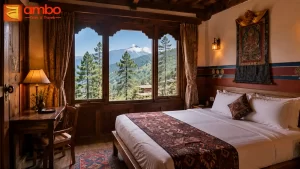
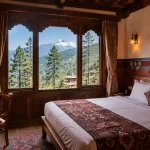
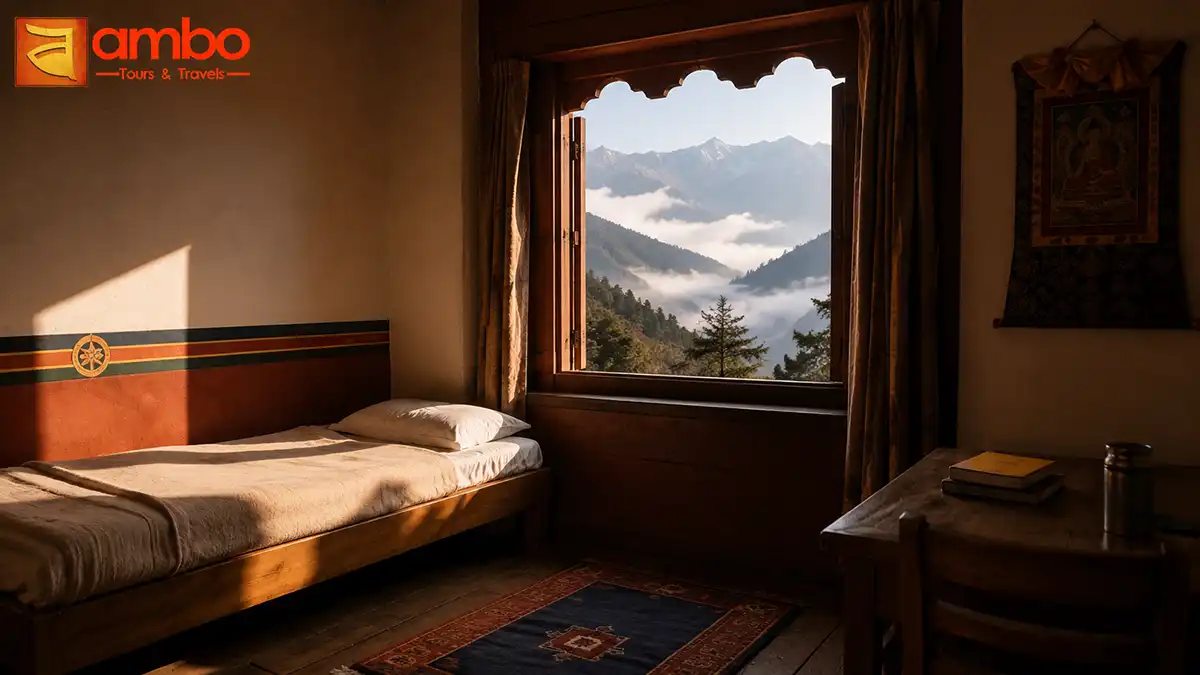
If a monastery stay can be arranged, expect it to be simple — genuinely simple, not simple-as-marketing-language. Basic rooms, shared facilities, modest meals reflecting monastic life rather than hotel-standard comfort. The value isn’t in amenities; it’s in proximity to something real — waking to morning prayers, sharing space with an active religious community, experiencing Bhutanese Buddhism as lived practice rather than as a sightseeing stop.
Etiquette If You Get the Chance
- Dress modestly at all times, not just during formal visits — you’re a guest inside someone’s home and workplace.
- Keep noise to a minimum, especially early morning and evening, when prayer and study routines are underway.
- Follow your guide’s lead on when photography is and isn’t appropriate — it will vary by site and by moment.
- Treat any offered meal or hospitality with genuine gratitude — these are communities operating on modest resources, not a hospitality business.
A More Reliable Alternative: Monastery Hikes and Cultural Immersion
If a genuine overnight monastery stay doesn’t come together for your specific trip, Bhutan still offers deep, reliable ways to connect with its monastic culture — hiking to remote monasteries like Kila Nunnery or Domendrel, visiting active teaching institutions like Tango Monastery, or combining a homestay with visits to significant religious sites nearby. These experiences are consistently available and, honestly, often just as meaningful.
Frequently Asked Questions
Can tourists stay overnight inside a Bhutanese monastery?
Occasionally, at a small number of sites, arranged in advance through a licensed operator — but it’s not a standard, guaranteed experience, and availability depends heavily on the specific monastery and timing.
What’s the difference between a monastery stay and a homestay in Bhutan?
A homestay means living with a local Bhutanese family in their home. A monastery stay means sleeping in guest quarters at an active religious institution, originally built for visiting monks or students rather than tourists.
Is a monastery overnight stay comfortable?
Expect genuinely simple accommodations — basic rooms and shared facilities reflecting monastic life, not hotel-standard comfort. The value is in the experience, not the amenities.
Interested in a deeper cultural immersion in Bhutan? Talk to us about combining monastery hikes, homestays, and festival timing into a private itinerary built around what matters most to you.
Ready to Experience Bhutan?
Tell us your dates and interests — our team in Thimphu will craft a personalised itinerary within 24 hours, at no cost.