Most souvenir guides tell you to buy a magnet and call it a day. Bhutan deserves better than that — and honestly, so do you. What’s actually worth bringing home from here ranges from the genuinely rare (Bhutan is one of the only places on earth you can legally buy cordyceps) to the beautifully handmade (textiles that take months to weave) to the simply useful (tea you’ll actually keep drinking long after the trip ends).
Here’s what’s genuinely worth your suitcase space, and where you’ll actually find it.
Cordyceps — Bhutan’s Strangest, Most Valuable Souvenir
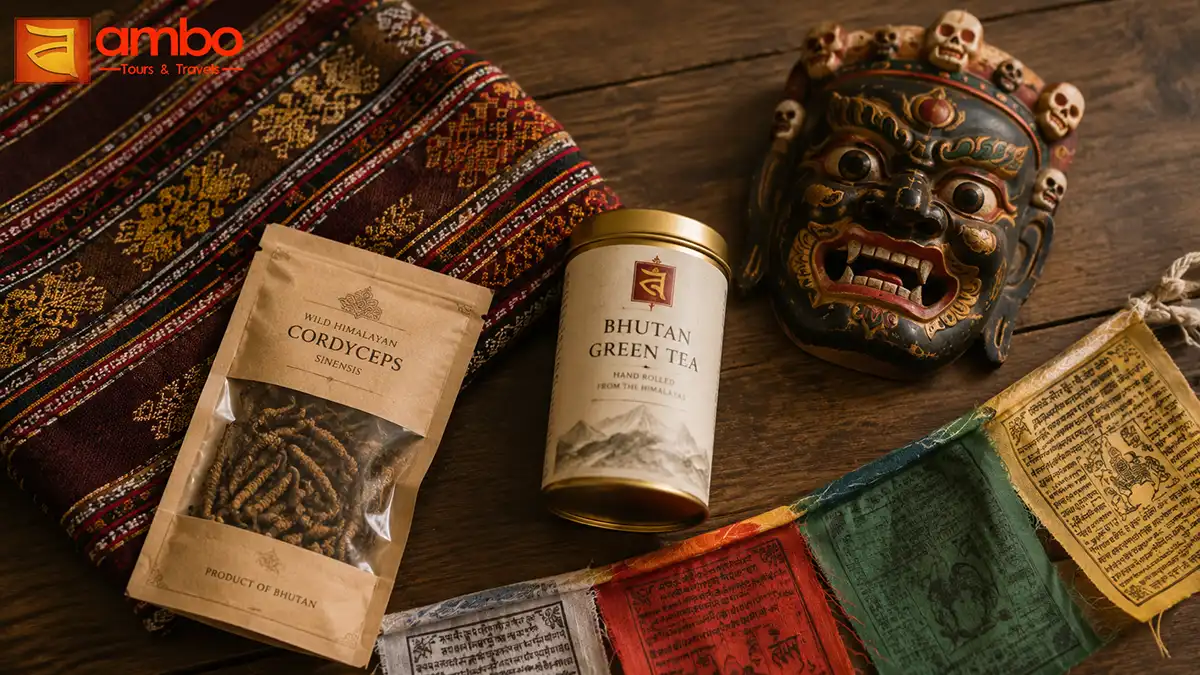
If you only buy one truly unusual thing in Bhutan, make it this. Cordyceps (locally called Yartsa Guenbub, “summer grass, winter worm”) is a rare fungus that grows on high-altitude caterpillar larvae in the Himalayas — and Bhutan is one of the few places in the world where it’s legally harvested and sold. It’s prized across Asia for its use in traditional medicine, and prices reflect that: genuine cordyceps is genuinely expensive, sold by the gram rather than the packet.
What to know before buying: quality varies enormously, and so does price — ask your guide to help verify authenticity before you commit to anything significant. This isn’t an impulse buy; treat it like you would any high-value purchase.
Handwoven Textiles
Bhutanese weaving, particularly kishuthara (a supplementary-weft brocade technique), is genuinely some of the most intricate textile work in the world — a single piece can take months to complete. You’ll find woven scarves, table runners, and traditional fabric lengths in markets and craft shops, especially in Thimphu.
The Royal Textile Academy and the craft market near Thimphu’s town center are worth a visit even if you’re not buying — seeing the weaving technique up close changes how you look at the finished piece.
Bhutanese Tea
Beyond the famous salted butter tea (suja, which is genuinely an acquired taste), Bhutan produces its own local teas worth taking home — easier to actually enjoy once you’re back home than trying to recreate butter tea in your own kitchen. Look for locally grown and packaged options rather than imported blends relabeled for tourists.
Hand-Carved Wooden Masks and Crafts
The masked dances you’ll see at any festival tour are performed in genuinely elaborate hand-carved wooden masks — and smaller decorative versions are sold as crafts, along with wooden bowls, boxes, and religious items. Look for pieces that show real carving detail rather than mass-produced imitations.
Incense
Bhutanese incense, typically juniper-based, is widely sold and genuinely distinct from incense you’ll find elsewhere — earthier, less sweet. Inexpensive, packs easily, and something you’ll actually use rather than let sit in a drawer.
Prayer Flags
You’ll see these strung across every mountain pass on your trip — and they’re sold everywhere, from market stalls to monastery shops. A genuinely meaningful, lightweight souvenir with real cultural context behind it, not just a tourist trinket.
Postage Stamps
Bhutan has a surprisingly famous philatelic history — including, at various points, stamps shaped like vinyl records and 3D-topographic maps. The National Postal Museum in Thimphu sells current and historic issues, and you can even have your own photo printed onto an official Bhutanese stamp.
Handmade Paper (Deysho)
Traditional Bhutanese paper, made from the daphne plant, is used for everything from prayer books to modern stationery. Notebooks, cards, and loose sheets are widely available and pack completely flat.
Red Rice and Local Honey
If you’d rather bring home something you’ll actually eat, Bhutan’s red rice and local honey are both genuinely good, distinct products worth the suitcase space — check your home country’s customs rules on food imports before you commit to a large quantity.
A Practical Note on Shopping During Your Trip
Souvenirs and personal spending aren’t included in your tour package — see our full cost of travelling to Bhutan guide for what is and isn’t covered. Most shopping happens naturally during your Thimphu sightseeing days — our guides know which shops sell genuine, quality work rather than mass-produced imports, and are happy to point you toward the right places rather than a commission-driven tourist trap.
Frequently Asked Questions
Is it legal to buy cordyceps in Bhutan?
Yes, cordyceps is legally harvested and sold within Bhutan. Genuine cordyceps is expensive and quality varies significantly — buy from reputable sellers, and ask your guide to help verify authenticity before a significant purchase.
What’s the best place to buy souvenirs in Bhutan?
Thimphu has the widest selection — craft markets, the weekend market, and shops near the town center. Your guide will know which sell genuine handmade work rather than imported reproductions.
Are souvenirs included in the tour package price?
No, souvenirs and personal spending are separate from your package cost. See our full cost breakdown for what’s included.
Can I bring cordyceps or other food items back through customs?
Rules vary significantly by destination country. Check your home country’s customs regulations on food and traditional-medicine imports before purchasing in quantity.
Ready to Experience Bhutan?
Tell us your dates and interests — our team in Thimphu will craft a personalised itinerary within 24 hours, at no cost.