4-Day Bhutan Tour Package — Paro, Thimphu & Tiger's Nest
Paro · Thimphu
Tour Information
- Hike to Paro Taktsang (Tiger's Nest Monastery) at 3,100m — 7km round trip through blue pine and rhododendron forest
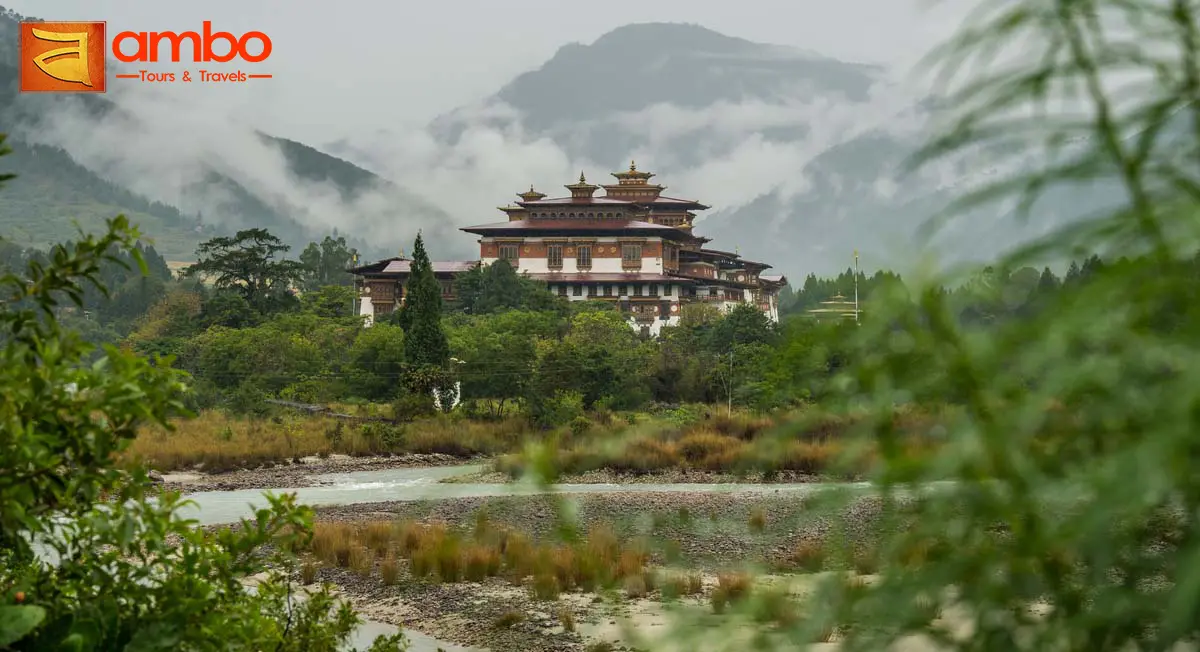
- Visit Rinpung Dzong — the fortress-monastery guarding Paro Valley, accessed via a covered cantilever bridge
- Explore Changangkha Lhakhang — a 15th-century hilltop temple in active daily use for newborn blessings
- Tour the National Museum of Bhutan (Ta Dzong) — seven floors of armour, thangka paintings and natural history
- Watch thangka painters and wood carvers at Zorig Chusum Institute — the national school of 13 traditional arts
- Visit Kichu Lhakhang — one of the oldest temples in Bhutan, built in 659 AD by King Songtsen Gampo
- See Drugyel Dzong ruins with views of Jomolhari (7,314m) on clear days
- Traditional Bhutanese farmhouse visit in Paro valley — butter churning, grain storage, altar room
- Sunset panorama of Thimphu from Sangaygang viewpoint above the capital
- Fully private and inclusive: SDF, visa, licensed guide, transport, accommodation and all meals
Four days is the minimum meaningful time in Bhutan — and this itinerary uses every hour of it well. The route covers the two valleys that hold the highest concentration of culturally and historically significant sites in western Bhutan: Paro and Thimphu. You arrive in Paro, spend the first afternoon in Thimphu's capital culture, return to Paro on Day 2 for the National Museum and Rinpung Dzong, hike to Tiger's Nest Monastery on Day 3, and depart on Day 4.
This is not a whistle-stop tour. The pace is deliberate — enough time at each site to absorb it rather than photograph it and move on. Tiger's Nest alone justifies the journey. But the farmhouse visit in the Paro valley, the thangka painters at Zorig Chusum, and the evening view from Sangaygang above Thimphu are the kind of details that stay with travellers long after the postcard images have faded.
The tour does not include Punakha, Gangtey, or eastern Bhutan — those require a minimum of seven days. If your time is genuinely limited to four days, this is the right itinerary. If you can extend, our 7-Day Western Bhutan Tour adds Punakha Dzong and Phobjikha Valley to the same foundation.
Tour Pricing
4 Days Bhutan Journey — Cost
All prices in USD per personCost includes Sustainable Development Fee (SDF) of US $100 per person per night and Bhutan Visa Fee of US $40 per person. Entrance fees for monuments and festival visits are paid separately.
Detailed Itinerary
Your 4 days Bhutan tour begins at Paro International Airport, whose approach between terraced rice fields and forested ridgelines is widely regarded as one of aviation's most technically demanding. Your guide and driver meet you at arrivals with a traditional Khadar silk scarf before the drive east along the Paro Chu river toward Thimphu. The highway follows the river through a narrow gorge before opening into the capital's broad valley — a 54 km drive that takes roughly one hour under normal conditions.
The afternoon covers Thimphu's most historically and spiritually significant sites:
- Tamchog Monastery (en route) — A 14th-century monastery founded by the iron-bridge builder Thangtong Gyalpo, reached across one of his original iron-chain suspension bridges above the Paro Chu. The crossing takes five minutes and offers an immediate sense of Bhutanese sacred geography.
- Buddha Dordenma Statue — A seated bronze buddha measuring 51.5 metres, completed in 2015 on the ridge above Thimphu's Kuensel Phodrang Nature Park. The interior houses 125,000 smaller buddha statues. Views extend across the full width of the Thimphu valley.
- Changangkha Lhakhang — A hilltop temple established in the 15th century by Lama Phajo Drugom Zhigpo, where Thimphu families bring newborns to receive protective blessings. The site remains in active daily use and carries a quality of genuine devotion rarely found at more-visited temples.
- Takin Preserve — Home to the Takin, Bhutan's national animal, a bovine ungulate found only in the eastern Himalayas. The preserve sits within walking distance of the national library.
The evening moves to Sangaygang, a forested hilltop above the city where a viewpoint gives an unobstructed panorama of Thimphu's urban sprawl at dusk — useful orientation before tomorrow's early departure. The final stop is Tashichho Dzong, the Royal Secretariat and seat of Bhutan's central government, built in its present form in 1962 and illuminated after dark in a way that makes the whitewashed walls glow against the surrounding pine forest. A brief visit to Dupthop Nunnery on the approach road allows you to observe evening prayers.
Practical note: Thimphu sits at 2,334 m. Keep the first afternoon unhurried to begin acclimatising. Photography inside any lhakhang requires permission from the caretaker monk.
Local food: Dinner at your hotel introduces Ema Datshi — fresh green chilies cooked in soft yak cheese, typically served over red rice. It is spicier than it appears and considerably more satisfying than its description suggests.
Tomorrow morning begins in Thimphu's arts district before the road drops back down to Paro for the afternoon.
Morning in Thimphu is best spent in the city's craft and arts quarter before the midday drive back to Paro. The pace is deliberately unhurried — Thimphu rewards walking more than scheduling.
- National Postal Museum — Bhutan has issued commemorative stamps on silk, steel, and embossed plastic since the 1960s, making its philatelic programme genuinely unusual. The museum on Desi Lam holds the complete national archive and is particularly interesting for the run of stamps depicting Bhutanese dzongs.
- Zorig Chusum Painting School (NITS) — The National Institute for Zorig Chusum trains students in all thirteen traditional Bhutanese arts over a six-year residential programme. Visitors are permitted to observe classrooms where students work on thangka painting, wood carving, embroidery, and clay sculpting. The quality of work at intermediate and senior levels is measurably high.
- Craft Bazaar, Clock Tower Square — A covered market selling hand-woven textiles, Rachu scarves, wooden prayer wheels, and hand-painted masks from accredited artisan collectives. Prices are fixed at most stalls and proceeds support the producing community directly.
After lunch the drive west returns to Paro along the same valley highway, arriving early to mid-afternoon. The Paro stops occupy three to four hours:
- Ta Dzong (National Museum of Bhutan) — A circular watchtower built in 1649 as the defensive outpost for Rinpung Dzong below it. Converted to a museum in 1968, its seven floors hold armour, thangka paintings, natural history specimens, and a full history of the Bhutanese postal system. The spiral structure is architecturally distinctive; the collection on Bhutan's 2003 Lhotshampa conflict is handled with unusual candour.
- Rinpung Dzong — First built in 1645 by Zhabdrung Ngawang Namgyal on the foundations of an earlier monastery, Rinpung Dzong is accessed via a covered wooden cantilever bridge across the Paro Chu. The courtyard contains two main temples and residential quarters for both monks and the district administration. Monks in maroon robes conduct morning and evening puja here throughout the year.
- Traditional Bhutanese Farmhouse — A working farmhouse in the Paro valley fields, typically three storeys of rammed earth and timber construction, where the ground floor houses animals in winter and the upper floors are residential and storage. The family demonstrates grain storage, butter churning, and the altar room that forms the spiritual centre of every Bhutanese household.
Practical note: Entry to Rinpung Dzong requires removing shoes and covering knees and shoulders. The wooden bridge can be slippery after rain. The museum charges a separate entrance fee payable on the day.
Local food: Phaksha Paa — thin-sliced pork dry-fried with red chilies and white radish — is the most commonly ordered dish in Paro's roadside restaurants and is worth trying before the heavier carbohydrate loading recommended for tomorrow's hike.
Rest well. Day 3 begins early with the hike that most people, when asked later, describe as the single most significant half-day of their Bhutan journey.
The trail to Paro Taktsang — known internationally as Tiger's Nest Monastery — begins at a car park at 2,600 m elevation on the forested slopes above Paro town. The monastery itself sits at 3,100 m, fixed to a sheer 900-metre granite cliff face above the valley floor. The round trip is 7 km and takes three to four hours at a steady pace with stops. Set off no later than 7:30 AM to reach the monastery before the late-morning haze builds and before the main body of day-tour groups arrives from Thimphu.
- Forest section (0–2.5 km, ascending) — Blue pine and rhododendron forest draped in five-coloured prayer flags. The gradient is consistent but not severe. The path is well-maintained stone and earthen switchbacks. Horses are available for hire from the trailhead to the halfway cafeteria for those who need them.
- Halfway cafeteria viewpoint — A rest stop at approximately 2,900 m with direct sight lines to the monastery complex. The first full view of Taktsang from this point — four temple buildings on a ledge of bare rock with a 300-metre drop below — is the image most commonly associated with Bhutan internationally. Tea, biscuits, and light meals are available.
- Final descent and ascent to the monastery — The trail descends 150 m into a waterfall ravine before climbing back up a stone staircase cut into the cliff to reach the monastery entrance. This section takes 30–40 minutes and requires care on wet stone.
- Paro Taktsang interior — First constructed in 1692 around the Drupkhang cave where Guru Rinpoche (Padmasambhava) is said to have meditated in the 8th century, the complex comprises four main temples connected by internal staircases. The Pelphug cave temple, directly above the original meditation cave, is the most sacred chamber. Remove shoes before entering each temple; photography is not permitted inside.
The afternoon turns to the northern end of the Paro valley, approximately 15 km from town:
- Drugyel Dzong — A 17th-century fortress built in 1647 to commemorate Bhutanese victories over Tibetan-Mongol invasions, now a preserved ruin following a fire in 1951. On clear days — most reliable in October and November — the summit of Jomolhari (7,314 m) is visible directly behind the ruin. The juxtaposition of burned whitewash against snow peak is worth the 15-minute detour.
- Kichu Lhakhang — One of 108 temples attributed to Tibetan Emperor Songtsen Gampo, built in 659 AD to pin down a demoness whose body was said to span the Himalayan plateau. Two separate temple buildings occupy the walled compound; the older of the two dates to the 7th century and contains original clay statues. Elderly pilgrims circumambulate the outer wall on prayer beads throughout the day.
Practical note: Carry a minimum of 1.5 litres of water for the hike. Poles are available for hire at the trailhead. The Tiger's Nest trail is closed to visitors during the annual Tshechu festival period when it is reserved for pilgrims — confirm the schedule with your guide when booking.
Local food: Jasha Maru — a dry minced chicken curry with garlic, ginger, tomato, and green chili served over red rice — is the standard post-hike recovery meal in Paro. Most 3-star hotels include it on the dinner menu without requiring advance notice.
Tomorrow is a short morning before your departure transfer to Paro Airport.
Checkout is typically between 10:00 and 11:00 AM at 3-star hotels in Paro. Most international departures from Paro Airport (IATA: PBH) occur in the morning hours — Druk Air and Bhutan Airlines schedule their regional connections to Kolkata, Delhi, Kathmandu, Dhaka, Bangkok, and Singapore before noon to allow onward connections the same day. Your guide will confirm your transfer time the evening before based on your flight details.
- Airport transfer — The drive from central Paro hotels to the terminal takes 15–20 minutes under normal conditions. The road passes through the lower valley farmland and offers a final view of the Rinpung Dzong on the hillside to the north.
- Check-in timing — Arrive at the terminal a minimum of two hours before departure for international flights, three hours during peak season (March–May and September–November) when multiple flights depart within a short window and security processing is slower.
- Currency — The Bhutanese Ngultrum (BTN) is pegged 1:1 with the Indian Rupee and is not exchangeable outside Bhutan. Use remaining cash at the terminal shops or exchange at the airport desk before clearing security.
- Antiques and religious objects — The export of genuine religious artefacts and antiques is prohibited under Bhutanese law. Handicrafts purchased from certified shops carry a certificate of origin confirming they are reproduction items. Customs officers at Paro inspect departing luggage for undeclared items.
If the departure is in the early afternoon and checkout falls well before flight time, your guide can arrange a final walk through the Paro town market or a tea stop at one of the roadside cafes along the main bazaar street, where the day begins with farmers bringing produce from the surrounding valley.
Practical note: Paro Airport closes to landing and departing traffic in conditions of low visibility, fog, and crosswinds. Delays are uncommon but not rare, particularly in the monsoon months of July and August. Build a conservative connection buffer into any onward itinerary, particularly for same-day intercontinental connections.
Local food: Ngaja — sweet milk tea brewed with sugar and full-fat milk in a style closer to Indian chai than Tibetan butter tea — is available at most airport-road cafes and is the appropriate final beverage before crossing back into the world of GDP-measured progress.
Included / Excluded
- ✔All meals — breakfast, lunch, and dinner
- ✔Accommodation on twin / double sharing basis (single supplement extra)
- ✔All transportation within the kingdom including airport transfers
- ✔Sustainable Development Fee — Government tax (SDF)
- ✔Bhutan visa fee
- ✔English-speaking private local guide
- ✔Sightseeing as per itinerary
- ✔Bottled water throughout the journey
- ✖International flights to and from Paro (PBH)
- ✖Entrance fees for museums and monuments
- ✖Gratuities for guides and drivers
- ✖Travel insurance premiums
- ✖Payments for services provided on a personal basis
- ✖Cost for any services not mentioned under "Cost Includes"
- ✖Cost incurred due to mishaps, strikes, political unrest, etc.
- ✖Personal expenses — laundry, beverages, or personal services
Ambo Tours & the 1% Club
Every tour we run includes a contribution to a Bhutanese NGO of your choice — at no extra cost to you. We call this the 1% Club: a minimum of 1% of your trip's profit, or Nu 5,000, whichever is higher, donated on every single journey. You choose where it goes.
Why 4 Days Works — and When to Extend
Four days is the minimum itinerary that does justice to Bhutan — enough time to hike Tiger's Nest properly, spend a full morning in Thimphu's arts quarter, explore Paro's dzong and museum without rushing, and still have an evening in each valley to absorb the pace of life rather than just the sights.
The itinerary deliberately stays within western Bhutan's two most accessible valleys: Paro and Thimphu. This concentration means less time in a vehicle and more time on the ground — the right trade-off for a short visit. If you have a fifth or sixth day available, our 7-Day Western Bhutan Tour adds Punakha Dzong and Phobjikha Valley to this same foundation, which most travellers who have done both itineraries describe as the natural extension.
Paro Valley — More Than Tiger's Nest
Tiger's Nest is the defining image of Bhutan and the centrepiece of this tour — but the Paro valley has depth beyond its most famous landmark. Rinpung Dzong, built in 1645, is accessed via a covered wooden cantilever bridge above the Paro Chu river and contains two active temples in daily monastic use. The National Museum at Ta Dzong occupies a circular 17th-century watchtower and holds seven floors of artefacts spanning armour, thangka paintings, natural history, and the complete history of Bhutan's postal programme. Kichu Lhakhang, built in 659 AD, is one of 108 temples attributed to Tibetan King Songtsen Gampo — still in daily use, still circumambulated by elderly pilgrims on prayer beads, still carrying the quality of a site that has not been rearranged for visitors.
The farmhouse visit on Day 2 adds a domestic scale that balances the monuments: a working household of rammed earth and timber construction, where the ground floor has housed animals in winter for generations and the altar room on the upper floor is the spiritual centre of daily life. For a full destination overview, see our complete Paro guide.
Practical Notes for a 4-Day Visit
A 4-day itinerary leaves no buffer for flight delays, so build a conservative connection into your onward booking — Paro Airport is subject to weather-related delays, particularly in July and August. International departures typically occur in the morning; confirm your transfer time with your guide the evening before.
Altitude: Thimphu sits at 2,334m and the Tiger's Nest trailhead at 2,600m. Most visitors experience no significant altitude effects on this route — stay hydrated, avoid alcohol on the first evening, and take Day 1 at a gentle pace. The Bhutanese Ngultrum (BTN) is not exchangeable outside Bhutan — spend remaining cash at the Paro Airport terminal shops or exchange at the airport desk before clearing security.
For a full overview of travel costs, visa process, and SDF rates, see our Bhutan travel guide and cost of travelling to Bhutan guide.
Itinerary Map
Map coming soon.
Frequently Asked Questions
Ready to Begin Your Journey?
Our Thimphu team responds within 24 hours. Tell us your dates and we will handle the rest.