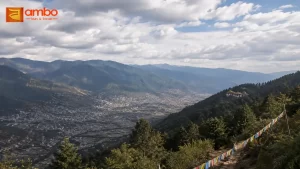
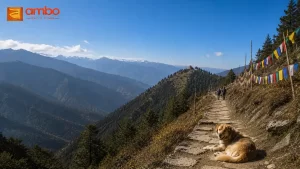
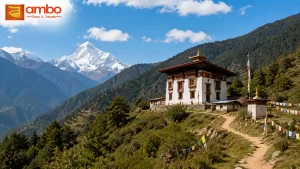
The Gangtey Nature Trail is widely considered the most accessible and rewarding short hike in Bhutan — a flat, roughly two-hour walk through pine forest and open valley floor, starting beside a 17th-century monastery and ending at a village temple. It’s also the best way to experience Phobjikha Valley on foot, home to one of Bhutan’s most celebrated conservation stories: the winter migration of the endangered black-necked crane.
Where the Trail Starts and Ends
The hike begins at a mani wall (a stone structure lined with prayer wheels) just north of Gangtey Monastery, one of the most significant religious sites in western Bhutan and the only Nyingma-school monastery in the region, dating to the 17th century. From there, the trail descends gently through pine forest and stands of Yushania microphylla — a dwarf bamboo species that happens to be the primary food source for the valley’s wintering cranes — before opening onto the wide, flat floor of Phobjikha Valley.
The trail ends at Khewa Lhakhang, a village temple on the valley floor, where a vehicle typically meets hikers for the return to their hotel. The full route covers around 5 kilometres and takes about two hours at an easy, unhurried pace, with very little elevation change — genuinely one of the gentlest hikes on offer anywhere in the country.
Black-Necked Cranes: The Valley’s Signature Residents
Phobjikha Valley is the most important wintering ground in Bhutan for the black-necked crane, an endangered species that migrates here from the Tibetan plateau roughly between late October and February, feeding on the valley’s marshlands and the same dwarf bamboo the trail passes through. Bhutanese culture holds the cranes in particularly high regard — their arrival and departure are said to be marked by the birds circling Gangtey Monastery three times, a gesture read locally as a blessing.
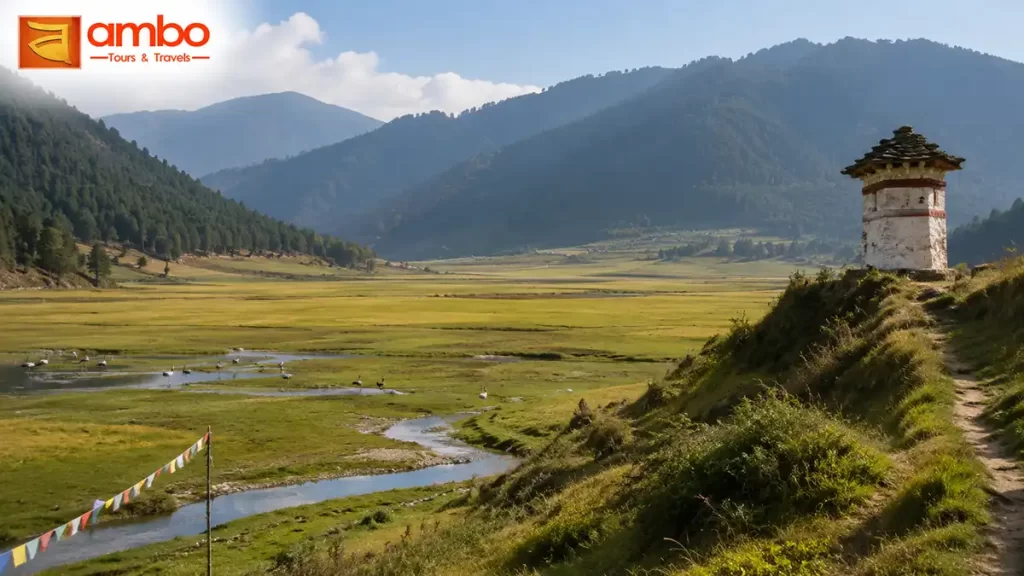
The valley’s Crane Information Centre, run by the Royal Society for Protection of Nature (RSPN), sits close to the trail and is well worth a stop on the way back — mounted binoculars, exhibits on the cranes’ migration and biology, and staff on hand to explain the conservation work protecting the species. Beyond cranes, keen birdwatchers on this trail also regularly spot Himalayan griffon vultures riding thermals above the valley and hear the distinctive calls of red-billed choughs in the pine forest.
The Black-Necked Crane Festival
Every year on November 11th, Gangtey Monastery hosts the Black-Necked Crane Festival, timed to coincide with the birds’ arrival in the valley. The festival blends conservation awareness with genuine local celebration — masked dances, folk songs, and cultural performances, including dances performed by local children dressed as cranes, alongside stalls for local handicrafts. It’s one of the more meaningful, less-touristed festivals in Bhutan’s calendar, and travelers visiting Phobjikha Valley in early-to-mid November can often combine the nature trail with the festival itself.
Best Time to Hike the Gangtey Nature Trail
For crane sightings specifically, late October through February is the window — with peak numbers typically settling in by November and staying through winter. Outside of crane season, the trail remains a beautiful, easy walk through pine forest and open valley regardless, and spring and autumn shoulder months offer clearer skies and greener surroundings if birdwatching isn’t the priority.
Practical Tips
- Wear comfortable walking shoes — the flat, gentle terrain means this hike suits nearly all fitness levels.
- Bring binoculars if you have them, though the Crane Information Centre has mounted binoculars available.
- Arrange for your driver to meet you at Khewa Lhakhang at the trail’s end rather than backtracking the same route.
- Visit the Crane Information Centre on your way back for context on the RSPN’s conservation work.
- A licensed Bhutanese guide is mandatory for all hikes in Bhutan, though this trail is straightforward enough that it’s a good option even for less experienced hikers in your group.
Frequently Asked Questions
How long is the Gangtey Nature Trail?
The trail covers approximately 5 kilometres and takes around two hours to walk at a relaxed pace, with minimal elevation change.
When can you see black-necked cranes on the Gangtey Nature Trail?
The cranes typically arrive in Phobjikha Valley from late October and remain through February, feeding on the valley’s marshlands and dwarf bamboo.
Is the Gangtey Nature Trail difficult?
No — it’s considered one of the easiest hikes in Bhutan, with flat terrain and very little elevation gain or loss, suitable for most fitness levels.
What is the Black-Necked Crane Festival?
An annual festival held on November 11th at Gangtey Monastery, celebrating the cranes’ arrival with masked dances, folk performances, and cultural exhibitions, alongside conservation awareness activities.
Explore more of Bhutan’s hidden trails in our complete guide to Bhutan’s best hiking trails and hidden monastery walks.
Ready to Experience Bhutan?
Tell us your dates and interests — our team in Thimphu will craft a personalised itinerary within 24 hours, at no cost.