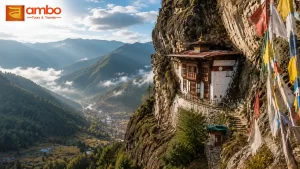
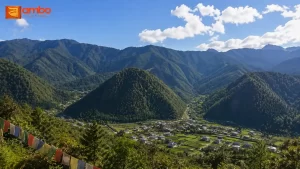
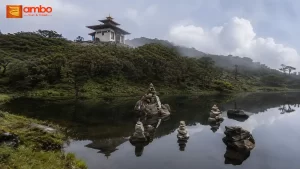
Everyone knows the Tiger’s Nest. Fewer know that a short drive away, a cliffside nunnery founded in the 9th century sees a fraction of the visitors — or that a ridge above Thimphu hides three interconnected hikes most travelers never combine into one trip. This guide is your starting point for the best trails Bhutan has to offer, from short afternoon escapes to genuinely obscure monastery walks.
Short & Half-Day Hikes
Not every great walk in Bhutan requires days of planning. These routes fit into a single afternoon and reward you with monasteries, cliffside nunneries, and valley views most visitors never see.
- Tiger’s Nest (Taktsang) Trail — the icon, and for good reason
- Kila Nunnery Hike — the oldest nunnery in Bhutan, cliffside, near-total absence of tourists
- Domendrel Hike — a mandala-rock legend and a tragic true story above Tango Monastery
- Lungchutse Temple Hike — rhododendron forest above Dochula Pass, rarely crowded
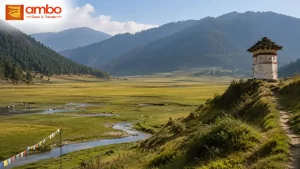
- Gangtey Nature Trail — the gentlest walk in Phobjikha Valley
- Khamsum Yulley Namgyal Chorten Hike — riverside walk to a temple built for world peace
- Chele La Pass Hike — Bhutan’s highest motorable pass, views of Jomolhari
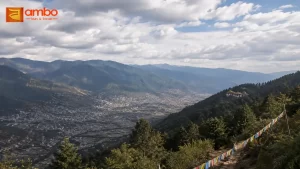
- Sangaygang Viewpoint — the best hilltop panorama over Thimphu, often paired with a visit to Dupthop Nunnery
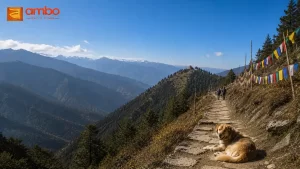
- Phajoding Monastery Hike — a ridge-top monastic complex above Thimphu at 3,600m, condensing days of trekking into a single half-day climb
- Pumola Hike — often combined with Phajoding as a loop from Motithang Takin Preserve, passing a quiet temple looked after by a single caretaker
Full guides to each of these are linked below as they’re published.
Haa Valley’s Hidden Hikes
Haa only opened to tourists in 2002, and it still sees a fraction of the visitors that reach Paro or Punakha. That’s exactly what makes its trails worth seeking out — genuine quiet, and stories most guidebooks skip.
- Meri Puensum (Three Mountains) Hike — a 9-hour sacred circuit locals consider a pilgrimage
- Lhakhang Karpo & Lhakhang Nagpo — the White and Black Temples, home to the Haa Tshechu
- Juneydrak Hermitage — a short, little-known walk from Katsho village
Bumthang’s Valley Walks
Bhutan’s spiritual heartland rewards slow travel on foot — temples, a “burning lake,” and villages linked by trails that have carried pilgrims for centuries.
- Ngang Lhakhang to Ogyen Chholing — an 18km valley walk crossing Phephe La Pass
- Mebar Tsho (“Burning Lake”) — the sacred lake of treasure-revealer Pema Lingpa
The Trans Bhutan Trail
Bhutan’s most significant trail restoration in generations. The Trans Bhutan Trail runs 403km from Haa in the west to Trashigang in the east, crossing 9 dzongkhags, 27 villages, and 12 mountain passes — a route that connected pilgrims, traders, and royal messengers for centuries before falling into disuse in the 1960s.
Highlights include the Divine Madman Trail, the Samtengang Ridge Walk, and the approach into Trongsa across the historic Mangde River cantilever bridge. You don’t need to walk all 403km — most travelers choose a handful of sections that match their interests and timeframe.
Multi-Day Treks
For travelers with more time, Bhutan’s classic multi-day routes range from moderate valley walks to genuine Himalayan expeditions. Explore our dedicated tour pages for these:
Frequently Asked Questions
Q: Do I need a permit to hike in Bhutan?
A: Most day hikes near Thimphu, Paro, and Punakha require no special permit beyond your standard visa and licensed guide. Multi-day treks and routes near restricted border areas may require additional permits, which your operator arranges as part of your trip.
Q: What’s the best season for hiking in Bhutan?
A: Spring (March–May) and autumn (September–November) offer the clearest skies and most comfortable temperatures. Monsoon season (June–August) brings lush greenery but muddier trails.
Q: Are Bhutan’s hiking trails difficult?
A: They range widely. Short hikes like the Gangtey Nature Trail are gentle and suitable for most fitness levels. Ridge hikes like Phajoding require a moderate level of fitness. Multi-day treks require serious preparation and experience.
Q: Can I hike independently in Bhutan, or do I need a guide?
A: All international visitors to Bhutan are required to travel with a licensed guide for the duration of their trip — this includes hikes, not just sightseeing.
Interested in building a trip around one or more of these trails? Get in touch — we’ll help you choose the right combination for your fitness level and interests.
Ready to Experience Bhutan?
Tell us your dates and interests — our team in Thimphu will craft a personalised itinerary within 24 hours, at no cost.