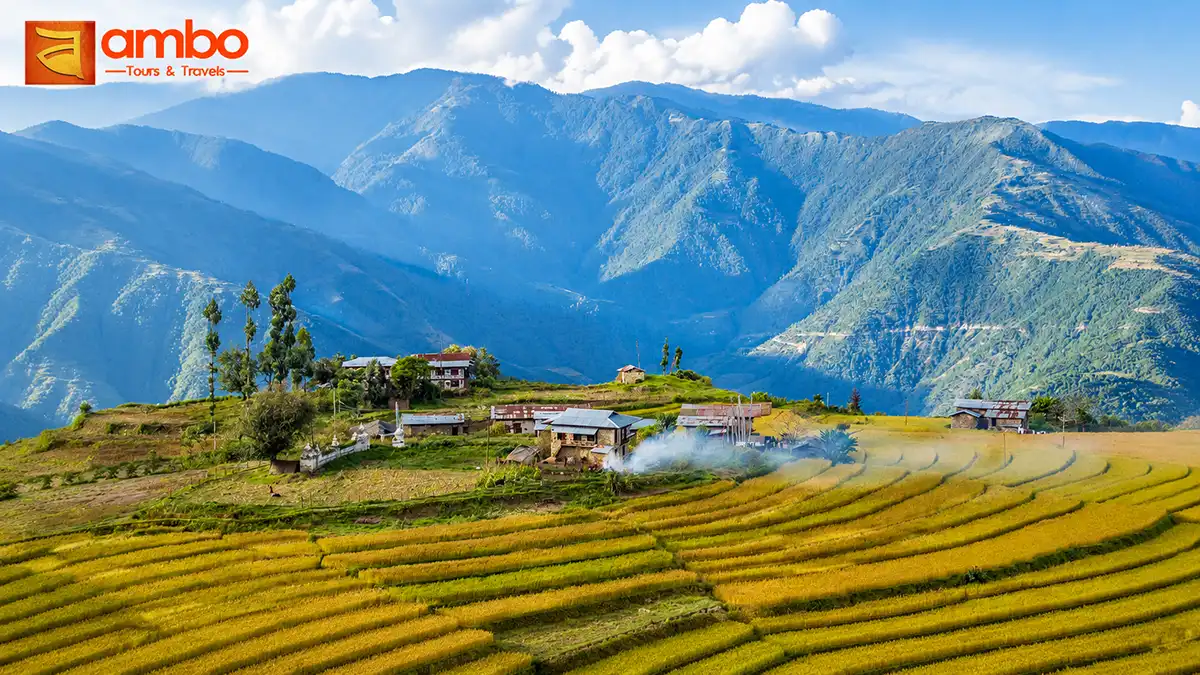
Eastern Bhutan Tour — 18 Days Across the Full Breadth of the Kingdom
Paro · Thimphu · Punakha · Gangtey · Bumthang · Trashigang · Tashi Yangtse
Tour Information
- Trashigang and eastern Bhutan — three full days in the least-visited corner of the kingdom
- Tashi Yangtse — Chorten Kora (modelled on Boudhanath) and traditional woodturning workshops
- Sakteng Wildlife Sanctuary — Brokpa community, Migoi habitat, and the Tsipee hat tradition
- Thrumshingla Pass (3,800m) — highest paved road pass in Bhutan, through Thrumshingla National Park
- Trongsa Dzong — largest dzong in Bhutan, ancestral seat of the Wangchuck royal dynasty
- Bumthang sacred valley — Kurjey Lhakhang, Jambay Lhakhang (7th century), Mebar Tsho
- Bumdra Trek overnight at 3,800m — Tiger's Nest approached from above on the descent
- Domestic flight Bumthang–Paro included (25 minutes over the Himalayan ranges)
- Punakha Dzong, Gangtey Valley and all western highlights covered in the first five days
The Eastern Bhutan Tour is the most complete journey through the kingdom that Ambo Tours offers — 18 days traversing Bhutan from the western valleys all the way to the remote eastern districts of Trashigang and Tashi Yangtse, before returning via domestic flight and the Bumdra Trek to finish with Tiger's Nest approached from above.
Western Bhutan is covered in the first five days — Thimphu, Punakha Dzong via Dochula Pass, and Gangtey Valley. The route then drives east through Trongsa Dzong (the largest dzong in Bhutan and ancestral seat of the royal dynasty), the sacred temples of Bumthang, and over Thrumshingla Pass (3,800m — the highest paved road pass in Bhutan) into the subtropical river gorges of the east. Three full days in Trashigang allow excursions to Tashi Yangtse (Chorten Kora and the woodturning workshops), Sakteng Wildlife Sanctuary and the Brokpa community, and Kanglung with Sherubtse College and Yonphula Airstrip.
The return journey flies from Bumthang to Paro — 25 minutes over the Himalayan ranges — before the Bumdra Trek overnight at 3,800m and the descent to Tiger's Nest from above on the final trekking day. Domestic flight included. Operated by Ambo Tours, DOT Licence No. 1053330, Thimphu.
Tour Pricing
18 Days Bhutan Journey — Cost
All prices in USD per personCost includes Sustainable Development Fee (SDF) of US $100 per person per night and Bhutan Visa Fee of US $40 per person. Entrance fees for monuments and festival visits are paid separately.
Detailed Itinerary
Your Bhutan travel adventure begins the moment your plane descends through dramatic mountain valleys into Paro Airport — one of the world's most technically challenging airports, flanked by steep Himalayan ridges. After clearing immigration, your journey east to the capital Thimphu begins along the Wang Chhu river, a scenic valley drive that sets the tone for everything ahead.
- Tamchog Monastery: A short stop at this private monastery built in the 14th century by the famous Tibetan iron-chain bridge builder Thangtong Gyalpo. The monastery sits on a rocky outcrop above the river and is accessible via a traditional iron chain suspension bridge — a wonderfully atmospheric introduction to Bhutan Buddhist culture.
- National Memorial Chorten: Built in 1974 in memory of the third King Jigme Dorji Wangchuck, this solemn stupa is a living place of worship where elderly Bhutanese circumambulate daily — one of the most moving sights in Bhutan sightseeing.
- Buddha Dordenma: The giant 51.5-metre gilded Buddha statue gazing serenely over the Thimphu valley — one of the largest Buddha statues in the world and a defining landmark of any Bhutan tour package.
The evening is yours to explore Thimphu's charming town centre on foot — browse craft shops, sip butter tea at a local café, and absorb the unhurried energy of a capital city without a single traffic light. Dinner and overnight at your Thimphu hotel.
Practical tip: Thimphu sits at 2,334 m — take it easy on arrival and drink plenty of water. Try Ema Datshi (chilli and cheese stew) for dinner — Bhutan's beloved national dish. Tomorrow brings a full day of Thimphu cultural exploration.
Thimphu rewards slow exploration, and today is devoted entirely to uncovering the layers of art, craft, history, and living tradition that make Bhutan's capital unlike any other city in the world. This is Bhutan cultural tour at its most concentrated — a full day that moves from philatelic curiosities to ancient textile arts to the kingdom's most magnificent fortress-monastery.
- National Postal Museum: Bhutan's famously creative stamps — some shaped like maps, some embossed in silk — are celebrated worldwide among collectors. This small but fascinating museum charts the kingdom's unique philatelic history and its role in Bhutan tourism diplomacy.
- Textile Museum: Home to an exquisite collection of royal and regional textiles, this museum illuminates the extraordinary weaving traditions that define Bhutanese identity. Each pattern carries meaning — understanding them transforms how you see the Bhutan Buddhist culture around you.
- National Institute for Zorig Chusum: Watch young students learning Bhutan's 13 traditional arts — painting, sculpture, weaving, embroidery, wood carving — in a living classroom environment. This is sustainable tourism Bhutan in its most meaningful form: a tradition actively preserved for future generations.
- Simply Bhutan Museum (Lunch): An interactive living museum where you can dress in traditional Gho and Kira, try your hand at archery, and enjoy a traditional Bhutanese lunch — a highlight of any Bhutan holiday.
- Tashichho Dzong: The majestic seat of Bhutan's government and the summer residence of the Je Khenpo (Chief Abbot). Its gleaming whitewashed walls, golden rooftops, and immaculate gardens make it one of the finest Bhutan dzong experiences in the country. Visit in the late afternoon when the light is golden and monks return from prayers.
Tip: Wear modest clothing for all monastery and dzong visits — covered shoulders and knees required. Try Hoentay (buckwheat dumplings) from a local restaurant for a change from Ema Datshi. Tomorrow, the beautiful mountain drive to Punakha begins.
The drive from Thimphu to Punakha is one of the great scenic journeys of any Bhutan itinerary — climbing through dense blue pine forest to the wind-swept heights of Dochula Pass before descending into the warmer, subtropical embrace of the Punakha valley. The transformation in landscape, temperature, and vegetation within a single hour's drive is one of the great geographical surprises of Bhutan travel.
- Dochula Pass (3,140 m): A high mountain pass adorned with 108 Druk Wangyal Chortens — a memorial built by the Queen Mother — set against a backdrop of snow-capped Himalayan peaks on clear April mornings. This is one of the most photographed spots in all of Bhutan sightseeing, and rightfully so. The Druk Wangyal Lhakhang here is also worth a visit for its extraordinary contemporary murals.
- Chimi Lhakhang (Fertility Temple): A 15th-century temple dedicated to the Divine Madman, Drukpa Kunley — a revered and eccentric Buddhist saint celebrated for his unconventional wisdom. Couples from across Bhutan and beyond make pilgrimages here hoping for blessings for conception. The approach across open rice paddies is charming.
Arrive in Punakha — the former capital of Bhutan and one of the warmest, most fertile valleys in the kingdom. The Mo Chhu and Pho Chhu rivers converge here, nourishing rice paddies and banana groves that give the valley a lush, almost tropical character utterly unlike the highlands you have left behind.
Practical tip: Pack a light jacket for Dochula but be ready to shed layers in Punakha — the temperature difference can be 10°C or more. Try Jasha Maru (spicy minced chicken stew) for dinner — a warming Bhutanese favourite. Tomorrow, Punakha Dzong and the valley's finest sights await.
Punakha deserves a full day — and today delivers one of the finest combinations of architectural grandeur, scenic hiking, and riverside adventure in all of Bhutan tourism. The valley's warm climate means April brings it into full bloom: jacaranda trees purple with blossom, rice paddies a vivid green, and the two rivers glittering in brilliant sunshine.
- Punakha Dzong (Palace of Great Happiness): Built in 1637 at the confluence of the Pho Chhu and Mo Chhu rivers, this is widely considered the most beautiful Bhutan dzong in the entire kingdom. Its soaring whitewashed walls, intricately painted interiors, and jacaranda-lined approach path make it an unmissable centrepiece of any Bhutan tour package. The dzong served as Bhutan's capital until 1955 and remains the winter residence of the Je Khenpo.
- Khamsum Yulley Namgyal Chorten (Hike): A 45-minute uphill hike through rice paddy terraces and apple orchards leads to this exquisite four-storey chorten perched high above the Mo Chhu river valley. Built by the Queen Mother, its interior murals represent the finest contemporary Bhutan Buddhist culture art anywhere in the kingdom. The views from the top are among the finest in Punakha.
- Punakha Suspension Bridge (160 m): Bhutan's longest traditional suspension bridge, draped in prayer flags and swaying gently above the turquoise Pho Chhu river. A short walk across rewards you with spectacular river canyon views — one of the most photographed Bhutan landscape moments of the entire trip.
Practical tip: The hike to Khamsum Chorten takes 1.5–2 hours return — wear comfortable shoes and bring water. The trail is moderate and suitable for most fitness levels. For dinner, try Phaksha Paa (pork belly slow-cooked with dried red chillies and radish) — a Punakha valley favourite. Tomorrow, the journey continues to the mystical Phobjikha Valley.
Today's drive from Punakha to the Phobjikha Valley takes you from subtropical warmth back up into the cool, wide glacial bowl that cradles one of Bhutan's most hauntingly beautiful landscapes. Gangtey (also written Gangte) is a Bhutan hidden gem that rewards visitors with extraordinary natural serenity, a remarkable monastery, and the conservation story of one of the world's rarest birds.
- Gangtey Monastery (Gangtey Gonpa): The only Nyingmapa monastery in the Phobjikha valley and one of the most spiritually significant in all of Bhutan Buddhist culture. Perched on a forested hillock above the valley floor, its commanding position offers sweeping views over the entire glacial plain. Founded in the 17th century, the monastery has been beautifully restored and remains an active centre of learning for monks from across the region.
- Black-Necked Crane Information Center: The endangered Black-Necked Crane winters in Phobjikha (October–February), but the center's exhibits, films, and conservation displays are fascinating year-round. The cranes hold deep spiritual significance in Bhutan travel lore — they are believed to circle Gangtey Monastery three times before departing for Tibet each spring, a ritual locals watch with reverence.
Spend the late afternoon walking the Phobjikha Valley floor trail — a gentle 5 km loop through farmland, past traditional farmhouses, and along the meandering Khotokha stream. The wide, open valley, carved by ancient glaciers, has an almost Scandinavian quality of light and space that is deeply restorative after days of mountain driving.
Practical tip: The valley sits at approximately 2,900 m — pack warm layers for evenings and mornings. Dinner at your guesthouse will likely include locally grown potatoes and buckwheat — the staple crops of this high-altitude farming community. Tomorrow, the long but rewarding drive east to Bumthang begins via ancient Trongsa Dzong.
Today is one of the great cross-country drives of any Bhutan itinerary — a journey from the pastoral serenity of Gangtey through the geographic heart of the kingdom to the sacred valleys of Bumthang. The road crosses the Pelela Pass (3,390 m) — the boundary between western and central Bhutan — before descending through spectacular gorges to the ancestral capital of Bhutan's royal dynasty.
- Trongsa Dzong: The most strategically positioned and historically significant of all Bhutanese dzongs, commanding a narrow ridge above a thundering river gorge at the exact geographic centre of Bhutan. Every king of Bhutan has served as Penlop (governor) of Trongsa before ascending the throne — making this Bhutan dzong a direct encounter with living royal history. Its labyrinthine layout of courtyards, temples, and galleries can be explored for hours.
- Ta Dzong (Royal Heritage Museum, Trongsa): A watchtower-turned-museum perched dramatically above the main dzong, housing royal artefacts, ceremonial regalia, and an outstanding photographic record of Bhutan's five-king dynasty. An essential complement to the dzong visit for any serious Bhutan cultural tour.
Continue east through the stunning Chumey Valley — one of central Bhutan's most fertile and traditionally preserved corridors — arriving in Bumthang by early evening. The air here is noticeably crisper and more fragrant than anywhere you have been — pine resin, apple blossom, and incense carried on mountain breezes.
Practical tip: Carry a packed lunch or plan a stop at a Trongsa restaurant — choices are limited on the road. At altitude, eat light and avoid alcohol. Bumthang is famous for its locally brewed Red Panda beer and aged buckwheat spirit — a welcome arrival drink after a long drive. Tomorrow, a full day of sacred Bumthang sightseeing.
Bumthang is the spiritual heartland of Bhutan travel — a cluster of four high valleys filled with ancient temples, apple orchards, and a palpable meditative energy that has drawn Buddhist saints and pilgrims for over a thousand years. Today is one of the most temple-rich days of the entire Bhutan tour package, visiting four sites of profound historical and religious significance.
- Jakar Dzong (Castle of the White Bird): Bumthang's elegant 17th-century dzong overlooking the Chokhor valley — its name derives from a white bird that landed during the initial construction survey, taken as a divine sign. A commanding and atmospheric Bhutan dzong that anchors the entire valley.
- Jambay Lhakhang: One of the 108 temples built simultaneously by the Tibetan King Songtsen Gampo in the 7th century to pin down a supine demoness across the Himalayas. Among the oldest temples in Bhutan, its atmosphere of quiet antiquity is extraordinary — peeling murals, ancient butter lamps, and the smell of centuries of devotion. A cornerstone of any Bhutan Buddhist culture experience.
- Kurjey Lhakhang: Named for the body (kur) imprint (jey) of Guru Rinpoche, who meditated in a cave here in the 8th century, leaving his body impression in the rock. Three temples span a 1,400-year period of Bhutanese religious history — walking through them is like walking through time itself.
- Mebar Tsho (Burning Lake): A sacred river pool where the treasure discoverer Pema Lingpa reportedly emerged from the water in the 15th century carrying sacred texts and a burning butter lamp still alight — the legend that gives this Bhutan hidden gem its evocative name. The surrounding cliffs, prayer flags, and emerald water create a deeply spiritual atmosphere.
Tip: Try Bumthang Swiss cheese and locally made apple cider — the valley's most beloved culinary exports. Tomorrow, the road heads east toward the remote district of Mongar.
The road from Bumthang eastward is the great frontier crossing of any Bhutan itinerary — a full day's drive that crosses the Thrumshingla Pass (3,800 m), the highest paved road pass in the kingdom, and descends through dramatic altitude and vegetation changes into the subtropical gorges of eastern Bhutan. Very few visitors venture this far east, which makes every kilometre feel like genuine discovery.
- Ura Valley: A wide, high-altitude meadow village considered one of the most beautifully preserved traditional settlements in all of Bhutan tourism. Ura's stone-paved lanes, tightly clustered farmhouses, and slow-paced community life have changed little in centuries — a walking tour of the village is a window into medieval Bhutan still very much alive. The surrounding meadows bloom with wildflowers in April.
Beyond Ura, the road crosses Thrumshingla National Park — Bhutan's largest protected area, blanketed in temperate and sub-tropical forests that harbour red pandas, tigers, and hundreds of bird species. April is an excellent month for birdwatching along this corridor, with numerous Himalayan species active during migration season.
Descend steeply into the Kuri Chhu gorge and arrive in Mongar — a neat, cheerful hill town that serves as the administrative and commercial hub of eastern Bhutan. Its compact market and friendly atmosphere make a wonderful first encounter with the distinctly different culture of Bhutan's east.
Practical tip: This is a long driving day — start early, carry snacks and water, and stop frequently to stretch. The Thrumshingla Pass can be cold and misty; a warm jacket within reach is essential. For dinner, try Sip (fermented leafy greens stir-fried with dried meat) — a distinctly eastern Bhutanese flavour. Tomorrow, the road continues to Trashigang.
The drive from Mongar to Trashigang follows the Kuri Chhu and Drangme Chhu river gorges through some of the most dramatic topography in all of Bhutan travel — hairpin bends above plunging valleys, subtropical forest, and occasional village clusters clinging to impossibly steep hillsides. Trashigang, the largest and historically most important district in eastern Bhutan, greets you with the energy of a frontier trading post that has changed remarkably little over centuries.
- Mongar Dzong: Before departing, visit this compact and elegant dzong in the heart of Mongar town — built in the 1930s on an unusual design quite different from the great western fortress-monasteries. Its intimate scale and active monastic community make it a quietly memorable Bhutan dzong experience.
- Trashigang Dzong: Dramatically positioned on a spur above the Drangme Chhu gorge, this 1659 dzong was once the most powerful administrative centre in all of eastern Bhutan. Its strategic setting above plunging river valleys and its well-preserved interior make it one of the finest dzong visits on the entire Bhutan itinerary. The views from the dzong ramparts over the gorge are extraordinary.
Arrive in Trashigang town with time to wander the bustling bazaar — a lively mix of Bhutanese, Nepali, and Indian traders that gives the town a uniquely cosmopolitan flavour for such a remote location. You may spot Brokpa semi-nomads from the Merak-Sakteng region, identifiable by their distinctive yak-hair hats.
Tip: Trashigang has the best range of restaurants in eastern Bhutan — try Kewa Phagsha (potatoes fried with dried pork and chilli) for dinner. Tomorrow, an extraordinary excursion to Tashi Yangtse and the revered Chorten Kora.
Today's excursion from Trashigang heads north along the Kuri Chhu river to Tashi Yangtse — one of the least-visited and most spiritually rewarding destinations in all of Bhutan tourism. The road winds through dense subtropical forest before opening onto a wide, peaceful river valley where Bhutan feels most ancient and most itself.
- Chorten Kora: The most important religious monument in eastern Bhutan — a large stupa modelled after the Boudhanath Stupa of Nepal, built in 1740 by Lama Ngagi Rinchen. The stupa's white dome and golden spire rise above the Kuri Chhu floodplain with extraordinary grace. Every February, thousands of pilgrims gather for the Chorten Kora Tshechu — the largest religious festival in eastern Bhutan. On a quiet April day, the site's atmosphere of peaceful devotion is profoundly moving — a true Bhutan Buddhist culture experience.
Tashi Yangtse itself is renowned across Bhutan for one unique craft: woodturning. Skilled artisans here produce exquisite wooden bowls and cups — called Dapa and Phob — from locally sourced burr wood. If time allows, visit a workshop and watch masters shape raw timber into vessels of extraordinary beauty. These make among the finest and most authentic souvenirs available anywhere in Bhutan sightseeing.
Return to Trashigang in the late afternoon via the same riverside road, this time watching for kingfishers and hornbills along the Kuri Chhu banks — April is one of the best times to visit Bhutan for birdwatching in the subtropical east.
Tip: Bring cash — Tashi Yangtse has limited ATM facilities. Tomorrow, a fascinating cultural excursion into Brokpa country via Radi village and Sakteng.
Today takes you into one of the most culturally distinctive corners of the entire Bhutan trip — the homeland of the Brokpa semi-nomadic community, whose traditions, language, and lifestyle set them apart from the rest of Bhutan. This is authentic Bhutan hidden gem territory, rarely featured in mainstream itineraries and deeply memorable for those who make the journey.
- Radi Village (Handloom Village): Drive via the rural road to Radi — a village famous across Bhutan for its raw silk weaving. In almost every household, women work backstrap looms to produce the distinctive Kishuthara silk cloth in vibrant geometric patterns unique to this region. Watch master weavers at work, learn about the dyeing process using natural plant pigments, and purchase directly from the artisans — this is sustainable tourism Bhutan at its most impactful.
- Radi Gompa: A small but spiritually significant monastery above the village, surrounded by prayer flags and offering peaceful views over the Radi valley — a gentle prelude to the more remote terrain ahead.
- Sakteng Village: The heart of Brokpa country — a high-altitude village where semi-nomadic herders live in traditional stone houses and wear the distinctive Tsipee Hat (a yak-hair hat with five pointed projections, designed to drain away rain and snow). The Sakteng Wildlife Sanctuary surrounding the village is one of the few protected areas in the world established partly to preserve the habitat of a mythical creature — the Bhutanese Migoi, or Yeti.
Practical tip: The walk into Sakteng involves some uphill trekking — wear comfortable shoes. Try roasted barley flour (Tsampa) mixed with butter tea — the Brokpa staple and one of the most energy-sustaining foods in the Himalayas. Return to Trashigang for dinner and overnight. Tomorrow, an excursion to Kanglung and Yonphula.
The final excursion from Trashigang ventures through the rolling upland terrain of Kanglung and up to the forested ridgeline of Yonphula — a day that pairs intellectual curiosity with spiritual discovery, and rounds out one of the most comprehensive explorations of eastern Bhutan available on any Bhutan tour package.
- Sherubtse College, Kanglung: Bhutan's first and oldest degree-granting college, established in 1983 and affiliated with the University of Delhi. Set amid pine forests on the Kanglung plateau at over 2,000 m, the campus is a fascinating institution that speaks directly to the Gross National Happiness philosophy — education, rather than GDP, as the measure of national progress. The college library holds rare Bhutanese manuscripts and a collection documenting the kingdom's academic history. The mountain views from the campus are magnificent.
- Yonphula Gompa: A forest monastery near the dramatically situated Yonphula Airstrip — one of Bhutan's most spectacular runways, carved into a mountain ridge with views stretching toward Arunachal Pradesh in India. The gompa itself is quiet and contemplative, set among towering pine and oak trees. Its remoteness amplifies the meditative quality that defines the finest Bhutan monastery experiences — this is Bhutan Buddhist culture far from the tourist trail.
Practical tip: The road to Yonphula is narrow and winding — your experienced Bhutanese driver will handle it comfortably. Pack a picnic lunch to enjoy at the ridgeline with panoramic Himalayan views. On the return to Trashigang, stop at a local market to pick up Yathra (colourful striped wool weavings) — one of eastern Bhutan's finest craft traditions. Tomorrow begins the long scenic drive back west toward Mongar.
Today is a transitional day on your Bhutan itinerary — a shorter, more relaxed drive back from Trashigang to Mongar that invites genuine appreciation of the eastern Bhutan landscape you have been moving through over the past several days. With the pressure of excursion schedules lifted, this becomes one of the most pleasurable and unhurried drives of the entire trip.
The road between Trashigang and Mongar traces the Drangme Chhu river gorge through subtropical forest, past roadside waterfalls, traditional suspension bridges draped in prayer flags, and occasional troops of langur monkeys in the canopy above. Stop as often as you like at scenic viewpoints — this section of eastern Bhutan is vastly underrepresented in mainstream Bhutan tourism photography and offers genuinely original landscape compositions at every bend.
Scenic stops to seek:
- Panoramic viewpoints above the Kuri Chhu and Drangme Chhu confluence
- Traditional mani walls painted in ochre and white along the roadside
- Roadside chortens with hand-carved prayer stones accumulated over centuries
- Terraced fields of potato and maize tended by farming families in traditional dress
Use the morning in Trashigang to visit any remaining local shops — eastern Bhutanese textiles, including Kishuthara silk and Yathra wool weaves, are priced far lower here than in Thimphu or Paro. This is your last chance to buy from the source.
Tip: Rest well in Mongar tonight — tomorrow brings another long but scenically spectacular drive back to sacred Bumthang via the Thrumshingla Pass.
The return drive from Mongar to Bumthang retraces the magnificent Thrumshingla highway in reverse — and even on second viewing, crossing the highest paved pass on Bhutan's east–west highway demands complete attention. The Bhutan mountain scenery at altitude remains among the most awe-inspiring road journeys in the entire Himalayan region, and the changing light of the return journey reveals details and colours that the outbound morning may have obscured.
Today is primarily a driving day, designed to be experienced at a reflective pace — a packed lunch en route allows you to stop freely and savour the landscape rather than rushing between restaurants.
- Pause at Thrumshingla National Park for a short forest walk — in April the park is alive with birdlife, wildflowers, and the possibility of encountering red pandas in the upper canopy.
- Revisit Ura Valley at leisure — perhaps stopping for tea with a farming family whose door-side prayer flags indicate a warm welcome to passing travellers.
- Watch for herds of yaks near the high pass, monks walking roadside routes between monasteries, and the occasional colourful mani stone wall extending for hundreds of metres along the highway — living expressions of Bhutan Buddhist culture embedded in the landscape itself.
Practical tip: The Thrumshingla Pass can be cold and foggy even in April — keep a warm layer within easy reach in the vehicle. Your driver will know the best roadside stop for hot butter tea and momos along the route. Arrive in Bumthang in the early evening with time for a final stroll through Jakar town before dinner.
Tomorrow, a thrilling short domestic flight carries you back west to Paro for the final chapter of your Bhutan holiday.
There is something almost cinematic about the 25-minute domestic flight from Bumthang to Paro — a bird's-eye panorama over the same mountain ranges, river gorges, and forested ridgelines that took days to traverse overland, compressed into a breathtaking aerial sequence. It is one of the finest short flights anywhere in the Himalayas, and the sight of snow-capped peaks at eye level through the aircraft window is one you will not forget.
Landing back in Paro — where your Bhutan travel journey began — the familiar mountain-valley landscape takes on new meaning after two weeks of cross-country exploration. This afternoon is devoted to one of Paro's finest monuments:
- Rinpung Dzong (Paro Dzong): The great fortress-monastery of Paro, founded in 1644 and housing the administrative offices of the Paro Dzongkhag as well as an active monastic community. Its whitewashed walls and golden rooftops rise dramatically above the Paro Chhu river, connected to the town by a traditional covered wooden cantilever bridge. The interior courtyards and assembly halls are richly painted with murals depicting Bhutan Buddhist culture across centuries — among the finest dzong interiors in the kingdom.
The evening is free — stroll along Paro's charming main street, browse craft shops for last-minute souvenirs, and enjoy the relaxed end-of-journey atmosphere of this small, beautiful town.
Tip: April evenings in Paro can be cool — bring a light jacket for the stroll. Try Phaksha Paa (pork with dried chillies) for a final taste of traditional Bhutanese cuisine before the trek days ahead. Tomorrow, the extraordinary Bumdra Trek begins.
After days of driving, flying, and sightseeing, today your Bhutan trip shifts into its most physical and elemental mode — a mountain trek that will carry you high above the Paro valley into pristine alpine wilderness, and tomorrow deliver you to one of the most iconic sights in all of Bhutan tourism. The Bumdra Trek is the finest short trek in the Paro region, and it forms the perfect climax to this extraordinary itinerary.
- Begin with a drive up the valley to Sang Choekor Buddhist College — a monastic institute set above the Paro valley floor where student monks engage in philosophical debate, memorisation of sacred texts, and ritual arts. A brief visit offers a moving insight into the living transmission of Bhutan Buddhist culture from generation to generation.
- The trek to Bumdra Monastery and campsite (3,800 m) begins from here — a steady ascent of 4–5 hours through forests of blue pine and rhododendron (in bloom in April, the trail edges become vivid with red and pink blossoms), past ancient lhakhangs and fluttering prayer flags, with panoramic views of the Paro valley expanding behind you at every turn.
- Arrive at Bumdra as the afternoon light turns golden — settle into your tented campsite for an overnight wilderness experience under a brilliant Himalayan sky.
Altitude tips: At 3,800 m, Bumdra sits well above Paro. Hydrate well, pace yourself steadily, and avoid alcohol the night before the trek. Warm sleeping gear is essential — temperatures drop sharply after sunset even in April.
Your camp crew will prepare hot Thukpa (noodle soup) and butter tea for dinner — perfect mountain fuel. Tomorrow: Tiger's Nest.
This is the day your entire Bhutan holiday has been building toward. From your campsite at Bumdra, the morning descent trail winds through ancient forest, rounding a rocky ridgeline to reveal the sight that has defined Bhutan travel for generations: Paro Taktsang — Tiger's Nest Monastery — clinging impossibly to a sheer cliff face 900 metres above the Paro valley floor, glowing in the early light like a vision from another world.
- Taktsang Monastery (Tiger's Nest): Built in 1692 around the sacred cave where Guru Rinpoche is said to have meditated for three months in the 8th century, having flown here on the back of a tigress. The approach from above via the Bumdra descent is the most dramatic way to arrive at this Bhutan monastery — most visitors see it from below, but you arrive from the clouds. Explore the four main temples, golden statues, sacred meditation caves, and the thundering waterfall that plunges beside the monastery path. This is Bhutan Buddhist culture at its most transcendent.
- Kyichu Lhakhang: After descending to the Paro valley floor, visit this 7th-century temple — one of the oldest and most sacred in Bhutan, built by the Tibetan King Songtsen Gampo. Its orange trees, tranquil courtyard, and ancient statues create an atmosphere of profound peace — a gentle, reflective conclusion to an extraordinary trek.
Practical tips: Photography is not permitted inside Tiger's Nest temple complex. Remove shoes before entering all shrines. The descent from Bumdra to Tiger's Nest takes 2–3 hours; trekking poles are recommended. Pack a generous lunch.
Return to Paro for a final dinner — celebrate an incredible Bhutan itinerary with Ara (Bhutanese rice wine) and the warmth of an unforgettable journey. Tomorrow, departure.
All extraordinary journeys must eventually end, and as your vehicle winds through the Paro valley toward Bhutan's only international airport, the full weight of what these 18 days have held begins to settle in — the golden chortens, the masked dances, the remote villages, the mountain silences, and the countless moments of warm human connection that define Bhutan travel unlike any destination on earth.
Paro International Airport is one of the world's most technically demanding airports — just a handful of specially certified pilots are permitted to navigate the tight mountain approach and short valley runway. Your final departure is itself a small adventure, and the aerial view of the Paro valley receding below the aircraft wing is a fitting last frame for this extraordinary story.
Before you leave, a moment to reflect on what this Bhutan tour package has encompassed:
- From the capital's cultural institutions to remote eastern villages rarely visited by outsiders
- From the majestic dzongs of Punakha and Trongsa to the sacred caves of Bumthang and Tiger's Nest
- From subtropical river gorges to Himalayan passes above 3,800 m — the full sweep of the Bhutan landscape
- From festival crowds and monastic chants to campfire silence under the stars at Bumdra
Your Bhutan permit and Sustainable Development Fee (SDF) payments have directly funded free healthcare, free education, and environmental conservation across the kingdom — sustainable tourism Bhutan as a genuine force for good. You have not merely visited a country; you have participated in an experiment in happiness.
Travel safely. Return soon. Bhutan will be here — unchanged, unhurried, and waiting.
Arranged by Ambo Tours & Travels · Trip ID: 25N26M3 · +975 16160000 / +975 16162222 · [email protected] · www.ambotours.com
Included / Excluded
- ✔All meals — breakfast, lunch, and dinner
- ✔Accommodation on twin / double sharing basis (single supplement extra)
- ✔All transportation within the kingdom including airport transfers
- ✔Sustainable Development Fee — Government tax (SDF)
- ✔Bhutan visa fee
- ✔English-speaking private local guide
- ✔Sightseeing as per itinerary
- ✔Bottled water throughout the journey
- ✖International flights to and from Paro (PBH)
- ✖Entrance fees for museums and monuments
- ✖Gratuities for guides and drivers
- ✖Travel insurance premiums
- ✖Payments for services provided on a personal basis
- ✖Cost for any services not mentioned under "Cost Includes"
- ✖Cost incurred due to mishaps, strikes, political unrest, etc.
- ✖Personal expenses — laundry, beverages, or personal services
Ambo Tours & the 1% Club
Every tour we run includes a contribution to a Bhutanese NGO of your choice — at no extra cost to you. We call this the 1% Club: a minimum of 1% of your trip's profit, or Nu 5,000, whichever is higher, donated on every single journey. You choose where it goes.
About This Tour
The Eastern Bhutan Tour is the most comprehensive journey through the kingdom — 18 days that cover Bhutan from the western valleys to the remote eastern districts and back, with the Bumdra Trek and Tiger's Nest as the final two days before departure.
The first five days follow the classic western route: Thimphu, Punakha via Dochula Pass, and the Phobjikha Valley at Gangtey. From Day 6 the itinerary turns east — Trongsa Dzong above the Black Mountain gorge, the sacred temples of Bumthang, and then the long mountain drive over Thrumshingla Pass (3,800m) into the subtropical east. Three full days based in Trashigang allow excursions to Tashi Yangtse, the Sakteng Wildlife Sanctuary and Brokpa community, and Kanglung with Sherubtse College and the Yonphula ridge.
The return journey uses the domestic flight from Bumthang to Paro — 25 minutes over the ranges — then two days on the Bumdra Trek ending at Tiger's Nest approached from above. It is the only way to arrive at Taktsang from the top.
For travellers with less time, our 10-day Bhutan itinerary covers the western and central highlights including Bumthang without the eastern extension.
Best Time for This Tour
Spring (March to May) is the most popular season. Rhododendrons bloom through the mountain passes in March and April. The Chorten Kora festival in Tashi Yangtse falls in March — some travellers specifically time the eastern tour around this. The Paro Tshechu is also in spring, which can be timed into the western section on arrival. Driving conditions are good after winter.
Autumn (September to November) offers the clearest mountain visibility for the Thrumshingla Pass crossing and the Bumdra Trek. The black-necked cranes return to Gangtey from late October. The Thimphu Tshechu is in September.
What to avoid: The monsoon (June to August) makes the Thrumshingla Pass crossing difficult — landslides are common on the eastern roads and the Bumdra Trek is not recommended in heavy rain. The eastern districts are more accessible in the dry seasons.
For a complete breakdown, see our best time to visit Bhutan guide.
Travel Tips
The Thrumshingla Pass drive — Days 8 and 14 both cross Thrumshingla Pass (3,800m) and take 7–8 hours each. These are genuinely long driving days through spectacular mountain scenery. Start early, carry snacks and water, and accept that these days are about the journey as much as the destination. The views across Thrumshingla National Park — home to red pandas, tigers, and rare bird species — reward patience.
Eastern Bhutan altitude — Trashigang sits at approximately 1,100m — warmer and more tropical than western Bhutan. Pack layers for the pass crossings but lighter clothing for the eastern valleys. The contrast between the high passes and the subtropical river gorges is one of the most striking features of the eastern route.
Bumdra Trek preparation — Days 16 and 17 include the overnight trek. Pack warm layers for the Bumdra camp at 3,800m even if the rest of the tour has been warm. Trekking poles are recommended for the descent to Tiger's Nest. See our Bumdra Trek page for full preparation details.
Sakteng community etiquette — the Brokpa community in Sakteng maintains a distinct culture and dress. Photography of individuals requires explicit consent through your guide. The community welcomes respectful visitors and the cultural exchange is genuine — this is not a staged experience.
For a full packing reference, see our complete Bhutan packing guide.
Itinerary Map
The map below shows the 18-day Eastern Bhutan Tour route from Paro through Thimphu, Punakha, Gangtey, Bumthang, Trashigang, Tashi Yangtse, and back to Paro via domestic flight and the Bumdra Trek.
Map coming soon.
Frequently Asked Questions
Eastern Bhutan — the Trashigang and Tashi Yangtse districts — is the part of the kingdom that most visitors never reach. It is less developed, more isolated, and culturally distinct from the western valleys. The Brokpa semi-nomadic communities of the Sakteng area wear distinctive star-shaped yak-hair hats and maintain a way of life largely unchanged by outside influence. Chorten Kora in Tashi Yangtse is an 18th-century stupa modelled on the Boudhanath in Kathmandu — virtually unknown outside Bhutan. The woodturning workshops of Tashi Yangtse produce the wooden bowls and cups used across the kingdom. Getting here requires commitment — the drive over Thrumshingla Pass (3,800m) takes 7–8 hours — which is exactly why it remains one of the most genuinely remote cultural experiences in the Himalayan world.
Bhutan is larger than it looks on a map. The drive from Paro to Trashigang in the east covers over 600km of mountain road, crossing passes above 3,800m and descending into subtropical river gorges. The 18-day itinerary is the minimum to cover the western highlights, reach the eastern districts with enough time for meaningful exploration (three full days in Trashigang), return via Bumthang, and finish with the Bumdra Trek and Tiger's Nest in Paro. Compressing the itinerary further would mean spending more time in vehicles than at destinations. For travellers with less time, our 10-day Bhutan itinerary covers the western and central highlights including Bumthang.
The Bumdra Trek is a two-day high-altitude trail above Paro valley. Day 16 ascends through blue pine and rhododendron forest from Sang Choekor Buddhist College to an overnight camp at Bumdra Monastery (3,800m). Day 17 descends via the rocky ridgeline to Taktsang Monastery — Tiger's Nest — approached from above rather than from the valley below. This is the only route that reaches Tiger's Nest from the top, and the perspective is entirely different from the standard approach. The eastern Bhutan tour is one of the few itineraries that ends with this experience. For the full Bumdra Trek details, see our Bumdra Trek page.
Yes. The domestic flight from Bumthang (Bathpalathang Airport) to Paro on Day 15 is included in all pricing tiers. The outward journey from Paro to eastern Bhutan is by road — the full mountain driving experience crossing Thrumshingla Pass. The domestic flight on the return saves two days of driving and gives you 25 minutes of aerial views over the central Himalayan ranges. The approach to Bathpalathang Airport — a grass strip in a high valley — is itself a memorable experience.
Spring (March to May) and autumn (September to November) are both excellent. Spring brings rhododendrons through the mountain passes and the clearest driving conditions after winter. Autumn offers the best visibility from Thrumshingla Pass and the Chorten Kora festival in Tashi Yangtse (March), which some travellers time their trip around. The eastern districts are drier than western Bhutan in most seasons. For a full breakdown, see our best time to visit Bhutan guide.
Chorten Kora is an 18th-century whitewashed stupa in the Tashi Yangtse valley, modelled on the great Boudhanath Stupa in Kathmandu. It was built in 1740 by Zhabdrung Ngawang Lhundrup after he returned from Nepal with a clay model of Boudhanath. The surrounding valley is filled with prayer flags and small shrines. Twice a year — in spring, during the Chorten Kora festivals — pilgrims from across eastern Bhutan and the adjacent areas of Arunachal Pradesh gather to circumambulate the stupa. Outside festival season, it is one of the most peaceful sacred sites in the kingdom.
Ready to Begin Your Journey?
Our Thimphu team responds within 24 hours. Tell us your dates and we will handle the rest.