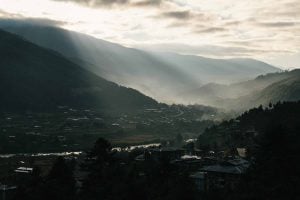
Bhutan is a small country with an outsized geography. In a journey of seven or eight days, you can move from a subtropical river valley to an alpine pass at 3,700 metres, from a 17th-century fortress monastery to a glacial wildlife sanctuary. The landscape changes constantly; so does the culture.
This guide covers every major destination — what each place offers, what makes it distinctive, and how it fits into a broader Bhutan itinerary. It is written by our team in Thimphu, and reflects how travellers actually experience these places on the ground.
How Bhutan Divides Geographically
Bhutan is most usefully understood as three regions: western, central, and eastern. Each requires different amounts of time and travel, and each rewards a different kind of traveller.
Western Bhutan — the most visited region, covering Paro, Thimphu, Punakha, and the Phobjikha Valley. Most itineraries of seven days or fewer focus here. Accessible, richly concentrated, and extraordinary.
Central Bhutan — anchored by the Bumthang valley complex. A longer journey from the west, but the spiritual and cultural heartland of the country. Requires a minimum of ten to twelve days to reach comfortably and explore properly.
Eastern Bhutan — the least visited and most remote region. Home to distinct textile traditions, unique festivals, and landscapes that feel entirely untouched. A full east–west crossing is among the most complete journeys possible in Bhutan and requires eighteen days or more.
Western Bhutan
Paro
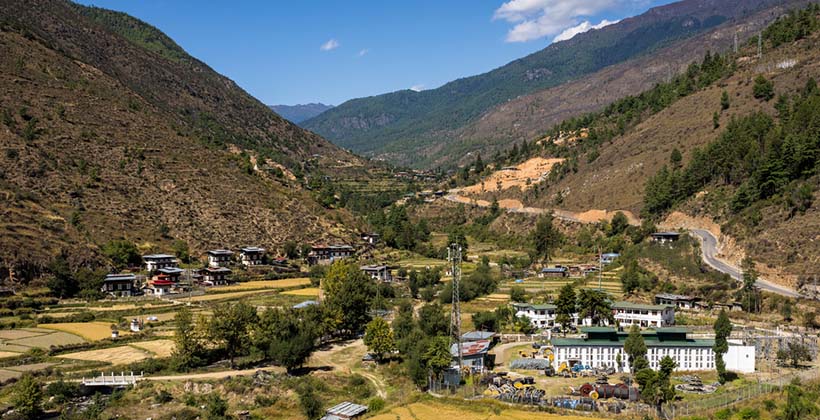
Paro is where every international journey to Bhutan begins — Paro International Airport is the country’s only gateway. Most travellers, understandably, spend their first hours here adjusting to the altitude and atmosphere before moving on. Many do not spend enough time.
Paro Valley is worth at least two full days. The town itself is compact and attractive, with traditional painted wooden shopfronts lining the main street. The Rinpung Dzong — a 17th-century fortress monastery above the Paro Chhu river — is one of the finest examples of Bhutanese dzong architecture in the country.
Above the valley, on a sheer cliff face at 3,120 metres, is Paro Taktsang. Tiger’s Nest, as it is universally known, is the defining image of Bhutan — a monastery complex built into a vertical rock face in the 10th century, accessible only via a trail that climbs 900 metres from the valley floor. It is one of the most extraordinary buildings in Asia. The hike takes three to four hours return and is within the ability of any reasonably fit traveller.
Other highlights in Paro include the National Museum (housed in a 17th-century watchtower), the Drukgyel Dzong ruins, and a handful of ancient temples scattered across the surrounding farmland.
Thimphu

Thimphu is the capital of Bhutan and the only capital city in the world without a traffic light. It is compact, walkable, and genuinely interesting — neither a sprawling metropolis nor a sterile administrative centre, but something in between: a city that is modernising slowly and on its own terms.
The Memorial Chorten — a large white stupa built in 1974 — is the spiritual centre of the city and surrounded throughout the day by residents walking clockwise in prayer. The National Folk Heritage Museum offers one of the best introductions to traditional Bhutanese domestic life. The weekend market at the north end of town is the most authentic market experience available to visitors in western Bhutan.
Thimphu is also the best place to experience contemporary Bhutanese culture — restaurants, craft shops, local bars, and the Changlimithang Archery Ground, where Bhutan’s national sport is practised with the same seriousness as anywhere else in the world.
Most itineraries allow one to two days in Thimphu, which is sufficient for the highlights. Those interested in going deeper — traditional medicine, art schools, weaving centres — will find more to occupy a third day.
Full Thimphu destination guide →
Punakha

An hour east of Thimphu over the Dochula Pass (3,100 metres), the Punakha valley is warmer, greener, and distinctly different in character from the capital. The pass itself, on a clear day, offers one of the most dramatic panoramas in Bhutan — a long ridge of Himalayan peaks stretching across the northern horizon, flanked by 108 memorial chortens.
Punakha Dzong stands at the confluence of the Pho Chhu and Mo Chhu rivers — the “father” and “mother” rivers — and is widely regarded as the most architecturally beautiful building in Bhutan. It served as the country’s capital and seat of government until 1955 and remains the winter residence of the Je Khenpo, Bhutan’s chief abbot. Walking through its courtyards and white-walled corridors, with the rivers visible through the windows below, is one of the defining experiences of any Bhutan journey.
A short hike across a suspension bridge and up through rice terraces leads to Khamsum Yulley Namgyal Chorten, a four-storey temple with sweeping views over the entire valley. The Chimi Lhakhang — the fertility temple — sits on a small hill between the two rivers and attracts couples hoping for children from across Bhutan and beyond.
Full Punakha destination guide →
Phobjikha Valley
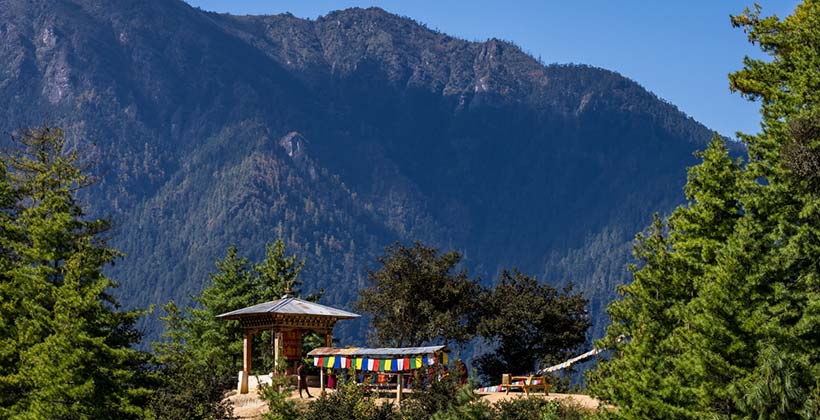
Phobjikha is a glacial valley at 2,900 metres, wide and flat and treeless in a way that is unlike anywhere else in Bhutan. The Gangtey Monastery sits above the western edge of the valley, one of the most important Nyingma monasteries in the country. Below it, the Black-Necked Crane Information Centre marks the arrival point each autumn of several hundred black-necked cranes, migrating south from the Tibetan Plateau.
The cranes arrive in late October and depart in late February. Watching them fly in formation over the valley at dawn or dusk is one of the most memorable wildlife experiences in the Himalayas.
Outside crane season, Phobjikha is worth visiting for the landscape alone — the silence, the scale, and the slow pace of valley life. A half-day loop trail around the wetland is easy and rewarding.
Central Bhutan
Bumthang
Bumthang is not a single valley but a cluster of four — Chhumey, Chhokhor, Tang, and Ura — each with its own character and its own collection of ancient temples and monasteries. It is the most sacred region in Bhutan, the site of the earliest Buddhist temples in the kingdom, and the spiritual heartland of the country.
The Jakar Dzong overlooks the Chhokhor valley from a ridge. The Kurje Lhakhang complex — three temples built against a cliff face — contains the body print of Guru Rinpoche, who brought Buddhism to Bhutan in the 8th century. The Jambay Lhakhang is one of the oldest temples in Bhutan, said to have been built in 659 AD.
Beyond the temples, Bumthang is known for its apple orchards, its buckwheat fields, its farmhouse cheese, and the Bumthang Brewery — producing Red Panda beer, one of Bhutan’s few locally brewed beers. The pace of life here is conspicuously slow, even by Bhutan’s standards, and most visitors who spend time in Bumthang find it the most quietly affecting part of their journey.
Getting to Bumthang from western Bhutan requires a full day’s driving or a short domestic flight. Most itineraries that include Bumthang are ten days or longer.
Full Bumthang destination guide →
Eastern Bhutan
Eastern Bhutan — The Road Less Travelled
East of Bumthang, Bhutan continues for another several hundred kilometres, becoming progressively more remote, less visited, and more distinct. The landscapes change — subtropical forests rise to alpine meadows and back down again. The people speak different dialects. The weaving traditions are unique to individual valleys. The festivals are less known but no less extraordinary.
Key destinations in the east include Mongar, Lhuentse, Trashigang, and the Merak and Sakteng valleys — home to the semi-nomadic Brokpa people, who maintain a way of life largely unchanged for centuries.
Eastern Bhutan is not for travellers in a hurry. Roads are longer, infrastructure is sparser, and the journey itself is as much the point as any individual destination. Those who make it consistently describe it as the most profoundly different part of their Bhutan experience.
A full east–west crossing — arriving in Paro, travelling through central and eastern Bhutan, and flying out of Yongphulla Airport in the east — takes eighteen days or more and is the most complete journey available in the country.
Enquire about Eastern Bhutan →
How to Decide Where to Go
The right destinations for your trip depend on two things: how much time you have, and what you are most interested in experiencing.
5–6 nights: Focus on western Bhutan — Paro, Thimphu, Punakha. A tight but deeply rewarding itinerary covering the most iconic sites.
7–8 nights: Western Bhutan plus Phobjikha Valley or a short introductory trek. The ideal first-visit structure for most travelers.
10–12 nights: Add Bumthang. A significantly more complete experience that includes the cultural and spiritual heartland of the country.
15–18+ nights: Include eastern Bhutan or a major trekking route. For experienced travelers or those returning for a second journey.
Our team designs itineraries around your specific dates and interests. There is no standard structure — every journey is built from the beginning.
Frequently Asked Questions
How many places can I realistically visit in one trip?
For a 7-night trip, three to four destinations in western Bhutan is a comfortable and well-paced itinerary. Trying to cover more leads to long driving days that undermine the experience. Bhutan rewards a slower pace.
Do I need a guide to visit all destinations?
Yes. All international visitors must travel with a licensed Bhutanese guide throughout their trip. Your guide accompanies you to every destination and handles all local logistics — entry permits, site access, translations, and local knowledge.
Can I visit the same place twice?
Absolutely. Some travelers return to Bhutan specifically to explore a different region — eastern Bhutan in particular attracts experienced travelers who covered the west on a first trip. We design second and third visits as thoughtfully as first ones.
Is it possible to trek between destinations?
Yes, though trekking routes require separate permits and additional planning. The Druk Path Trek, for example, connects Paro and Thimphu through high-altitude terrain. We incorporate trekking into itineraries of eight days or more for travelers who want it.
Written by the Ambo Tours team, Thimphu, Bhutan. DOT License No. 1053330.
Ready to Experience Bhutan?
Tell us your dates and interests — our team in Thimphu will craft a personalised itinerary within 24 hours, at no cost.