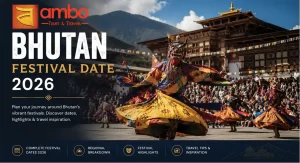
Bhutan’s festival calendar is the heartbeat of the kingdom’s cultural year. Every tshechu — literally “the tenth day” in Dzongkha — marks the anniversary of an auspicious deed performed by Guru Rinpoche, the tantric master who brought Buddhism to Bhutan in the 8th century. For travellers, these are the moments when Bhutan is most vividly, most completely itself: monks in silk brocade robes performing sacred mask dances, villagers in their finest kira and gho, and centuries of tradition held together with striking force.
Below is the complete tentative festival calendar for 2027, sourced from the Association of Bhutanese Tour Operators (ABTO) and the Department of Tourism, last updated February 14, 2025. Dates are subject to change — we update this page when confirmed revisions are published. To plan a festival tour around any of the dates below, get in touch with our team — we’ll build your itinerary around the festival and handle everything from flights to dzong-side accommodation.
All dates are tentative. Final confirmation typically comes 3–6 months prior to each festival.
February 2027
February is one of the most rewarding months to visit Bhutan — the crowds of the spring peak haven’t arrived yet, the mountain air is crisp and clear, and the kingdom’s most spectacular winter festivals fall in rapid succession across the Punakha and Bumthang valleys.
| Festival | Location | Date | Tour |
|---|---|---|---|
| Lhamoi Dromchhen | Trongsa Dzong, Trongsa | 11–13 February | — |
| Punakha Dromchoe | Punakha Dzong, Punakha | 13–15 February | View Festival Tours |
| Punakha Tshechu | Punakha Dzong, Punakha | 16–18 February | View Festival Tours |
| Tharpaling Thongdrol | Tharpaling Lhakhang, Chumi, Bumthang | 20 February | — |
| Tangsibi Mani | Tangsibi Lhakhang, Ura, Bumthang | 22–24 February | — |
| Chhorten Kora (first) | Chorten Kora, Trashiyangtshe | 20 February | Chorten Kora Tour → |
Punakha Dromchoe & Tshechu — February 13–18
The Punakha Dromchoe and Punakha Tshechu run back-to-back across six days at Punakha Dzong — arguably the most photogenic dzong in Bhutan, sitting at the confluence of the Pho Chhu and Mo Chhu rivers. The Dromchoe re-enacts Bhutan’s 17th-century victory over Tibetan invaders; the Tshechu follows immediately with three days of sacred mask dances. Planning a trip around both gives you one of Bhutan’s most complete festival experiences. The valley is warm in February, rhododendrons are beginning to bloom, and the dzong is reflected in still water. This is a bucket-list combination.
Chorten Kora — February 20 & March 8
One of eastern Bhutan’s most important pilgrimage festivals, Chorten Kora draws thousands of devotees who circumambulate the large stupa at Trashiyangtshe. The festival happens twice — first for people from Bhutan’s eastern districts, then again two weeks later for Arunachali pilgrims from across the border in India. See our Chorten Kora Festival Tour.
March 2027
March brings Paro Tshechu — the most famous festival in Bhutan and the one that draws the highest number of international visitors. Book early; accommodation in Paro fills up many months in advance.
| Festival | Location | Date | Tour |
|---|---|---|---|
| Chhorten Kora (second) | Chorten Kora, Trashiyangtshe | 8 March | Chorten Kora Tour → |
| Gomphukora | Gom Kora Lhakhang, Trashiyangtshe | 16–18 March | — |
| Talo Tshechu | Talo Gonpa, Punakha | 16–18 March | — |
| Gasa Tshechu | Gasa Dzong, Gasa | 16–18 March | — |
| Zhemgang Tshechu | Zhemgang Dzong, Zhemgang | 16–18 March | — |
| Paro Tshechu | Rinpung Dzong, Paro | 18–22 March (Thongdral on last day) | View Festival Tours |
Paro Tshechu — March 18–22
Paro Tshechu is Bhutan’s most famous festival — five days of sacred mask dances at Rinpung Dzong, culminating in the unfurling of the Thongdral, a massive sacred silk appliqué thangka, at dawn on the final day. Seeing it is believed to grant liberation from the cycle of rebirth. For international travellers, this is often the first festival they hear about — and for good reason. The combination of Rinpung Dzong as a backdrop, the monastery above it, and the sheer scale of the Thongdral ceremony at sunrise makes it one of the most memorable experiences in Asia. Book months in advance — it’s Bhutan’s busiest festival period.
April 2027
Spring in Bhutan is rhododendron season — valleys are blanketed in pink, red, and white. April combines flower watching with two of Bumthang’s most important festivals.
| Festival | Location | Date | Tour |
|---|---|---|---|
| Rhododendron Week | Shetemey, Merak, Trashigang | 3–9 April | — |
| Domkhar Tshechu | Domkhar, Chumi, Bumthang | 16–18 April | — |
| Ura Yakchoe | Ura Lhakhang, Bumthang | 18–22 April | — |
| Rhododendron Festival | Lamperi Botanical Park, Thimphu | 22–23 April | — |
Ura Yakchoe — April 18–22
The Ura Yakchoe is one of Bumthang’s most distinctive festivals — a five-day celebration centred on a sacred relic at Ura Lhakhang. Unlike the larger dzong tshecheus, this is an intimate village festival where you are genuinely welcomed as a witness rather than a tourist. The village of Ura itself, high on a ridge in the Bumthang valley at around 3,100m, is one of Bhutan’s most beautifully preserved traditional settlements. Worth combining with a Bumthang cultural tour.
June 2027
| Festival | Location | Date | Tour |
|---|---|---|---|
| Nimalung Tshechu | Nimalung Dratshang, Chumi, Bumthang | 12–14 June | Nimalung Tshechu Tour → |
| Kurjey Tshechu | Kurjey Lhakhang, Choekhor, Bumthang | 14 June | — |
Nimalung Tshechu & Kurjey Tshechu — June 12–14
June is monsoon season in most of Asia, but Bhutan’s interior valleys — particularly Bumthang — are often spared the worst of the rains. The Nimalung Tshechu at Nimalung Dratshang and the Kurjey Tshechu at Kurjey Lhakhang fall within days of each other, making early June an excellent time for a quieter Bumthang trip. Fewer international visitors, greener landscapes, and two significant festivals within easy reach of each other. See our Nimalung Tshechu tour.
October 2027
October is Bhutan’s second peak season — the monsoon has cleared, the skies are crystalline, Himalayan views are at their sharpest, and the festival calendar packs in some of its most significant events in rapid succession. Thimphu Tshechu and Wangdue Tshechu fall within weeks of each other, making October Bhutan’s most festival-dense month.
| Festival | Location | Date | Tour |
|---|---|---|---|
| Thimphu Drubchen | Tashi Chhodzong, Thimphu | 5 October | — |
| Wangdue Tshechu | Wangduephodrang | 8–10 October | Wangdue Tshechu Tour → |
| Tamshing Phala Chhoepa | Tamshing Lhakhang, Bumthang | 10–12 October | Tamshing Tshechu Tour → |
| Thimphu Tshechu | Tashi Chhodzong, Thimphu | 10–12 October | — |
| Gangtey Tshechu | Gangtey Gonpa, Wangduephodrang | 13–15 October (Thongdral on last day) | Gangtey Tshechu Tour → |
| Jhomolhari Mountain Festival | Dangochong, Thimphu | 14–15 October | — |
| Thangbi Mewang | Thangbi Lhakhang, Choekor, Bumthang | 15–16 October | — |
Thimphu Tshechu — October 10–12
Thimphu Tshechu is the capital’s biggest festival — three days of sacred mask dances at Tashi Chhodzong, the seat of Bhutan’s government and the royal family’s official residence. The scale and energy of Thimphu Tshechu is unmatched; it draws tens of thousands of Bhutanese from across the country and is one of the few festivals where you can feel the full sweep of Bhutanese society gathered in one place.
Gangtey Tshechu — October 13–15
Set in the Phobjikha valley against the backdrop of Gangtey Gonpa, one of Bhutan’s most important Nyingma monasteries, the Gangtey Tshechu is an increasingly popular festival among international visitors — partly because of the setting, partly because late October in Phobjikha is when the first black-necked cranes begin arriving from the Tibetan plateau. Combining Gangtey Tshechu with black-necked crane spotting makes for one of Bhutan’s most complete autumn itineraries. See our Gangtey Tshechu Tour.
November 2027
November is one of Bhutan’s best-kept secrets as a travel month — the festival season continues, the black-necked cranes are settling into Phobjikha, and the crowds that characterised October have largely thinned.
| Festival | Location | Date | Tour |
|---|---|---|---|
| Pemagatshel Tshechu | Pemagatshel Dzong | 6–9 November (Thongdral on last day) | — |
| Haa Tshechu | Lhakhang Karpo, Haa | 6–8 November | Haa Festival Tour → |
| Chhukha Tshechu | Chhukha Dzong, Chhukha | 6–8 November | — |
| Dechenphu Tshechu | Dechenphu Lhakhang, Thimphu | 8 November | — |
| Jakar Tshechu | Jakar Dzong, Choekhor, Bumthang | 6–9 November | Jakar Tshechu Tour → |
| Black Necked Crane Festival | Gangtey Gonpa, Phobjikha | 11 November | — |
| Jambay Lhakhang Drup | Jambay Lhakhang, Choekhor, Bumthang | 14–17 November | — |
| Prakhar Duchhoed | Prakar Khakhang, Chumni, Bumthang | 15–17 November | — |
Jakar Tshechu — November 6–9
Jakar Tshechu at Jakar Dzong in Bumthang’s Choekhor valley is one of Bhutan’s most atmospheric mid-sized festivals — intimate enough that you can watch the sacred dances from close range, but significant enough to draw devotees from across the Bumthang valleys. The surrounding landscape in early November is golden and still, making this one of the most beautiful times to be in central Bhutan. See our Jakar Tshechu Festival Tour.
Jambay Lhakhang Drup — November 14–17
One of Bhutan’s most ancient and sacred festivals — held at Jambay Lhakhang, a 7th-century temple believed to have been built in a single day by the Tibetan king Songtsen Gampo. The festival includes the extraordinary Mewang (fire blessing) ceremony and the Tercham (naked dance) performed by monks at night — a sight almost impossible to find anywhere else on earth. Combining this with the Jakar Tshechu in the same week gives you one of the most complete festival experiences in Bhutan.
December 2027 & January 2028
Winter festivals are Bhutan’s most local and most intimate — fewer international visitors, sharper mountain air, and a festival atmosphere that feels less curated and more genuinely alive. The year closes with a cluster of dzong tshecheus across the east and centre.
| Festival | Location | Date | Tour |
|---|---|---|---|
| Goenpai Drupchen | Trongsa Dzong, Trongsa | 3–5 December | — |
| Mongar Tshechu | Mongar Dzong, Mongar | 6–8 December | — |
| Trashigang Tshechu | Trashigang Dzong, Trashigang | 7–9 December | — |
| Trongsa Tshechu | Trongsa Dzong, Trongsa | 5–9 January 2028 (Thongdral on last day) | — |
| Lhuentse Tshechu | Lhuentse Dzong, Lhuentse | 5–9 January 2028 (Thongdral on last day) | — |
| Samdrupjongkhar Tshechu | Samdrupjongkhar | 10–12 January 2028 | — |
Planning Your 2027 Festival Trip
When to Book
For Paro Tshechu (March) and Thimphu Tshechu (October) — Bhutan’s two most visited festivals — we recommend booking at least 4–6 months in advance. Accommodation in Paro and Thimphu fills quickly around these dates. For the mid-sized festivals (Gangtey, Jakar, Tamshing, Nimalung), 2–3 months is usually sufficient, though earlier is always better.
Best Festival Combinations for 2027
- February sweep: Punakha Dromchoe (13–15 Feb) + Punakha Tshechu (16–18 Feb) — six days across one of Bhutan’s most beautiful dzongs
- October triple: Wangdue Tshechu (8–10 Oct) + Tamshing Phala Chhoepa (10–12 Oct) + Gangtey Tshechu (13–15 Oct) — a spectacular 8-day western Bhutan loop
- November week: Jakar Tshechu (6–9 Nov) + Jambay Lhakhang Drup (14–17 Nov) — the most complete Bumthang festival experience of the year
What to Expect at a Tshechu
A tshechu is a religious event before it is a cultural spectacle. Dress modestly (covered shoulders and knees), arrive early for a good vantage point, and move slowly around the courtyards — these are sacred spaces. Photography is generally permitted from the edges of the courtyard but not during specific ritual moments; your Ambo Tours guide will advise you in real time.
Entrance to most tshecheus is free. Some larger festivals (particularly Paro) have designated areas for international visitors.
Visa, SDF & What’s Included
All international visitors to Bhutan (except Indian, Bangladeshi, and Maldivian nationals) require a visa (USD 40 per person) and pay the Sustainable Development Fee (USD 100 per person per night). All Ambo Tours packages include both — there are no hidden costs. Contact us for a free festival itinerary and we’ll walk you through everything.
All dates are tentative per ABTO / Department of Tourism bulletin updated February 14, 2025. Final confirmed dates will be published here as they are announced. Last page update: July 2026.
Looking for the current year? See the Bhutan Festival Calendar 2026.
Ready to Experience Bhutan?
Tell us your dates and interests — our team in Thimphu will craft a personalised itinerary within 24 hours, at no cost.