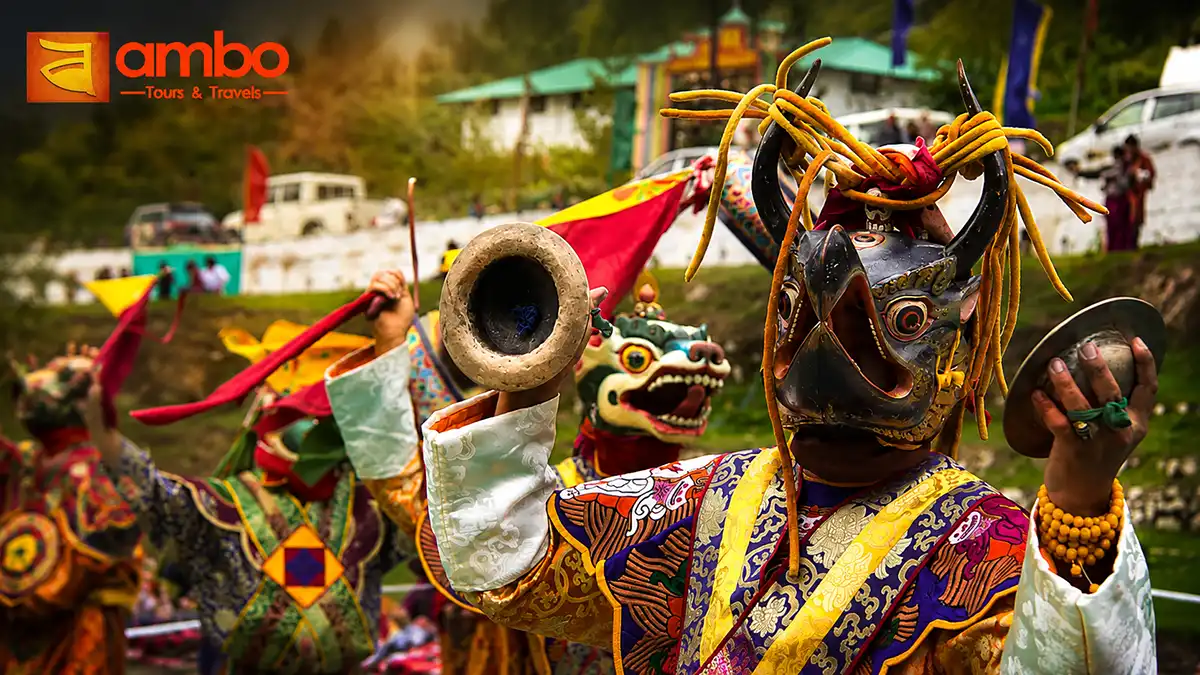
Haa Summer Festival Tour — Haa Valley, Tiger's Nest & Bhutan's Hidden Highlands
Paro · Thimphu · Punakha · Haa Valley
Tour Information
- Attend the Haa Summer Festival — traditional archery, yak herder demonstrations and folk dance in Haa Valley (July annually)
- Cross Chele La Pass (3,988 m) — the highest motorable road in Bhutan, with views of Jhomolhari peak
- Hike to Taktsang Monastery (Tiger's Nest) — 900 m above Paro Valley through blue pine forest
- Visit Punakha Dzong — the Palace of Great Happiness, built in 1637 at the confluence of two rivers
- Explore Haa Valley — one of Bhutan's most remote and least visited regions, open to tourism since 2002
- Visit Lhakhang Karpo and Lhakhang Nagpo — twin 7th-century temples on the Haa valley floor
- Stop at Dochula Pass (3,140 m) with 108 memorial chortens and Himalayan panoramas
- Taste hoentay — Haa Valley's signature buckwheat dumplings, served at the festival food stalls
- Visit Kichu Lhakhang in Paro — one of Bhutan's oldest temples, built in 659 AD
- Fully private and inclusive: SDF, visa, licensed guide, transport, accommodation and all meals
The Haa Summer Festival is one of Bhutan's most authentic and least visited celebrations — held each July in the remote Haa Valley, a region that only opened to foreign tourists in 2002. For two full days, the valley comes alive with traditional archery, yak herder demonstrations, folk dance performances, and food stalls serving hoentay — Haa's signature buckwheat dumplings stuffed with turnip. It is the kind of festival where you are not watching from a distance — you are in it.
This 10-day private tour is built around those two festival days, but the journey offers far more. You arrive in Paro, hike to Tiger's Nest on Day 2, explore Thimphu's capital culture on Day 4, cross to Punakha for the finest dzong in Bhutan, and then drive over Chele La Pass — at 3,988 metres, the highest motorable road in Bhutan — into the lush green bowl of Haa Valley. After the festival, you return to Paro for a final evening before departure.
Every aspect is arranged by Ambo Tours' licensed team in Thimphu — permits, accommodation, guide, transport, and all meals throughout.
Tour Pricing
10 Days Bhutan Journey — Cost
All prices in USD per personCost includes Sustainable Development Fee (SDF) of US $100 per person per night and Bhutan Visa Fee of US $40 per person. Entrance fees for monuments and festival visits are paid separately.
Detailed Itinerary
Your Bhutan holiday begins with one of aviation's most thrilling arrivals. Paro International Airport sits deep inside a narrow valley, and as the plane banks between ridgelines, the first glimpse of whitewashed farmhouses and fluttering prayer flags sets the tone for everything ahead. The Ambo Tours guide and driver will meet you at arrivals and transfer you to your hotel.
The rest of the day is yours to settle in and acclimatise to Paro's altitude of 2,250 metres. Take a gentle stroll along the Paro town main street, lined with traditionally painted shopfronts selling woven textiles, wooden bowls, and local cheese. Try ema datshi — Bhutan's national dish of chillies and cheese — at a local restaurant for your first taste of authentic Bhutan Buddhist culture on a plate.
Tip: Drink plenty of water on arrival day and avoid heavy exertion — altitude adjustment is worth taking seriously. Dinner and overnight at your hotel in Paro.
Tomorrow, lace up your hiking boots for the legendary climb to Tiger's Nest Monastery — the defining image of Bhutan tourism worldwide.
Few experiences in Asia rival the morning walk up to Taktsang Monastery (Tiger's Nest) in Paro. The trail winds through blue pine forest, past fluttering prayer flags and views that widen with every step, until suddenly a cluster of gilded temples appears — clinging impossibly to a sheer 900-metre cliff face. According to legend, Guru Rinpoche flew here on the back of a tigress to subdue the local demons, and the site has been sacred ever since.
- The hike is a 4-hour round trip at a gentle pace — the halfway viewpoint delivers Bhutan's most photographed vista.
- Enter the inner sanctuaries (cameras must be left at the entrance) for a genuinely moving moment of stillness inside one of Asia's most remarkable Bhutan monastery complexes.
- Descend to visit Kichu Lhakhang — one of Bhutan's oldest temples, built in 659 AD by the Tibetan king Srongtsen Gampo, said to pin the left foot of a mythological earth-demon.
Tip: Start by 7 am to avoid midday heat and afternoon crowds. Carry at least 1.5 litres of water and a light snack. This is one of the finest things to do in Bhutan and no Bhutan itinerary is complete without it. Dinner and overnight in Paro.
Tomorrow, the road climbs over the scenic highlands toward Thimphu, Bhutan's quietly extraordinary capital city.
The drive from Paro to Thimphu (2,350 m) follows the Paro Chhu river downstream before climbing into the capital's broad valley — a journey of about 90 minutes that rewards you with views of terraced rice fields and pine-cloaked ridgelines typical of the Bhutan landscape.
En route, stop at Paro Rinpung Dzong (built 1646 by Zhabdrung Ngawang Namgyal) — a fortress-monastery that guards the entrance to the valley and remains one of the finest examples of Bhutan dzong architecture in the country. Some scenes of the film The Little Buddha were shot in its courtyard.
Arrive in Thimphu in the afternoon and check in to your hotel. In the evening, the Ambo Tours guide takes you for a walk through Thimphu's clock tower square and the craft market — a relaxed introduction to the world's only national capital that runs without a single traffic light. Sample suja (butter tea) from a local café for a classic Bhutan cultural tour moment. Dinner and overnight in Thimphu.
Tomorrow brings a full day of Thimphu sightseeing — from the world's largest seated Buddha to ancient hilltop temples.
Thimphu rewards slow exploration, and today Ambo Tours gives you a full day to take in the capital's most significant sites on this Bhutan cultural tour.
- Buddha Dordenma Statue — at 51.5 metres, one of the world's tallest seated Buddha statues, with sweeping views across the Thimphu valley and the Bhutan mountain horizon.
- Memorial Chorten — always busy with elderly Bhutanese walking circumambulations at dawn; a living expression of Bhutan Buddhist culture.
- Changangkha Lhakhang — a 15th-century hilltop temple still active for infant blessings and offering panoramic city views.
- Tashichho Dzong — the royal secretariat and summer residence of Je Khenpo, Bhutan's chief abbot; best visited late afternoon when the light catches its white towers.
- National Postal Museum — a Bhutan hidden gem where you can have your portrait printed on an official Bhutanese postage stamp.
- Takin Preserve — home to Bhutan's national animal, a distinctive bovine-goat hybrid found nowhere else on earth.
Tip: Tashichho Dzong is closed to visitors on weekday mornings — plan it for late afternoon or the weekend. Dinner and overnight in Thimphu.
Tomorrow, the road descends to warm, subtropical Punakha — home to Bhutan's most magnificent dzong.
The drive from Thimphu to Punakha (1,250 m) is one of the most celebrated road journeys in the Himalayas. Your Ambo Tours driver stops first at Dochula Pass (3,140 m) — where 108 memorial chortens ring a hilltop draped in prayer flags, and on clear mornings the entire Eastern Himalayan range stretches across the horizon. This is one of the most photographed moments in any Bhutan travel guide.
- Visit Chimi Lhakhang — the revered fertility temple of Lama Drukpa Kuenley (the Divine Madman), reached via a 20-minute walk through golden rice paddies.
- Explore Punakha Dzong (built 1637) at the confluence of the Pho Chhu and Mo Chhu rivers — the former capital and winter residence of Je Khenpo, and arguably the most beautiful Bhutan dzong in the country.
- Hike to Khamsum Yulley Namgyal Choling Monastery across a suspension bridge and up a forested hillside — a 45-minute climb rewarded with views over the entire Punakha valley.
Tip: Carry sunscreen — Punakha is noticeably warmer than Thimphu and can reach 30°C in summer. This is one of the most rewarding single days of any Bhutan tour package. Dinner and overnight in Punakha.
Tomorrow, the route returns to Thimphu with an optional riverside walk before the journey west to Haa Valley begins.
This morning offers a relaxed departure from Punakha back toward Thimphu, retracing the highland road via Dochula Pass. If yesterday's mist blocked the mountain views, today may offer a second chance — the pass is glorious in early morning light as part of any Bhutan sightseeing itinerary.
Arrive in Thimphu by midday. The Ambo Tours team sets you free for the afternoon to explore at your own pace. Good options include:
- Browse the Centenary Farmers' Market — open on weekends, this is Bhutan's most vibrant open-air market, selling everything from dried chillies to homemade ara (rice wine).
- Visit the Zorig Chusum Institute (painting school) to watch apprentices practising Bhutan's 13 traditional arts and crafts.
- Pick up last-minute souvenirs along Norzin Lam, Thimphu's main commercial street.
This gentle day is intentional — it prepares you for the exciting drive to Haa Valley tomorrow, one of the least-visited and most scenic corners of Bhutan. Dinner and overnight in Thimphu.
Tomorrow, the road crosses the dramatic Chele La Pass and drops into the hidden valley of Haa — and the Haa Summer Festival begins.
Today ranks among the most memorable days of any Bhutan trip. The drive from Thimphu to Haa Valley crosses the Chele La Pass (3,988 m) — the highest motorable road in Bhutan, where thousands of prayer flags snap in the mountain wind and views of Jhomolhari peak fill the horizon on clear days. Your Ambo Tours guide will stop here for photographs and a moment to breathe the thin, pure air.
Descend into Haa — a remote, deeply traditional valley that opened to foreign visitors only in 2002 — just in time for the opening of the Haa Summer Festival 2026. This beloved annual celebration showcases the living culture of the Haa district in a way that no museum ever could.
- Watch traditional archery — Bhutan's national sport — with teams in full ceremonial dress shooting at targets 145 metres away.
- Enjoy traditional Haa food stalls serving dishes specific to this valley, including hoentay — buckwheat dumplings stuffed with turnip leaves and cheese, a Bhutan hidden gem food experience found only here.
- Watch nomadic yak herders from the highlands demonstrate tent-pitching, butter-churning, and traditional games.
Dinner and overnight in Haa.
Tomorrow brings the full second day of the Haa Summer Festival with folk dances and cultural performances.
Haa Valley wakes up festival-ready on this second morning — and your Ambo Tours guide will have you at the festival ground early to catch the best cultural performances of the Haa Summer Festival 2026. The atmosphere is warm, genuinely local, and utterly unlike the more well-known Bhutan dzong festivals — this is community celebration at its most authentic.
- Watch folk dance performances — zhungdra and boedra songs accompanied by dancers in Haa's distinctive regional dress.
- Attend the yak sports demonstrations — yak riding and racing are a highlight unique to this festival and central to any genuine Bhutan cultural tour.
- Visit Lhakhang Karpo (White Temple) and Lhakhang Nagpo (Black Temple) — twin 7th-century temples built, according to tradition, by the Tibetan king Srongtsen Gampo in a single night; these are among the oldest sacred sites in Bhutan.
- Walk the Haa Valley floor in the late afternoon when the light turns golden across the barley fields — one of the most peaceful Bhutan landscape moments of the entire tour.
Tip: The best time to visit Bhutan's Haa Summer Festival is July — the valley is lush green and skies are often clear by afternoon despite the monsoon season. Dinner and overnight in Haa.
Tomorrow, the Chele La Pass takes you back over the mountains toward Paro for the final night of the tour.
The morning drive back from Haa to Paro over Chele La Pass is, if anything, even more beautiful in the opposite direction — the descent into the Paro side frames a sweeping panorama of the valley below, with Paro Dzong visible in the distance. The Ambo Tours team will stop at the pass for a final photograph with the summit prayer flags.
Back in Paro, the afternoon is spent on a few sites that complement what you saw on Day 2:
- Visit Drugyal Dzong — a ruined 17th-century fortress built by Zhabdrung Ngawang Namgyal to repel Tibetan invasion. On clear days, Jhomolhari (7,326 m) towers behind the ruins in a photograph that epitomises Bhutan mountain scenery.
- Walk the Paro town bazaar one final time for any last souvenir shopping — hand-woven textiles, incense, and handmade paper make ideal gifts.
In the evening, your Ambo Tours guide will join you for a farewell dinner — a chance to reflect on ten days of Bhutan travel, share photographs, and raise a glass of local ara to the kingdom. Dinner and overnight in Paro.
Tomorrow, the journey home — but Bhutan has a way of calling people back.
Your Haa Summer Festival Bhutan journey with Ambo Tours comes to a close this morning. The team transfers you to Paro International Airport with time to spare — and as the plane climbs steeply out of the valley, the last thing you see is Paro Rinpung Dzong catching the morning light far below.
Ten days in Bhutan covers an enormous amount of ground: the world's most dramatic landing strip, the hike to Taktsang Monastery, the subtropical warmth of Punakha Dzong, the highest motorable pass in the country, and the rare, unhurried joy of the Haa Summer Festival — a celebration that most visitors to Bhutan never find. That is precisely why Ambo Tours built this Bhutan tour package around it.
Bhutan measures its wealth in Gross National Happiness (GNH), not GDP — and after ten days here, you will understand why. Travel consciously, support sustainable tourism Bhutan, and when you are ready to return, Ambo Tours will be waiting to take you deeper. Safe onwards travels.
Included / Excluded
- ✔All meals — breakfast, lunch, and dinner
- ✔Accommodation on twin / double sharing basis (single supplement extra)
- ✔All transportation within the kingdom including airport transfers
- ✔Sustainable Development Fee — Government tax (SDF)
- ✔Bhutan visa fee
- ✔English-speaking private local guide
- ✔Sightseeing as per itinerary
- ✔Bottled water throughout the journey
- ✖International flights to and from Paro (PBH)
- ✖Entrance fees for museums and monuments
- ✖Gratuities for guides and drivers
- ✖Travel insurance premiums
- ✖Payments for services provided on a personal basis
- ✖Cost for any services not mentioned under "Cost Includes"
- ✖Cost incurred due to mishaps, strikes, political unrest, etc.
- ✖Personal expenses — laundry, beverages, or personal services
Ambo Tours & the 1% Club
Every tour we run includes a contribution to a Bhutanese NGO of your choice — at no extra cost to you. We call this the 1% Club: a minimum of 1% of your trip's profit, or Nu 5,000, whichever is higher, donated on every single journey. You choose where it goes.
About the Haa Summer Festival
The Haa Summer Festival was established to celebrate and preserve the nomadic highland culture of Haa Valley — one of the most remote and least-visited districts in Bhutan. Held each July when the valley is at its most verdant, the festival draws together Haa's highland yak herder communities alongside residents from the valley floor in a two-day celebration of traditional skills, food, music, and sport.
The centrepiece is traditional archery — Bhutan's national sport — with teams competing in full ceremonial dress at targets 145 metres apart, accompanied by singing and dancing after each successful shot. Yak herder demonstrations are unique to this festival: highland nomads descend from their summer pastures to demonstrate tent-pitching, butter-churning, and yak riding — skills that are increasingly rare in modern Bhutan. Folk dance and music performances featuring zhungdra and boedra song forms fill the evenings, and food stalls serve hoentay, Haa's signature dish — buckwheat dumplings stuffed with turnip greens and soft cheese.
For visitors, the festival offers something genuinely different from Bhutan's larger tshechu festivals — it is intimate, unhurried, and deeply local. To understand the full landscape of Bhutan's festivals, see our complete guide to Bhutan festivals.
Haa Valley — Bhutan's Hidden Highland
Haa Valley sits in Bhutan's far western corner, bordered by Tibet to the north and Paro district to the east. It only opened to foreign tourists in 2002, making it one of the last parts of Bhutan to receive visitors — and still one of the least visited. The drive in from Thimphu crosses Chele La Pass at 3,988 metres, the highest motorable road in Bhutan, before descending steeply into a wide valley floor of barley fields, pine forest, and meandering river.
The valley's most significant historic sites are Lhakhang Karpo (the White Temple) and Lhakhang Nagpo (the Black Temple) — twin 7th-century temples built according to tradition by Tibetan King Srongtsen Gampo. Both remain active places of worship and are accessible to visitors.
Beyond the temples, Haa retains a genuine remoteness. Nomadic yak herder families still follow seasonal migration routes between the valley floor and highland pastures above 4,000 metres. In July, when the festival takes place, the surrounding hills are deep green and wildflowers cover the upper slopes — a completely different Bhutan from the dry autumn months most visitors experience. For best time and season guidance, see our best time to visit Bhutan guide.
Chele La Pass — The Highest Motorable Road in Bhutan
The drive from Thimphu to Haa Valley crosses Chele La Pass at 3,988 metres — the highest motorable road in Bhutan. The ascent winds through rhododendron and blue pine forest before breaking into the open at the pass, where prayer flags stretch across the ridge and, on a clear day, Jhomolhari (7,326 metres) is visible to the north.
Chele La is not just a transit point — it is one of the most scenic drives in the entire Himalayan region. The descent into Haa Valley on the western side is equally dramatic, with the valley opening below in a series of switchbacks through forest. On the return journey on Day 9, the pass offers a different perspective: looking back east toward Paro, the valley and Paro Dzong are visible far below.
In July the forest is at its most vivid green. Temperatures at the pass are cool even in summer — carry a warm layer regardless of the valley heat below. If you are combining this tour with a trek, our Jhomolhari Trek starts from Paro and offers close views of the same peak visible from Chele La.
Itinerary Map
Map coming soon.
Frequently Asked Questions
Ready to Begin Your Journey?
Our Thimphu team responds within 24 hours. Tell us your dates and we will handle the rest.