There is no single best time to visit Bhutan. There is the best time for you, based on what you want to experience, how you travel, and what kind of landscape and atmosphere you are drawn to.
Bhutan has four distinct seasons. Each is genuinely different — in temperature, in scenery, in the festivals on the calendar, and in the texture of the experience. This guide covers all four, honestly, so you can choose the right window for your journey. Visit our Bhutan travel guide for an extensive and detailed guide to planning your trip to Bhutan.
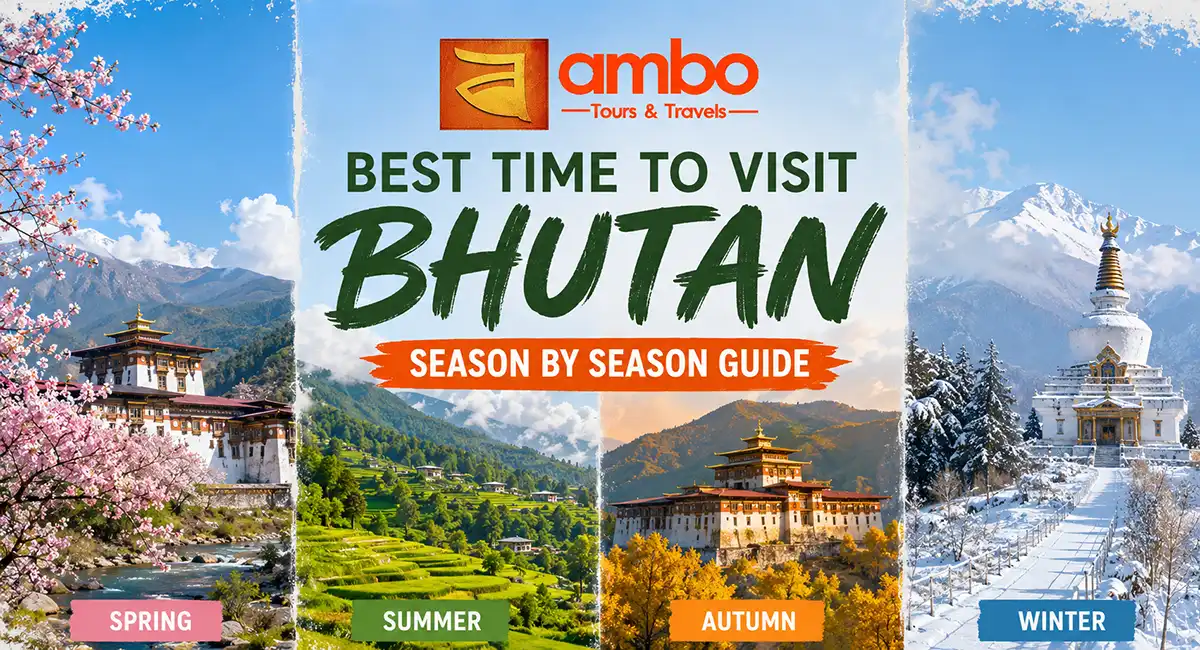
Spring — March to May
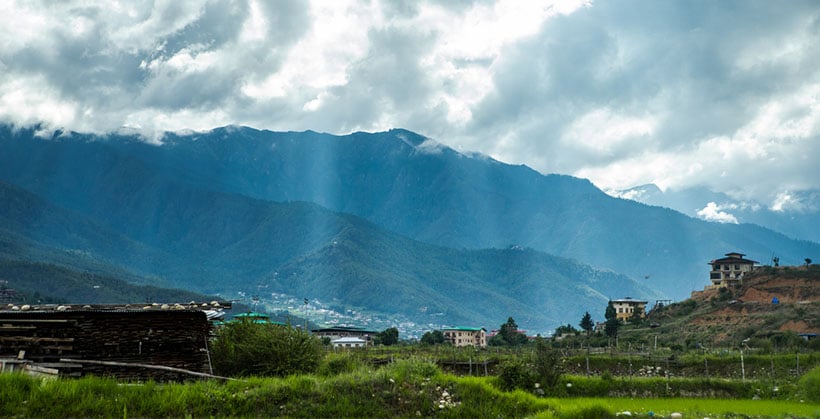
Spring is Bhutan’s most popular season and generally considered the best time to visit Bhutan, and for good reason. The combination of mild temperatures, clear mountain skies, blooming rhododendrons, and the richest festival calendar makes it the most complete time to visit for most first-time travellers.
Weather in Spring
Valley temperatures range from 10°C at night to 22°C during the day in March, warming to 15–26°C by May. The air is clear, mountain views are excellent, and afternoon cloud is common but not disruptive. Higher altitudes — Chelela Pass, Phobjikha, the trekking routes — remain cool.
Festivals in Spring
Spring is festival season. The major events are:
Paro Tshechu — held in March or April, this is one of Bhutan’s most celebrated and photographed festivals. Five days of sacred masked dances (Cham) performed in the courtyard of Rinpung Dzong. The final morning includes the unfurling of the Thongdrel — a vast, appliquéd religious scroll — at dawn, which draws thousands of worshippers from across the country.
Punakha Drubchen and Tshechu — held in February and March, commemorating a 17th-century battle victory. Includes a dramatic re-enactment involving hundreds of costumed participants at Punakha Dzong.
Haa Summer Festival — later in the season, celebrating the nomadic heritage of the Haa valley.
Trekking in Spring
Spring is excellent for trekking below 4,000 metres. The Druk Path and Bumthang Owl Trek are at their best. Higher altitude routes may still have snow in March but open progressively through April and May.
Practical Notes
Spring is peak season. Accommodation books out months in advance, particularly around festival dates. Flights fill quickly. If you are planning a spring trip, confirm dates and accommodation at least three to four months ahead.
Autumn — September to November
Autumn is the second peak season or the second best time to visit Bhutan and, for many experienced travellers, the preferred time to visit. The monsoon ends in late September, leaving skies that are clearer and bluer than at any other time of year. Mountain views are at their sharpest. The air is cool and dry.
Weather in Autumn
September is transitional — warm with occasional residual rain. By October, conditions are ideal across western and central Bhutan: 8–20°C in the valleys, cold at altitude, and clear for most of the day. November brings the first frosts at higher elevations and shortening days.
Festivals in Autumn
Thimphu Tshechu — held in September or October at the Tashichho Dzong in Thimphu. The largest festival in western Bhutan and the most accessible for visitors staying in the capital.
Wangdue Tshechu — held at Wangdue Phodrang Dzong.
Black-Necked Crane Festival — held in late October or November at the Gangtey Monastery in Phobjikha Valley, celebrating the arrival of the cranes from Tibet. A smaller, more intimate event than the major Tshechus.
Jambay Lhakhang Drup — held in Bumthang, one of Bhutan’s oldest and most spiritually significant festivals. Includes a naked fire dance performed at midnight.
Trekking in Autumn
Autumn is the best trekking season. Skies are clear, trails are dry, mountain views are at their finest, and temperatures at altitude are cold but manageable. The Jhomolhari and Druk Path treks are at their peak in October.
Practical Notes
Autumn books out nearly as fast as spring. October in particular is the most in-demand month of the year. Book three to four months in advance for October travel, and earlier if possible.
Winter — December to February
Winter is the quiet season — and for a particular kind of traveller, the best season of all. Visitor numbers drop, prices moderate, and Bhutan takes on a stillness that feels almost private.
Weather in Winter
Valley temperatures drop to 2–5°C at night and 10–15°C during the day. Snow is common in Thimphu and Paro from December through February, though it rarely disrupts travel significantly. Higher altitude trekking routes are largely closed. The Phobjikha Valley is cold but dry, and the cranes are present until late February.
Why Winter Works
The low season brings several genuine advantages. Accommodation is more available, rates are lower, and popular sites — Tiger’s Nest, Punakha Dzong — are experienced without the crowds of peak season. The winter light has a particular quality — sharp and golden — that photographers particularly value.
Culturally, winter is also an active time. Farmers are less busy, and interactions with local communities are often easier and more relaxed than during the harvest and festival rush of autumn.
Festivals in Winter
Monggar Tshechu and Trashigang Tshechu — late autumn/early winter, in eastern Bhutan.
Punakha Drubchen — late February, the ceremonial re-enactment at Punakha Dzong before spring begins.
Who Winter Suits
Winter suits experienced travellers, those returning for a second visit, and anyone seeking serenity over spectacle. It is not recommended for first-time visitors who want to cover maximum ground or experience a major festival.
Monsoon — June to August
The monsoon season is the least visited period in Bhutan and, for many travellers, the least appealing. Rainfall is heavy, particularly in July and August. Trails are muddy and leeches are active at lower elevations. Some roads are occasionally disrupted by landslides.
Why Some Travellers Prefer the Monsoon
The monsoon is also when Bhutan is at its most intensely green — rice paddies brilliant, hillsides lush, rivers full. Dzongs and temples in this light look quite different from their autumn or spring versions. Cultural experiences in towns are unaffected by rain. And the absence of other tourists creates a sense of having the country to yourself.
Accommodation is readily available and prices are at their lowest. Flights are easier to book.
What Is Not Possible in Monsoon
High-altitude trekking is not advisable during the monsoon. Mountain views are obscured for most of the season. Road travel in remote areas carries a slightly higher risk of disruption.
Who Monsoon Suits
Travellers who are comfortable with rain, primarily interested in culture and architecture rather than landscapes and trekking, and looking for the most cost-effective time to visit.
Month-by-Month Quick Reference
| Month | Season | Festival Highlights | Trekking | Crowds |
|---|---|---|---|---|
| January | Winter | — | Limited | Low |
| February | Winter | Punakha Drubchen | Limited | Low |
| March | Spring | Paro Tshechu | Good | High |
| April | Spring | Paro Tshechu | Excellent | High |
| May | Spring | Haa Summer Festival | Excellent | Moderate |
| June | Monsoon | — | Not advised | Very low |
| July | Monsoon | — | Not advised | Very low |
| August | Monsoon | — | Not advised | Very low |
| September | Autumn | Thimphu Tshechu | Good | Moderate-High |
| October | Autumn | Thimphu/Wangdue Tshechu | Excellent | Very High |
| November | Autumn | Crane Festival, Jambay Lhakhang | Good | High |
| December | Winter | — | Limited | Low |
Frequently Asked Questions
When is the best time to visit Bhutan for the first time?
October is the most popular month for first-time visitors — clear skies, excellent mountain views, good trekking conditions, and a major festival usually falls in this window. March and April are equally strong if you want the Paro Tshechu experience.
When should I avoid visiting Bhutan?
No time of year is truly to be avoided, but July and August are the most challenging for most travellers — particularly those hoping to trek or spend time in the mountains. If this is your first trip, the monsoon months are better avoided.
Can I see Tiger’s Nest in winter?
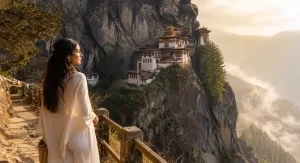
Yes. Tiger’s Nest is accessible year-round. In winter, you may hike with snow on the upper trail, which adds a dramatic element to the experience. The monastery itself is open regardless of season.
When do festivals take place?
Bhutanese festivals (Tshechus) follow the lunar calendar, so dates shift each year. We publish confirmed festival dates for the current year on our website and factor them into itinerary planning for every guest.
Is there a time of year when Bhutan is less crowded?
Winter (December to February) and the monsoon (June to August) are the quietest periods. For travellers seeking a less busy experience without sacrificing good weather, late November and early December is an often-overlooked window with excellent conditions and falling visitor numbers.
Plan Around the Right Season for You
Tell us when you are available and what matters most to you, what you thing is the best time to visit Bhutan — festivals, trekking, photography, culture — and we will advise on the best timing and build an itinerary accordingly.
Written by the Ambo Tours team, Thimphu, Bhutan. DOT License No. 1053330.
Ready to Experience Bhutan?
Tell us your dates and interests — our team in Thimphu will craft a personalised itinerary within 24 hours, at no cost.