Bhutan Packing List: What to Wear and Bring for Every Season
Most travelers spend weeks researching where to go in Bhutan. Very few spend enough time thinking about what to bring, a Bhutan packing list. That is a mistake — because Bhutan’s terrain, altitude, and cultural expectations make packing genuinely different here than almost anywhere else.
This guide is written by the team at Ambo Tours, based in Thimphu. We send people into the mountains, the monasteries, and the Dzongs every month of the year. What follows is exactly what we tell our travelers before they leave home.
The Golden Rule: Layers Over Bulk
Bhutan is a small country with extreme altitude variation. You can walk through subtropical forest in Gelephu at 200 metres above sea level and stand at a 4,000-metre pass in the same week. Even within a single day in Paro or Thimphu, mornings are cold, afternoons are warm, and evenings drop sharply.
The answer is not a heavy jacket. The answer is layers — a base layer, a mid layer, and a shell — that you can add and remove throughout the day. Pack one good layering system rather than multiple bulky pieces.
Seasonal Packing Guide
Spring (March to May) — Peak Season
Spring is Bhutan’s most popular season, and for good reason. The rhododendrons are flowering across the hillsides, the skies are mostly clear, and the major festivals — including Paro Tshechu or a 7 days cultural tour— fall in this window.

Temperature range: Thimphu 5°C to 18°C. Higher elevations significantly colder.
What to bring:
- Lightweight base layers (merino wool preferred over synthetic)
- Mid layer fleece or light down jacket
- Windproof shell or light rain jacket — afternoon showers are possible in April and May
- Comfortable walking trousers — not jeans (heavy, slow to dry, cold when wet)
- At least two smart-casual outfits for dzong and festival visits (see cultural dress section below)
- Sturdy walking shoes with ankle support for uneven dzong courtyards and trails
- Sunscreen SPF 30+ — the UV intensity at altitude is significant and catches people off guard
- Sunglasses
Summer / Monsoon (June to August)
Bhutan receives most of its annual rainfall between June and August. This is not a reason to avoid the journey — the country turns an extraordinary shade of green, crowds thin considerably, and prices are lower — but your packing strategy changes.
Temperature range: Warm and humid in valleys; cool at altitude.
What to bring:
- Quick-dry clothing throughout — cotton is your enemy in monsoon conditions
- A proper waterproof jacket, not a poncho — you will be walking in rain
- Waterproof overshoes or gaiters if you plan to hike
- Waterproof daypack cover
- Light, breathable layers for the warm valley towns
- Insect repellent — DEET-based is most effective in forested areas
- Antifungal foot powder if you are prone to foot issues in wet conditions
Leave behind: Heavy items you were planning to wear once. Monsoon travel rewards ruthless packing.
Autumn (September to November) — Peak Season

Autumn is arguably the finest time to visit Bhutan. The monsoon clears, the air is clean and sharp, mountain views are exceptional, and the Thimphu Tshechu falls in this window. If you are trekking — particularly the Jomolhari or Snowman Route — autumn is the standard season.
Temperature range: Thimphu 2°C to 18°C. Nights cool quickly through October into November.
What to bring:
- Full layering system — mornings and evenings are cold by late October
- Warm mid layer (down or synthetic insulation)
- Packable down jacket for evenings
- Trekking-specific gear if relevant (see trekking section)
- Everything from the spring list, with slightly heavier emphasis on warmth
Winter (December to February)
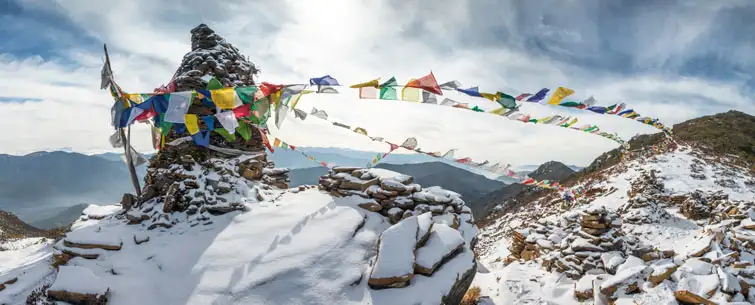
Winter in Bhutan is cold, clear, and often beautiful. The valleys see occasional frost, higher passes may be closed, but Thimphu and Paro are perfectly accessible and far quieter than peak season. The Phobjikha Valley is at its best in winter — the black-necked cranes have arrived from Tibet and the light is extraordinary. Our Black-Necked Crane Festival Tour is timed specifically for this window.
Temperature range: Thimphu -5°C to 12°C. Mountain areas significantly colder.
What to bring:
- Thermal base layers, top and bottom — these are non-negotiable
- Heavyweight fleece or mid-layer
- Insulated down jacket — a proper one, not a fashion piece
- Warm hat, gloves, and a scarf
- Warm socks — merino wool is worth the cost
- Hand warmers if you feel the cold easily
Cultural Dress: What to Wear in Monasteries and Dzongs
This matters more in Bhutan than almost anywhere else in Asia, and the rules are clear.
For everyone:
- Shoulders must be covered inside monasteries and Dzongs — no sleeveless tops
- Legs must be covered — shorts are not appropriate in religious or government buildings
- Remove shoes before entering temple halls — wear socks you are comfortable standing in
For women:
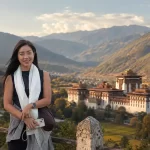
- A long skirt or full-length dress is traditional and deeply appreciated at major Dzongs and festivals. It is not required, but it is noticed in the right way.
- Loose trousers are perfectly acceptable
- Avoid tight or revealing clothing in cultural settings
For men:
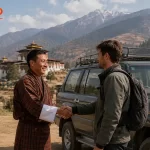
- Bhutanese men wear the gho (a knee-length robe) for all formal and cultural occasions. Visitors are not expected to wear traditional dress, but long trousers and a collared shirt are appropriate at dzongs and festivals.
- A scarf (kabney) is required for certain areas of dzongs — your guide will carry one for you
Practical tip: Pack one or two items specifically for cultural visits. A lightweight linen or cotton shirt that packs small but looks respectful is worth including.
Trekking Packing List
If your journey includes the Jomolhari Trek, Druk Path, or Dagala Thousand Lakes, your packing list needs additional items. Bhutan’s treks are remote — the nearest medical facility may be a full day’s walk away.
Clothing additions:
- Moisture-wicking trekking shirts (at least three for multi-day)
- Trekking trousers — not jeans or cotton
- Warm sleeping layer (the temperature in tents drops significantly at altitude)
- Down jacket — essential above 3,500 metres
- Gaiters for wet or snowy trail sections
- Wool or synthetic trekking socks (at least one pair per day)
- Camp shoes or light sandals for evenings
Footwear:
- Broken-in waterproof trekking boots with ankle support — this is non-negotiable. New boots will destroy your feet. Break them in at home.
Kit and gear:
- Trekking poles (highly recommended — reduce knee strain on descents significantly)
- Headlamp with spare batteries
- Sleeping bag rated to -10°C for high-altitude treks in spring or autumn
- Personal first aid kit including blister treatment, altitude medication (consult your doctor), and water purification tablets or a filter
- High-SPF lip balm and sunscreen — altitude UV is extreme
- Lightweight dry bags or zip-lock bags to keep gear dry inside your pack
What the crew provides: Your Ambo Tours trek crew provides camping equipment, cooking supplies, and food. You carry your personal gear in a daypack; pack animals or porters carry the main loads.
Medications and Health Essentials
- Altitude medication: Consult your doctor about Diamox (acetazolamide) before departure. Your trip will take you to 2,300 metres in Thimphu, and many trek routes go significantly higher.
- Personal prescription medications: Bring more than you need, in original packaging. Pharmacies in Bhutan are limited in rural areas.
- Rehydration sachets — useful if you experience stomach issues
- Antihistamines — useful in spring if you have pollen sensitivities
- Antiseptic cream and bandages for minor cuts and blisters
Electronics and Practical Items
- Power adapters: Bhutan uses Type D and Type G plugs (the same as India and the UK, respectively). Bring a universal adapter.
- Portable battery bank: Useful on multi-day treks where charging is not available
- Camera and spare memory cards: Bhutan is one of the most photogenic destinations in Asia. Do not run out of storage.
- Cash: Bhutan uses the Ngultrum, pegged 1:1 to the Indian Rupee. ATMs exist in Thimphu and Paro but are not reliable in rural areas. Withdraw cash before leaving major towns.
- Small backpack or daypack: A 20–30 litre daypack is ideal for daily excursions
- Reusable water bottle: Bhutan has clean mountain water and you will be drinking a lot of it at altitude
What to Leave at Home
- Drones: Drones require special permits in Bhutan and are restricted in most areas. Do not bring one without arranging permits in advance through your operator.
- Expensive jewellery: Not necessary and adds security concerns
- Large bottles of shampoo or toiletries: Most hotels in Bhutan provide basics and luggage space is better used elsewhere
- Heavy cotton clothing: Cotton kills in the cold and takes forever to dry in the monsoon. Leave it behind.
A Note on Luggage
Most travellers to Bhutan are on private tours with a dedicated vehicle. This gives you flexibility — you do not need to carry everything on your back for most of the journey. However, for trek segments, your personal gear goes into a duffel bag that pack animals will carry. Most operators specify a 15kg limit on trekking duffel bags.
A sensible approach: one main bag left in your vehicle or hotel storage, one trekking duffel for multi-day sections, and a 25-litre daypack you carry with you each day.
Ready to Plan Your Journey?
If you have questions about what to bring for a specific itinerary — a festival tour in October, the Jomolhari Trek in spring, a winter journey to Phobjikha — our team is happy to advise. Every trip we build is different, and so is every packing list.
Already planning what to pack means you’re serious about this trip — see our 7-day Bhutan tour for a complete itinerary to pack for.
Planning a Trek?
See our complete guide to trekking in Bhutan for routes, permits, and detailed gear advice. Our most popular trekking tours:
- Jomolhari Trek — 9 days, high-altitude classic through the Jomolhari base camp
- Druk Path Trek — 6 days, the most accessible high-altitude trek in Bhutan
- Snowman Trek — 25 days, one of the most demanding treks in the world
- Dagala Thousand Lakes Trek — 5 days, remote lake plateau above Thimphu
Planning a Festival Tour?
Festival packing has its own requirements — smart-casual cultural dress for dzong courtyard performances, layers for early morning starts, and comfortable shoes for long standing days. Our most popular festival tours:
- Paro Tshechu Festival Tour — spring, mask dances at Rinpung Dzong
- Thimphu Tshechu Festival Tour — autumn, three days at Tashichho Dzong
- Black-Necked Crane Festival Tour — winter, Phobjikha Valley
- Jakar Tshechu Festival Tour — autumn, intimate mask dances at Jakar Dzong in Bumthang
Ready to Experience Bhutan?
Tell us your dates and interests — our team in Thimphu will craft a personalised itinerary within 24 hours, at no cost.