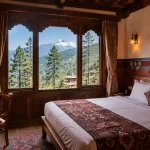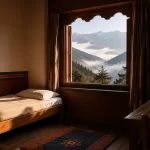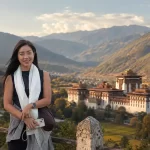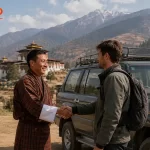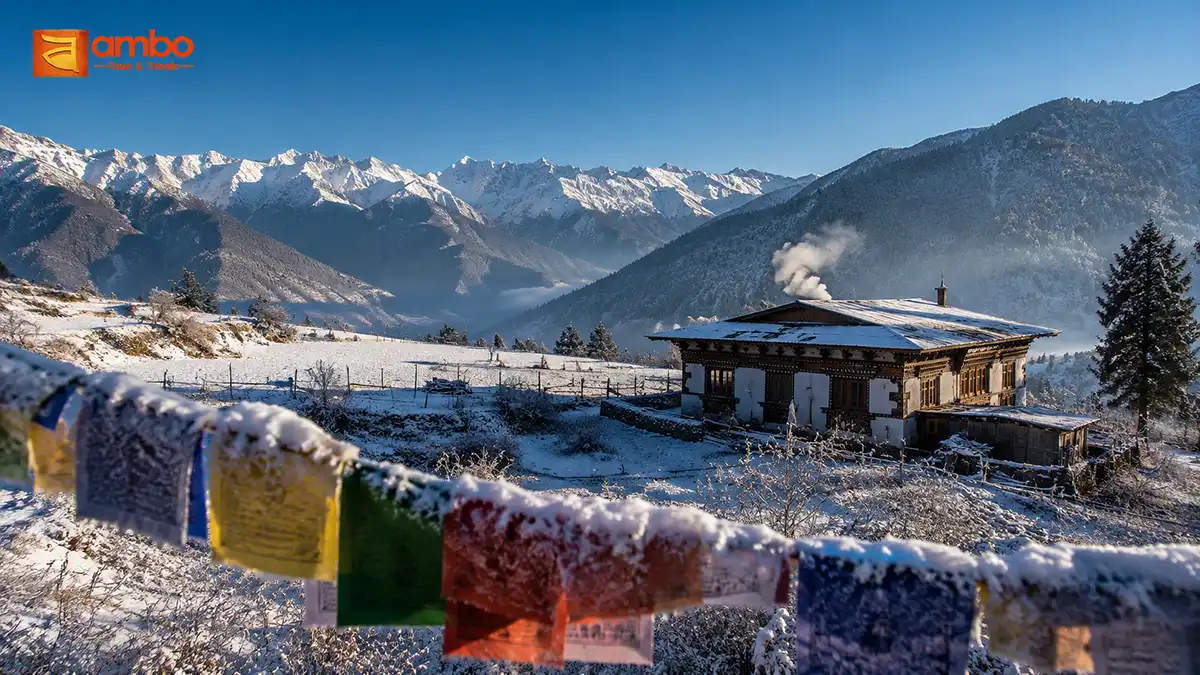
Most Bhutan advice steers you toward spring or autumn. Fair enough — those seasons have the clearest skies and the biggest festivals. But winter has quietly become the season serious repeat travellers ask for by name, and there are real reasons why.
What Winter in Bhutan Actually Feels Like
Valley temperatures in Thimphu and Paro drop to 2–5°C at night and climb to a comfortable 10–15°C in the midday sun. Snow dusts the higher passes and rooftops from December through February, though it rarely disrupts travel — roads stay open, and the cold is dry, not damp. The sky, more often than not, is a hard, clear blue.
This is Bhutan with the crowds gone. Dzongs you’d otherwise share with three tour buses are empty enough to hear your own footsteps on the stone. Guides have time to talk. Lodges upgrade you without being asked. It’s a different country to experience than the one in the brochure photos of prayer flags against September skies — quieter, starker, and in its own way, more honest.
Who Winter Is Actually For
We’re direct about this: winter isn’t for everyone. It suits travellers who’ve already done the “highlight reel” version of a destination and want something closer to how a place actually lives day to day. It’s well suited to:
- Second-time visitors who’ve seen Paro and Thimphu already and want a slower, deeper trip
- Photographers chasing clear-sky mountain shots without haze or crowds in the frame
- Travellers who dislike crowds more than they dislike cold
- Budget-conscious travellers who want the same itinerary at a noticeably lower package rate
It’s not the right call for first-time visitors chasing a major festival, or anyone who wants to stack the maximum number of sights into a short trip — some high-altitude treks and passes are best avoided this time of year, and we’ll tell you plainly if your dates don’t suit what you have in mind.
The Black-Necked Cranes — Winter’s Signature Event
If there’s one reason to specifically target winter, it’s this: the Phobjikha Valley becomes home to migratory black-necked cranes from late October through mid-February. These endangered birds arrive from the Tibetan Plateau and settle into the valley’s protected wetlands — a genuinely rare wildlife spectacle, and one that simply doesn’t exist outside this window. No spring or autumn visit can offer it.
What You’ll Pay — and Why It’s Lower
Winter is Bhutan’s low season, and package rates reflect it. You’ll find the same itineraries, same licensed guides, same accommodation tiers — at rates that are noticeably lower than the March–May or September–November peaks. The government’s Sustainable Development Fee (USD 100 per person per night) doesn’t change by season, but everything layered on top of it — accommodation, vehicle costs, and often the guide’s availability for a more flexible pace — does.
For a full breakdown of what a Bhutan trip costs at any time of year, see our Bhutan travel cost guide.
What to Pack
Layering is the whole game. Days are mild enough for a fleece or light jacket; nights and early mornings call for a proper insulated layer, gloves, and a warm hat. Most lodges and hotels have heating, but it’s worth packing thermal base layers if you’re sensitive to cold, particularly for early starts like the Tiger’s Nest hike, where the trail begins in shade.
Sample Winter Itinerary: 6 Days, Paro–Thimphu–Punakha–Phobjikha
Day 1–2: Paro
Arrival and the Tiger’s Nest hike, done in cool, clear conditions — arguably the best weather window of the year for this climb, since the trail avoids both monsoon mud and peak-season crowds.
Day 3: Thimphu
The capital’s sights — Memorial Chorten, the weekend market (if your dates align), Buddha Dordenma — all with none of the visitor lines you’d meet in April or October.
Day 4: Punakha
Cross Dochula Pass, where winter mornings often deliver the clearest Himalayan panorama of the entire year — including a rare sighting of Gangkhar Puensum, the world’s highest unclimbed peak, when the cloud lifts. Punakha itself sits at lower elevation and stays noticeably warmer than the northern valleys.
Day 5–6: Phobjikha Valley
The valley’s winter centrepiece: the black-necked cranes, alongside the Gangtey Monastery and some of the most peaceful walking in the country.
Frequently Asked Questions
Q: Is Bhutan too cold to visit in winter?
A: No. Daytime temperatures in the main valleys (Paro, Thimphu, Punakha) are comfortable in the sun, typically 10–15°C. Nights are cold (2–5°C), but heated accommodation and proper layering make it entirely manageable.
Q: Do roads and flights stay reliable in winter?
A: Yes, generally. Snow at higher passes is common but rarely closes roads for long. Paro’s mountain-approach flights can occasionally be affected by weather at any time of year, which is true of any Himalayan airport, not specific to winter.
Q: What’s the single best reason to visit in winter over spring or autumn?
A: The black-necked cranes in Phobjikha Valley, present only from late October to mid-February, combined with noticeably lower crowds and package rates across the entire country.
Q: Is winter a good time for a first Bhutan trip?
A: It can work, but we’re candid with first-timers: if a major festival or maximum sightseeing is the priority, spring or autumn suits better. Winter rewards travellers who want depth and quiet over spectacle.
Q: What should I pack for a Bhutan winter trip?
A: Layers. A warm jacket, gloves, and hat for mornings and evenings; lighter layers for midday sun. Thermal base layers are worth it for early starts like the Tiger’s Nest hike.
Thinking about a winter trip? Get in touch with our Thimphu team — we’ll tell you honestly whether your dates and interests suit the season, and build an itinerary around it.
Related guides: Best Time to Visit Bhutan — Full Season Guide · Bhutan Travel Cost Guide · Phobjikha Valley Guide
Ready to Experience Bhutan?
Tell us your dates and interests — our team in Thimphu will craft a personalised itinerary within 24 hours, at no cost.