Germany is one of Bhutan’s most consistent European source markets — and it’s easy to understand why. German travellers tend to value authenticity over spectacle, depth over surface, and landscapes that haven’t been smoothed out for mass tourism. Bhutan, with its untouched river valleys, centuries-old dzong architecture, and a national philosophy built around Gross National Happiness rather than GDP, speaks directly to that instinct.
This guide covers everything you need to plan a Bhutan trip from Germany — flights from Frankfurt, Munich, Berlin, and Hamburg, the visa process for German passport holders, costs in EUR and USD, and the best time to go. If you’d rather skip to planning your itinerary directly, get in touch with our team — we’ll have a private itinerary in your inbox within 24 hours.
Can German Citizens Travel to Bhutan?
Yes — German passport holders are welcome in Bhutan, with two requirements that are straightforward to fulfil:
- A Bhutan visa (USD 40 per person per trip) — issued online through your licensed Bhutanese tour operator, typically within 3–5 working days after payment is confirmed. There are no Bhutanese embassies or consulates in Germany and no visa on arrival — the visa is issued digitally and confirmed before you board your connecting flight.
- A licensed Bhutanese tour operator — all international visitors to Bhutan (except Indian, Bangladeshi, and Maldivian nationals) must book through a TCB-licensed operator. This includes your guide, accommodation, and in-country transport. Independent backpacking in Bhutan is not permitted.
You do not need to travel in a group. Private tours — a solo traveller, a couple, or a family — are completely standard and are actually the norm for German visitors who want full flexibility over their itinerary.
Flights from Germany to Bhutan
There are no direct flights from Germany to Bhutan. All routes connect through a regional hub before catching a Drukair or Bhutan Airlines flight into Paro — the only international airport in Bhutan, set dramatically between Himalayan ridges at 2,235m.
Frankfurt (FRA) — Recommended Hub: Dubai (DXB) or Bangkok (BKK)
Via Dubai: Lufthansa, Emirates, or Condor from Frankfurt to Dubai (FRA–DXB, ~6.5 hrs), then Drukair Dubai–Paro (3x/week, ~4 hrs). Total: ~13–16 hrs including connection.
Via Bangkok: Lufthansa, Thai Airways, or connections through Middle Eastern carriers from Frankfurt to Bangkok (~11 hrs), then Drukair/Bhutan Airlines Bangkok–Paro (~3h15m). Total: ~17–20 hrs.
Via Delhi: Lufthansa and Air India from Frankfurt to Delhi (~8 hrs), then Drukair Delhi–Paro (~2 hrs). Total: ~13–16 hrs. Good option if combining with India.
Munich (MUC)
Via Dubai: Lufthansa or Emirates Munich–Dubai (~5.5 hrs), then Dubai–Paro. Total: ~12–15 hrs. This is often the fastest routing from Germany.
Via Bangkok: Lufthansa or Thai Airways Munich–Bangkok (~10.5 hrs), then Bangkok–Paro. Total: ~16–19 hrs.
Berlin (BER)
Via Frankfurt or Munich: Connect to FRA or MUC first (1 hr), then continue as above. Alternatively, direct connections on Eurowings/Ryanair to Dubai hubs with onward connections.
Via Doha: Qatar Airways operates from Berlin to Doha, and while there are no direct Doha–Paro flights, Doha connects well to Delhi and Bangkok. Allow 18–22 hrs total.
Hamburg (HAM), Düsseldorf (DUS), Cologne (CGN)
All route via Frankfurt or Munich as a primary hub. Add 1–2 hours domestic connection to total journey time.
| Hub | Bhutan flights/week | Flight time to Paro | Best for |
|---|---|---|---|
| Bangkok (BKK) | Most frequent | ~3h 15m | Most German travellers |
| Dubai (DXB) | 3x/week | ~4h | Frankfurt and Munich |
| Delhi (DEL) | Daily | ~2h | India combination trips |
| Kathmandu (KTM) | Most days | ~1h | Nepal combination trips |
A word on the Paro approach: Landing at Paro International Airport is an experience in itself. The final descent threads between Himalayan ridges at low altitude — only a small number of specially trained pilots are certified worldwide to fly the approach. Most passengers describe it as the most spectacular landing they have experienced. Request a window seat on the left side of the aircraft for the best mountain views.
Cost of a Bhutan Tour from Germany
Bhutan is a premium destination — not mass tourism, and not budget travel. Here is an honest breakdown of what to expect:
| Cost Item | Amount | Notes |
|---|---|---|
| Bhutan Visa | USD 40 (~€37) per person | One-time per trip, processed by your operator |
| Sustainable Development Fee (SDF) | USD 100 (~€92) per person per night | Mandatory for all international tourists, funds healthcare, education, and conservation |
| Private tour package | From USD 200–350 (~€185–325) per person per day | Includes licensed guide, accommodation (typically 3-star), all in-country transport, and entrance fees. Higher-end hotels increase this figure. |
| Flights from Germany | €600–1,400 return | Varies significantly by season, booking window, and routing. Frankfurt–Dubai–Paro tends to be most competitive. |
Example total for a 7-night private tour (2 persons):
- SDF: 2 × 7 × USD 100 = USD 1,400
- Visa: 2 × USD 40 = USD 80
- Tour package (mid-range): ~USD 2,800 for 2 persons over 7 nights
- Flights: ~€1,400–2,200 for two
- Total: approximately €5,000–7,000 for two people, 7 nights
This is comparable to a high-end safari or expedition cruise — positioned accordingly, and with the same complete exclusivity that comes with limited visitor numbers.
Bhutan Visa for German Citizens — Step by Step
- Choose your itinerary and confirm your dates with Ambo Tours. We’ll send you a tour proposal within 24 hours.
- Send us a copy of your passport (valid for at least 6 months beyond your travel dates, with at least 2 blank pages).
- Complete payment — visa processing begins only after tour payment is confirmed.
- Receive your e-visa clearance — typically within 3–5 working days. We provide this directly.
- Book your flights once visa clearance is confirmed — you will not be permitted to board at your hub without it.
- Arrive in Paro — your physical visa stamp is issued on arrival.
There is no Bhutanese embassy in Germany. The visa is issued entirely online by Bhutan’s Department of Tourism through your licensed operator — there is no paperwork to submit in Germany and no embassy appointment required.
Best Time to Visit Bhutan from Germany
Germany to Bhutan is a long journey, so most travellers aim for at least 10–14 days in-country to make the travel worthwhile. The two peak seasons coincide with Bhutan’s two most spectacular festival periods:
Spring — March to May
The rhododendron forests are in full bloom across Bhutan’s middle hills. Paro Tshechu (March, 5 days of sacred mask dances at Rinpung Dzong) is Bhutan’s most famous festival and draws the highest international visitor numbers of any event in the calendar. Book months in advance for this period — accommodation in Paro is extremely limited. May brings warmer temperatures and is excellent for trekking before the monsoon arrives.
Autumn — September to November
Bhutan’s best weather window. The monsoon clears in September, and October–November brings crystalline skies, sharp Himalayan views, and the festival season’s second peak: Thimphu Tshechu (October, 3 days at Tashi Chhodzong), Gangtey Tshechu (October, set in Phobjikha valley as the black-necked cranes arrive from Tibet), and Jambay Lhakhang Drup (November, one of Bhutan’s most ancient and atmospheric festivals). This is our most popular travel window for European visitors.
Winter — December to February
Fewer visitors, lower prices, and Bhutan’s most intimate festival atmosphere. The Punakha Dromchoe and Punakha Tshechu (typically February) take place at Punakha Dzong in the warmest valley in western Bhutan. Snow on the high passes makes trekking limited, but the cultural circuit (Thimphu–Punakha–Paro) is fully open and less crowded than in peak season.
Private Bhutan Tours for German Travellers
All Ambo Tours journeys are fully private — no shared coaches, no fixed group departures. Your guide, your vehicle, and your itinerary are exclusive to you from the first day to the last. We design every trip around your specific interests: whether that is a cultural circuit through western Bhutan’s dzongs and monasteries, a high-altitude trek to Jhomolhari base camp, a festival journey timed around the Paro or Thimphu tshecheus, or a combination of all three.
German-speaking guides are available on advance request — please mention this when you enquire and we’ll arrange accordingly.
Recommended starting itineraries for German travellers:
- 7 Days — Paro, Thimphu, Punakha & Gangtey — the ideal first Bhutan trip
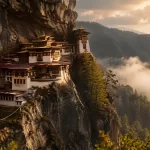
- 10 Days — Bumthang, Gangtey & Tiger’s Nest — adds central Bhutan’s sacred valley
- 13 Days — Jhomolhari Trek — high-altitude trekking to the base of a 7,326m Himalayan peak
The 1% Club — Your Trip Gives Back
Every tour booked with Ambo Tours includes a donation to a Bhutanese NGO of your choice — at no extra cost to you. A minimum of 1% of your trip’s profit, or Nu 5,000, whichever is higher. You choose between Nazhoen Lamten (child and youth welfare), Bhutan Kidney Foundation, or Jangsa Animal Saving Trust. Read the story behind the 1% Club →
Frequently Asked Questions
Do German citizens need a visa for Bhutan?
Yes. All international visitors except Indians, Bangladeshis, and Maldivians require a Bhutan visa (USD 40 per person per trip). It is arranged entirely online through your licensed Bhutanese tour operator — no embassy visit required in Germany.
Is independent travel allowed in Bhutan for Germans?
No. You must travel with a TCB-licensed guide. However, you do not need to join a group tour — private tours for solo travellers, couples, or families are standard.
What is the Sustainable Development Fee?
USD 100 per person per night (approximately €92), paid as part of your tour cost. It directly funds Bhutan’s free healthcare, free education, and environmental conservation programs.
How long does it take to fly from Germany to Bhutan?
Typically 13–20 hours depending on your departure city and routing. Frankfurt via Dubai is usually the fastest option (~13–15 hrs). There are no direct flights.
What currency should I bring?
The Bhutanese Ngultrum (BTN) is pegged 1:1 to the Indian Rupee. USD, EUR, and Indian Rupees are accepted in most hotels and tourist areas. ATMs exist in Thimphu and Paro. We recommend bringing some USD or EUR in cash as a backup.
Do I need travel insurance for Bhutan?
Strongly recommended. Your policy should cover international medical evacuation (Bhutan has limited hospital facilities outside Thimphu) and trip cancellation. Many standard German travel insurance policies cover Bhutan — check with your provider before departure.
Ready to plan your Bhutan journey from Germany? Send us your dates and interests — our team in Thimphu will have a private itinerary ready within 24 hours, at no obligation.
Ready to Experience Bhutan?
Tell us your dates and interests — our team in Thimphu will craft a personalised itinerary within 24 hours, at no cost.
Recent Articles