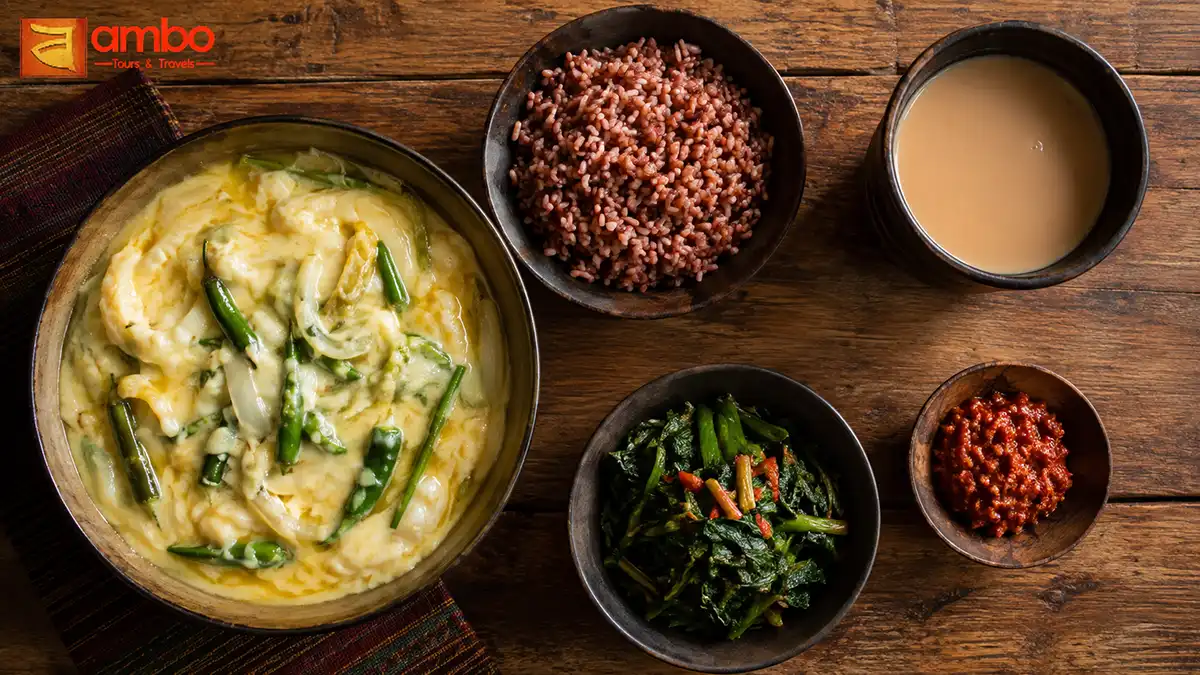
Bhutanese food is not shy. Chilies here aren’t a garnish — they’re treated as a vegetable in their own right, often the main ingredient rather than the heat behind one. Combine that with local cheese, high-altitude cooking, and a genuine mountain-kingdom self-sufficiency, and you get a cuisine that tastes like almost nowhere else in the world.
Every meal on our tours is home-cooked or prepared fresh by local kitchens — not a hotel buffet built for tourists. Here’s what you’ll actually be eating, and what’s worth seeking out beyond it.
The National Dish: Ema Datshi
If you eat one dish in Bhutan, it’s this one. Ema datshi — chilies stewed in melted local cheese — is Bhutan’s national dish and the anchor of most everyday meals. It’s genuinely spicy, and genuinely simple: just chilies, cheese, and a little oil, with the combination varying by household and region.
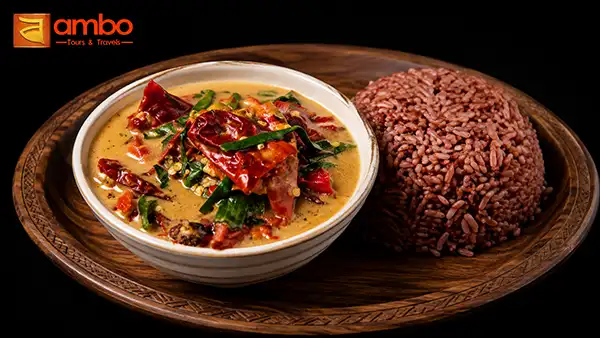
| Chili | Cheese |
|---|---|
| Large dried chili | Cow cheese |
| Small dried chili | Yak cheese |
| Large green chili | Goat cheese |
| Small green chili | Packaged cheese |
Any combination works — there’s no wrong answer, and every family has their own preference.
Kewa Datshi and Shamu Datshi
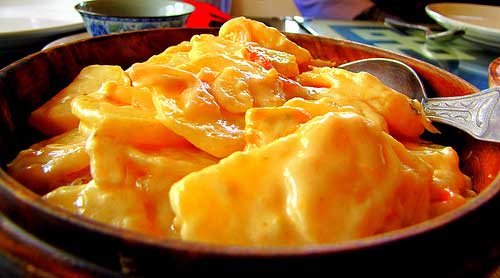
Two gentler variations for anyone easing into Bhutanese spice levels. Kewa datshi swaps in potato alongside the chili and cheese — milder, and often the version served to children.
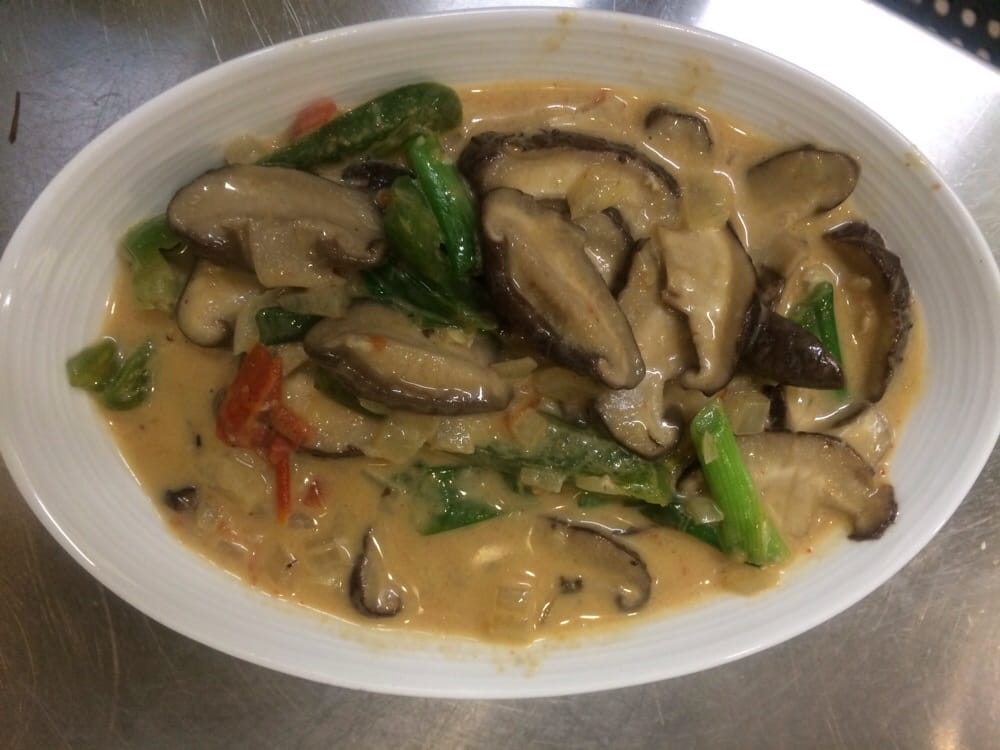
Shamu datshi does the same with mushrooms in place of potato, stewed the same way with cheese, oil, and chili.
Meat Dishes
Beyond the datshi family, Bhutanese cuisine has a strong dried-meat tradition, shaped by a mountain climate where preservation mattered as much as flavor.
- Shakam datshi — dried beef, finely chopped, stewed with chili, cheese, and butter.
- Sikam datshi — the same preparation with dried pork instead of beef; noticeably richer, given the fat content.
- Gondo datshi — made the same way but with egg (gondo), usually with less broth than the meat versions.
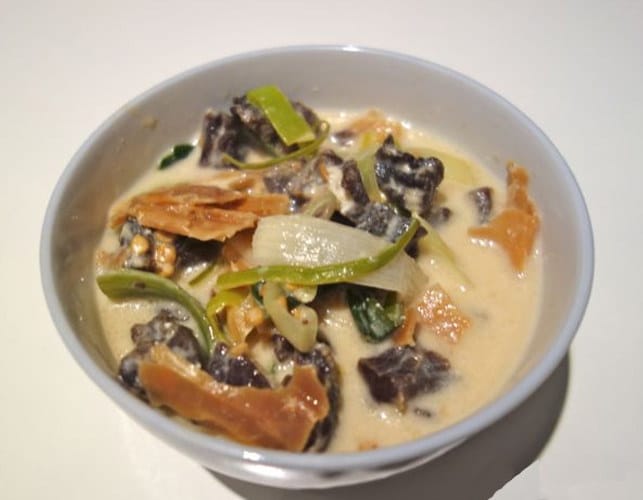
For a drier preparation, shakam paa pairs boiled-then-fried dried beef with chili and radish — a popular dish during festival season.

Sikam paa is the same technique with dried pork.
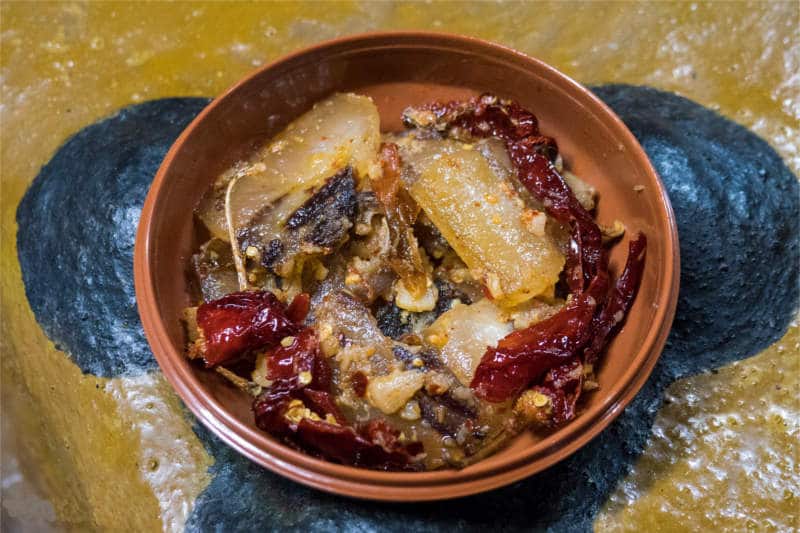
Yak sha paa is a genuine rarity, made almost exclusively by nomadic yak herders and closer in spirit to Tibetan cooking than lowland Bhutanese food. Jasha maroo, Bhutan’s everyday chicken dish, is cooked with garlic, ginger, chili, and tomato — spicy, but more approachable than the datshi family for first-timers.
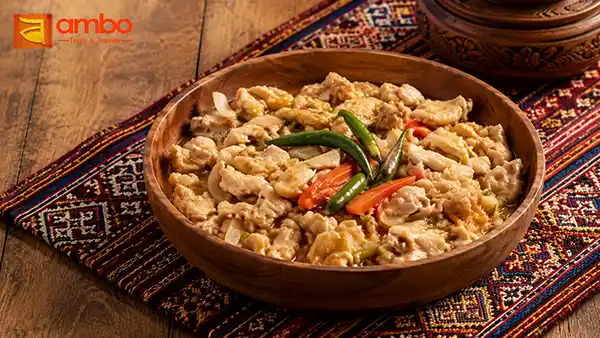
Goep — sliced tripe fried with dried chili and green onion — is a genuine local favorite, best paired with red rice.
Regional Specialties
Bhutan’s geography produces real regional variation, not just a single national cuisine repeated everywhere.
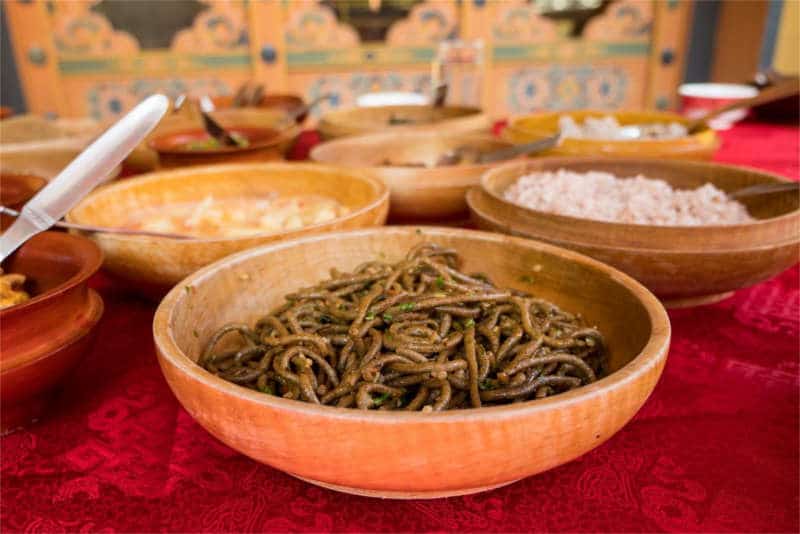
Puta, buckwheat noodles from the Bumthang valley, are traditionally reserved for special occasions and served with Sichuan pepper, chili, or whey.
Selroti, a rice-flour doughnut flavored with cardamom and clove, has Nepali origins but is now a genuine part of southern Bhutanese festive cooking.

Gundruk — fermented, dried spinach — is a clever piece of mountain food preservation from the south, eaten as a main or side depending on preparation.
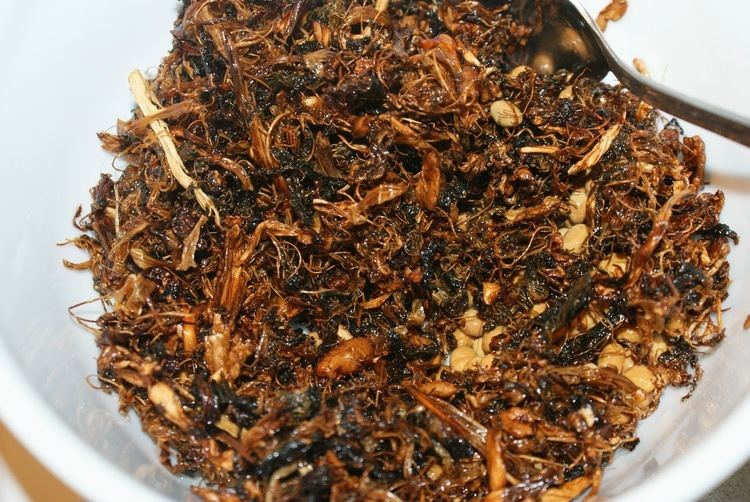
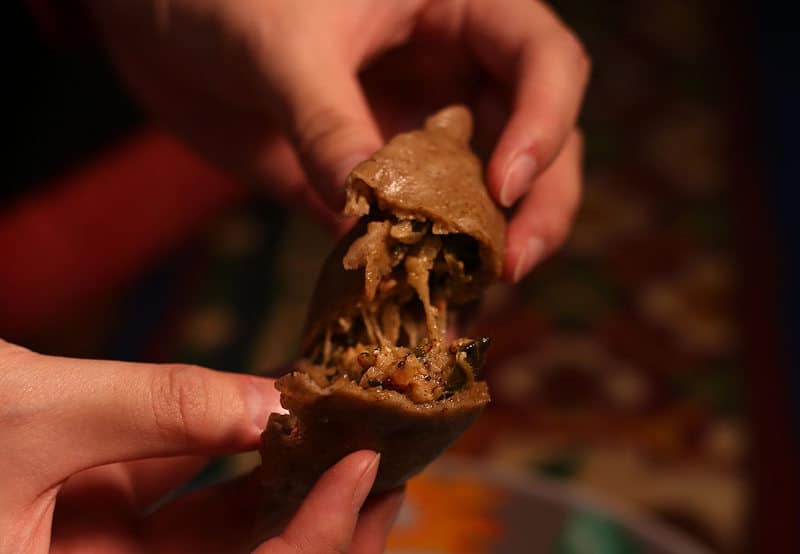
Hoentay, sweet buckwheat dumplings stuffed with turnip greens, cheese, and butter, come specifically from Haa Valley and are made for the Haap New Year festival, Lomba.
Sides, Condiments, and Snacks
Jaju is Bhutan’s answer to India’s dal — a creamy soup of milk, spinach, oil, chili powder, and a little cheese, served alongside curry and rice. Ezay is the condiment version of everything Bhutanese cooking loves: a thick, hot paste of chili, tomato, onion, garlic, and cheese. Lom, dried turnip, is the northern counterpart to southern gundruk. Khatem, sliced and fried bitter gourd, adds crunch to any meal. Goen hogay, a spicy cucumber salad with local cheese and cherry tomato, is a common fresh counterpoint to the richer dishes.
Red rice — locally grown, genuinely high in nutritional value — is the standard accompaniment to almost every meal and deserves specific mention on its own merits, not just as a side note.
For something to eat on the move, juma — minced meat, rice, and mild spices packed into an intestine casing — can be pan-fried for a quick snack, or cooked more like a full dish.
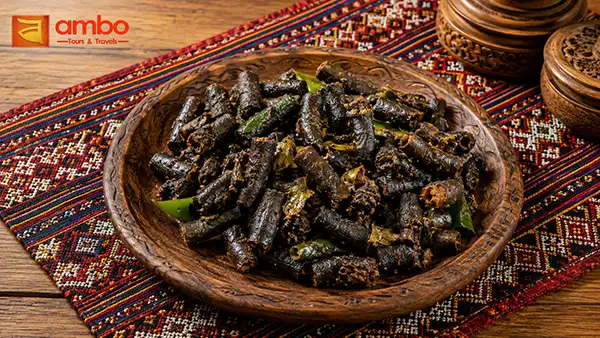
Chogo (also called chhurpi) is hard, dried yak cheese, eaten slowly since it takes real patience — and real jaw strength — to work through.
What to Drink
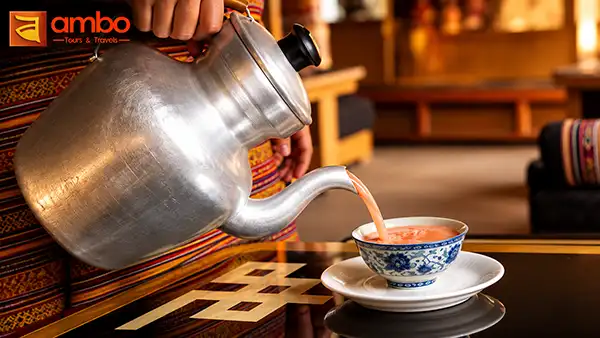
Suja, Bhutan’s butter tea, is genuinely unlike any tea you’ve had — fermented tea leaves churned with salt, butter, and milk into something closer to a savory broth than a sweet drink. Worth trying at least once, even if it’s not for everyone.
Ara, a locally distilled spirit made from barley, rice, maize, millet, or wheat, is one of the few alcoholic drinks traditionally served hot. Changkey, a lighter, porridge-like brew of fermented rice, butter, and egg, is particularly popular among young mothers for its nutritional value.
Trying This Food for Yourself
Every meal on an Ambo Tours itinerary is genuinely home-style — cooked fresh, not a hotel buffet assembled for visitors. If you have dietary preferences or restrictions, let us know when planning your trip and we’ll build them into your itinerary from the start. Curious what a full day of Bhutanese meals looks like alongside sightseeing? Our Bhutan culture and customs guide covers dining etiquette and daily life in more depth.
Frequently Asked Questions
Is Bhutanese food very spicy?
Often, yes — chilies are treated as a vegetable, not just a seasoning, in dishes like ema datshi. Milder options like kewa datshi (with potato) and jasha maroo (chicken) are good starting points if you’re easing into it.
What is the national dish of Bhutan?
Ema datshi — chilies stewed in melted local cheese. It’s the anchor of most everyday Bhutanese meals.
Will I get to try authentic Bhutanese food on an Ambo Tours trip?
Yes — every meal on our itineraries is home-style cooking, not a tourist buffet. Let us know about any dietary preferences when planning your trip.
Are there vegetarian options in Bhutanese cuisine?
Yes, plenty — ema datshi, kewa datshi, shamu datshi, jaju, ezay, and red rice are all naturally vegetarian, alongside many side dishes.
Ready to Experience Bhutan?
Tell us your dates and interests — our team in Thimphu will craft a personalised itinerary within 24 hours, at no cost.