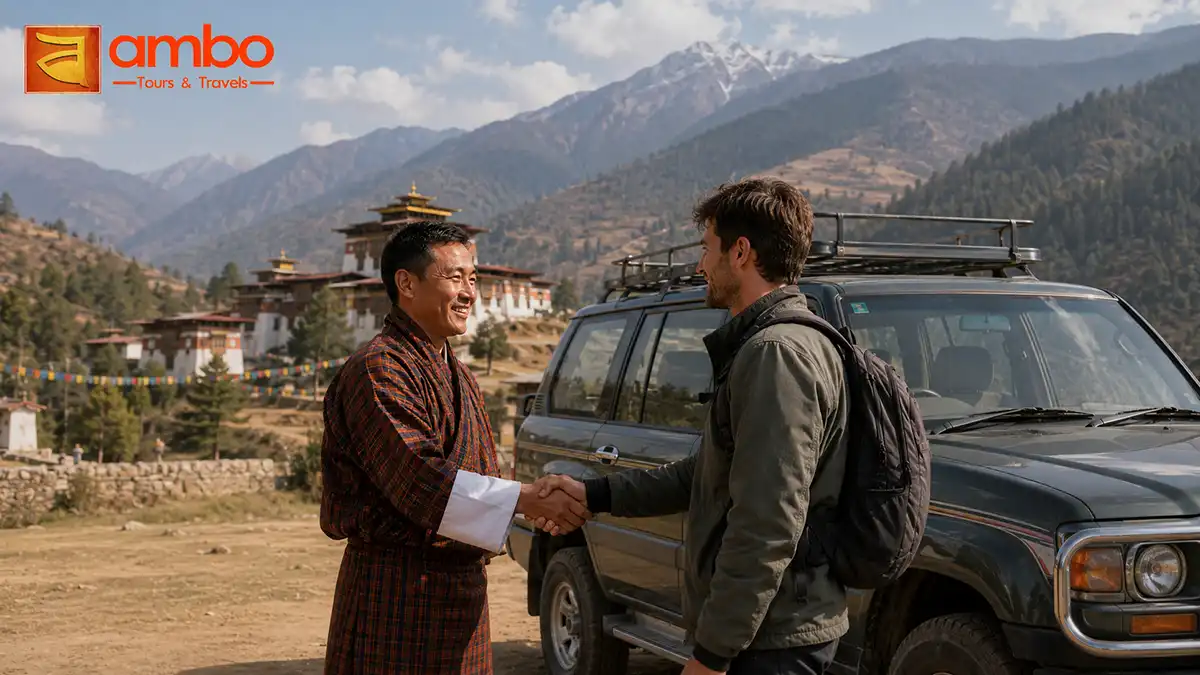
Tipping in Bhutan isn’t compulsory — nobody will treat you differently if you don’t — but it’s genuinely customary, and for the guides, drivers, and trekking crews who make your trip work, it’s become a real and expected part of their income. Unlike hotels and restaurants, they don’t receive a built-in service charge, so a tip at the end of your trip carries real weight. Here’s what to actually budget, broken down clearly rather than left vague.
Why Tipping Matters More in Bhutan Than It Might Seem
Bhutan’s Sustainable Development Fee and your package cost cover the government levy, permits, accommodation, meals, and your team’s baseline wages — but tipping guides and drivers directly has become an accepted supplementary practice across the industry, not something invented to extract more money from tourists. Your guide and driver aren’t paid on commission or service charges the way hospitality staff are elsewhere, so a fair tip at the end of a well-run trip is a genuine gesture of thanks that’s expected, even if never demanded.
How Much to Tip Your Guide and Driver
Recommended rates vary a little across the industry, but they cluster in a fairly consistent range:
- Guide: USD 8–15 per day, shared across your group (not per person per day, for groups larger than one or two). For a solo traveler or couple, expect toward the higher end of that range per day; for larger groups of 5 or more, a bit less per person is standard since the total is split more ways.
- Driver: USD 5–10 per day, following the same shared-group logic.
A simple way to think about it: for a 7-day tour with 2 travelers, a guide tip in the USD 70–100 range for the whole trip (split between the two of you) and a driver tip in the USD 35–70 range is a reasonable, well-within-norm gesture. You’re not expected to calculate this to the dollar — round figures are completely normal.
Tips are typically given at the very end of the trip, often at your final shared meal, handed directly to your guide and driver — commonly in an envelope. You can pay in USD or Bhutanese Ngultrum; both are accepted without issue.
Tipping on a Trek
If your itinerary includes a multi-day trek, your trekking crew — cook, porters, and horsemen — are tipped separately from your main guide and driver, and only at the end of the trekking portion, not for day hikes. This is usually handled as a single lump sum given to your guide, who distributes it fairly among the crew, rather than individual tips to each person. Your Ambo guide will be able to advise a fair total based on your specific trek’s length and crew size when the time comes.
Hotels, Restaurants, and Temple Visits
Because most Bhutan tour packages, including Ambo’s, are full-board (meals and accommodation included), you’ll rarely find yourself paying — or tipping — for food and lodging directly. If you do dine out independently or stay somewhere with hotel porter service, a modest discretionary tip is appreciated but genuinely optional.
One separate, smaller custom worth knowing: it’s traditional to leave a small donation when visiting a temple, typically around Nu 100 (Bhutanese Ngultrum). This isn’t a tip in the same sense — it’s a customary gesture of respect at a religious site — but many travelers find it useful to carry a bit of small change for exactly this purpose throughout their trip.
What If You Don’t Want to Tip?
Genuinely, that’s fine. Tipping in Bhutan is discretionary, not an obligation, and your guide and driver won’t treat you any differently either way. That said, if you’ve had a trip where your team went out of their way — extra flexibility on the itinerary, real warmth and care, going beyond the basics — a tip is the clearest way to say thank you in a system where they don’t otherwise see a share of what you’ve paid for the trip itself.
Quick Reference
- Guide: USD 8–15/day, shared across your group
- Driver: USD 5–10/day, shared across your group
- Trekking crew: one lump sum at trek’s end, given to your guide to distribute
- Temple donations: around Nu 100, optional but customary
- Currency: USD or Ngultrum, both accepted
- Timing: typically given at the end of the trip, often at a final shared meal
Frequently Asked Questions
Is tipping mandatory in Bhutan?
No, tipping is not mandatory or compulsory. It’s a customary practice that’s genuinely appreciated, but you won’t be treated differently if you choose not to tip.
How much should I tip my Bhutan tour guide?
A common range is USD 8–15 per day, shared across your group rather than per person, adjusted based on group size and the length of your trip.
Should I tip my driver separately from my guide?
Yes, drivers and guides are typically tipped separately. A common range for drivers is USD 5–10 per day, shared across your group.
Do I tip my trekking crew the same way as my guide and driver?
No — trekking crew (cook, porters, horsemen) are tipped separately, as a single lump sum at the end of the trek, usually handed to your guide to distribute among the crew.
Planning your trip’s budget? See our guide on how to pay for your Bhutan tour, or read what to expect from a Bhutan tour operator for the full picture before you go.
Ready to Experience Bhutan?
Tell us your dates and interests — our team in Thimphu will craft a personalised itinerary within 24 hours, at no cost.


Recent Articles